Introduction
Plastic kitchen tools save time, cut mess, and cost less. See which ones I use daily and learn smart care tips today.
I still use the same plastic spatula I bought on a hot July day years ago. It works well. Over time, I learned which tools last, which melt fast, and which truly help in a busy home kitchen.
Are Plastic Kitchen Tools Worth It?
Yes, for most home cooks, plastic kitchen tools are worth it. I use them almost every day. They feel light in my hand. They also cost less than steel or wood tools.
I first bought cheap plastic spoons when I moved into my tiny flat. I had almost no cash. At first, I thought they would break fast. Some did. But a few lasted for years.
Good plastic kitchen tools can:
- Protect nonstick pans
- Feel easy to hold
- Clean up fast
- Cost less than metal tools
- Work well for quick meals
Still, not all plastic tools are safe or strong. I learned that the hard way after one spoon bent into my pasta sauce. Since then, I look for heat-safe and BPA-free picks only.
Why I Keep Using Plastic Kitchen Tools
I own wood, steel, and silicone tools too. Yet I still reach for plastic more than I expected.
They Feel Light and Easy
Heavy tools tire my wrist. This matters when I cook for hours.
One rainy Friday night, I made soup, rice, and fried eggs at once. My light plastic ladle made the work feel easy. Small things like that matter in real kitchens.
They Protect Nonstick Pans
Metal tools can scratch pans fast. Plastic tools are softer.
I once ruined a costly pan with a steel spatula. The next week, I switched to plastic turners. My pans now last much longer.
They Cost Less
This may be the biggest reason people buy them.
You can often get a full set for the price of one steel spoon. That helps students, new cooks, and big families.
Here is a quick look at common kitchen tool types:
| Tool Type | Cost | Heat Safe | Pan Friendly | Life Span |
|---|---|---|---|---|
| Plastic | Low | Medium | Yes | Medium |
| Silicone | Medium | High | Yes | High |
| Steel | High | Very High | No | Very High |
| Wood | Medium | Medium | Yes | Medium |
The Plastic Kitchen Tools I Use Most
Not every tool earns space in my drawer. These are the ones I truly use.
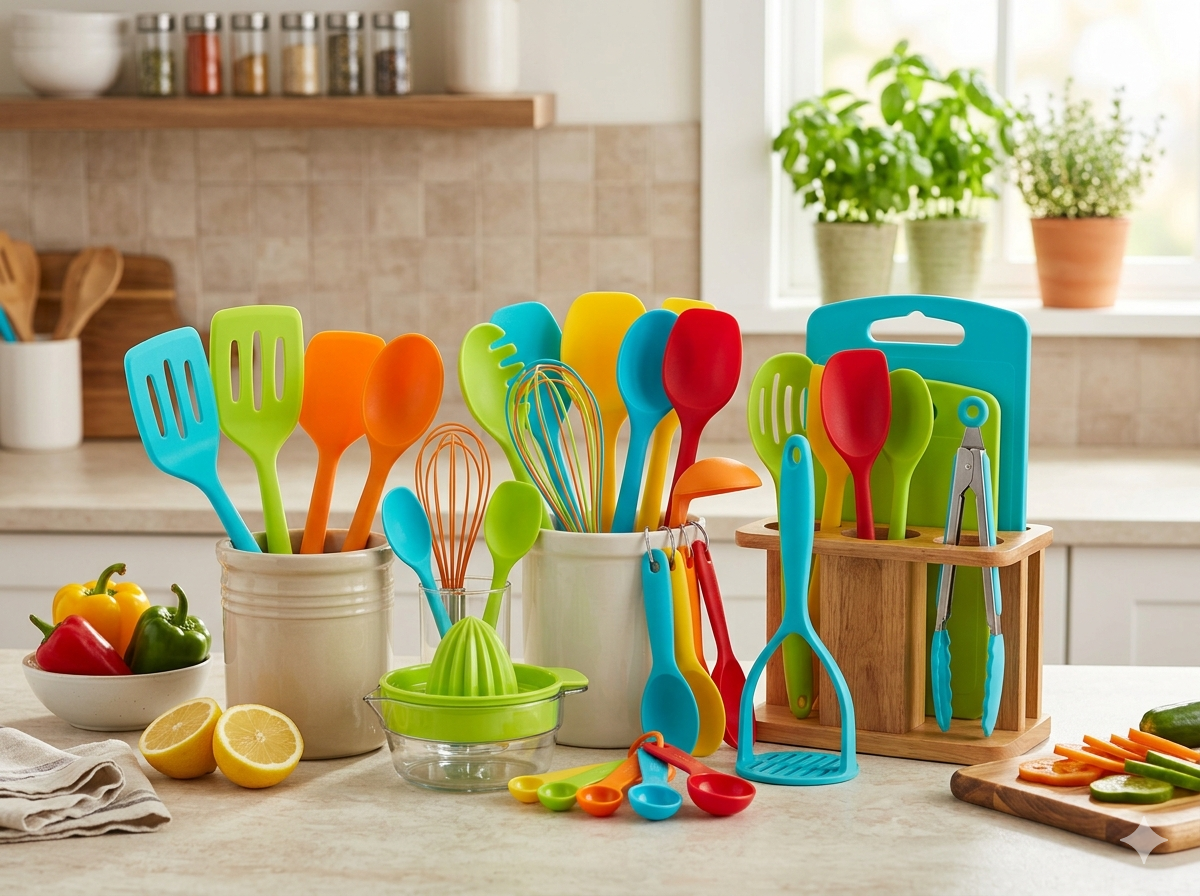
Plastic Spatulas
I use spatulas almost daily.
They work well for:
- Eggs
- Pancakes
- Burgers
- Stir fry
A thin edge helps slide under food fast. I like firm spatulas more than floppy ones. Cheap soft ones often melt near heat.
Measuring Cups and Spoons
Plastic measuring tools feel simple. Yet they save me every week.
I bake bread on slow Sunday mornings. Good measurements matter. I once used faded cups with worn marks. My dough failed twice before I noticed.
Now I buy sets with deep printed marks.
Mixing Bowls
Plastic bowls are great for quick prep.
I use them for:
- Cake mix
- Salad
- Dough
- Fruit wash
Glass bowls look nice. But plastic bowls feel safer around kids. I dropped one last winter. It bounced right off the floor.
Food Storage Boxes
This may be my top kitchen buy ever.
Clear plastic boxes help me:
- Store leftovers
- Prep lunch
- Freeze soup
- Keep snacks fresh
I like square boxes best. They stack neatly and save shelf space.
Plastic Tongs
I did not trust plastic tongs at first. They looked weak.
Then I found strong heat-safe ones. Now I use them for toast, salad, and pasta. They grip well without scratching pans.
How to Pick Safe Plastic Kitchen Tools
This part matters most. Some cheap tools are not worth the risk.
I now check labels before I buy anything.
Look for BPA-Free Labels
BPA worries many cooks. I avoid it when I can.
A clear BPA-free label gives peace of mind. Many trusted brands now use safer plastics.
Check Heat Limits
Some tools melt very fast.
I once left a spoon near a hot pan edge. The side curled in seconds. Since then, I always check heat ratings.
Look for tools safe above:
- 400°F for cooking tools
- 200°F for storage use
Avoid Cracks and Deep Scratches
Old plastic can trap food and smells.
I replace tools when I notice:
- Rough edges
- Cracks
- Burn marks
- Loose handles
That may sound picky. But clean tools help keep food safe.
Pick Thick, Solid Designs
Thin plastic bends fast.
A solid handle feels safer and lasts longer. Cheap hollow tools often break under heavy food.
Common Problems With Plastic Kitchen Tools
Plastic tools are useful. But they are not perfect.
Heat Damage Happens Fast
This is the biggest issue.
I ruined two spoons while making caramel. High heat and thin plastic do not mix well.
For very hot cooking, silicone or steel may work better.
Some Tools Hold Smells
Garlic, curry, and tomato sauce can stain plastic.
One red sauce left my spoon orange for months. Baking soda helped a bit, though the smell stayed longer.
Cheap Sets Break Easily
Not all plastic kitchen tools are equal.
Very cheap sets may:
- Bend fast
- Crack in dishwashers
- Fade over time
- Lose shape near heat
I now buy fewer tools but better ones.
My Tips to Make Plastic Kitchen Tools Last Longer
I learned these tips after wasting money on weak tools.
Keep Them Away From Open Flame
This sounds obvious. Yet it happens fast.
Do not rest tools on hot pan rims. Keep them on spoon rests or plates.
Wash Strong Stains Quickly
Tomato sauce and curry stain fast.
I rinse tools right after meals. Warm soap water helps a lot.
Use Soft Scrubbers
Hard steel pads scratch plastic.
Scratches make tools wear out faster. I use soft sponges instead.
Store Them Dry
Wet drawers smell bad.
I once shoved damp tools into a drawer after dinner. By morning, the whole space smelled musty.
Now I air dry everything first.
Best Times to Use Plastic Kitchen Tools
Plastic tools shine in some tasks more than others.
Great for Nonstick Cooking
This is where they work best.
I use plastic for:
- Omelets
- Fried rice
- Pancakes
- Grilled cheese
The soft edge protects pan coatings.
Good for Meal Prep
Plastic bowls and spoons make prep easy.
They feel light when moving around the kitchen. That helps during busy cooking nights.
Smart for Kids Learning to Cook
Kids can safely hold light plastic tools.
My niece loves helping me bake cookies. I hand her plastic spoons instead of heavy metal ones.
When I Avoid Plastic Kitchen Tools
Even though I like them, I do not use them for everything.
High Heat Cooking
Very high heat can warp plastic.
For searing meat or deep frying, I switch to steel or wood.
Sharp Cutting Tasks
Plastic knives dull quickly.
I tried one during a camping trip once. It struggled with even soft fruit.
Long Oven Use
Most plastic tools should stay out of ovens.
Always check labels first.
Plastic Kitchen Tools vs Silicone
Many cooks compare these two often.
Here is my honest view after years of use.
| Feature | Plastic Tools | Silicone Tools |
|---|---|---|
| Price | Lower | Higher |
| Weight | Very Light | Light |
| Heat Safety | Medium | High |
| Flexibility | Medium | High |
| Durability | Medium | High |
| Best Use | Daily quick meals | High heat cooking |
I still use both. Plastic feels great for quick tasks. Silicone works better near strong heat.
FAQs
Are plastic kitchen tools safe for cooking?
Most plastic kitchen tools are safe if they are BPA-free and heat-safe. Avoid cracked or melted tools. Learn more about safe kitchen use.
How long do plastic kitchen tools last?
Good plastic kitchen tools can last years with proper care. Keep them away from high heat and deep scratches. Learn more about tool care.
Can plastic kitchen tools go in the dishwasher?
Many plastic kitchen tools are dishwasher-safe, but high heat may warp thin items. Top-rack washing works best. Learn more about safe cleaning.
Do plastic kitchen tools melt easily?
Cheap plastic kitchen tools may melt near hot pans or flames. Heat-safe tools hold up better during daily cooking. Learn more about heat ratings.
What are the best plastic kitchen tools to buy first?
Start with spatulas, bowls, tongs, and measuring cups. These plastic kitchen tools help with daily meals fast. Learn more about kitchen basics.
#plastic kitchen tools