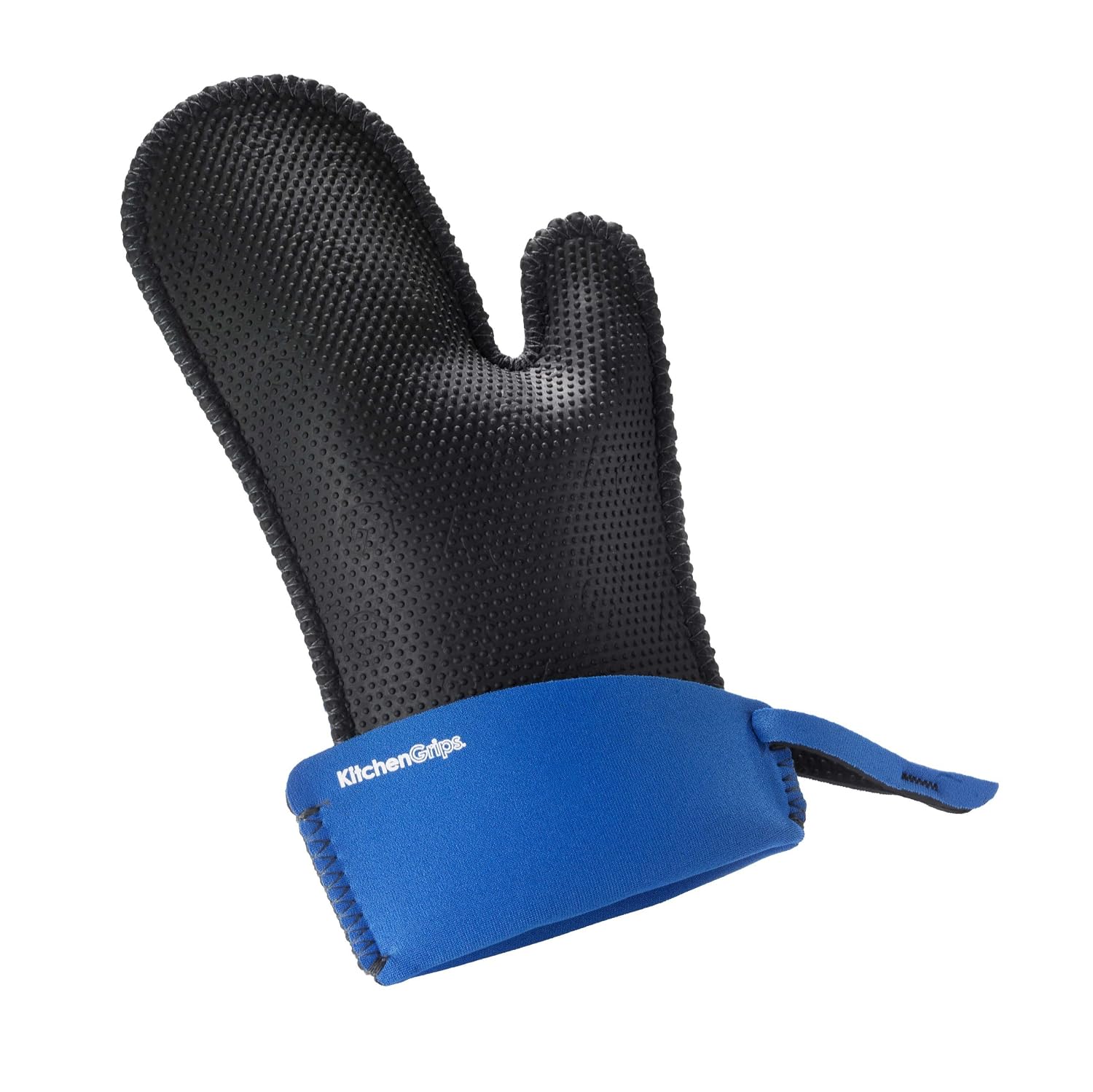
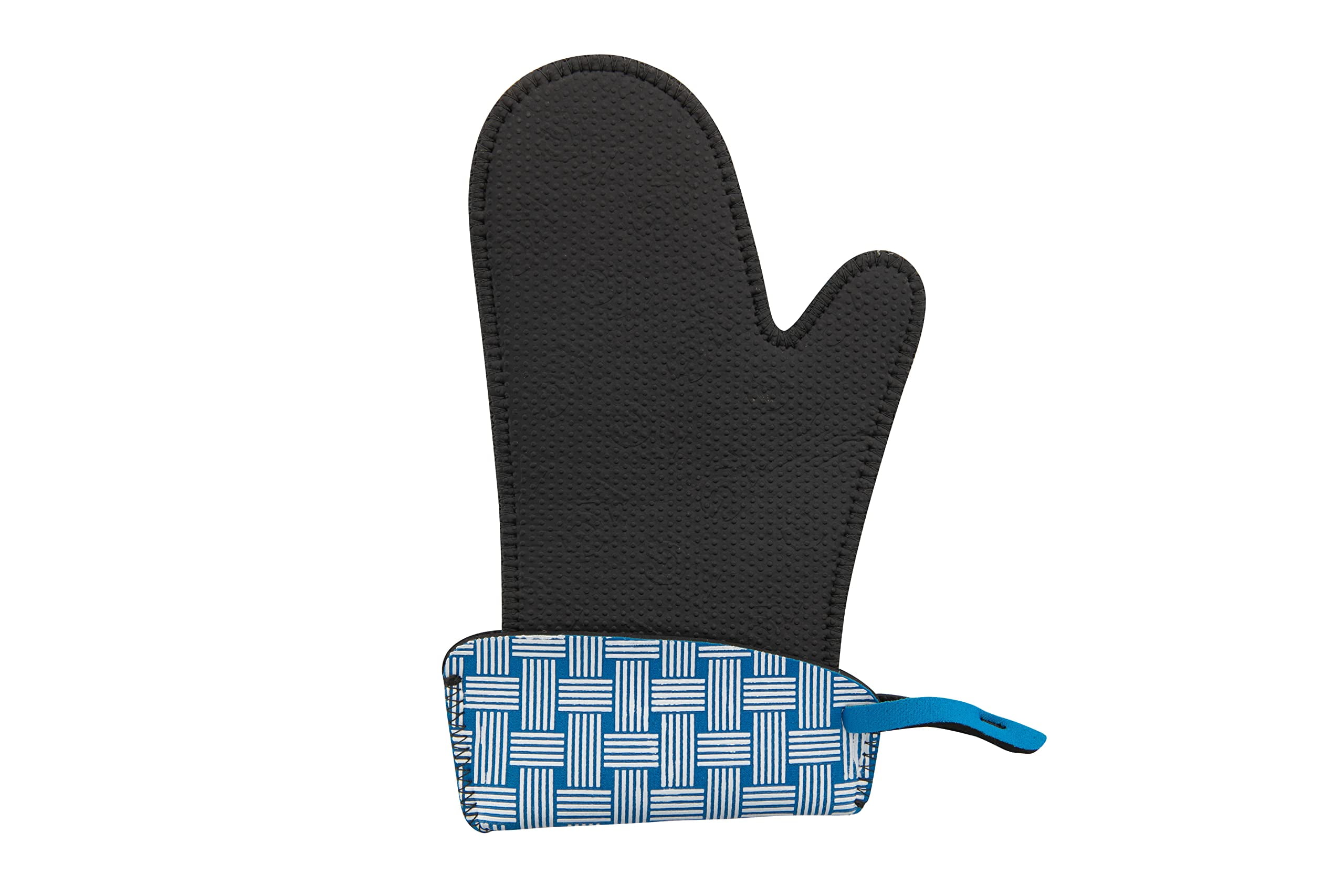
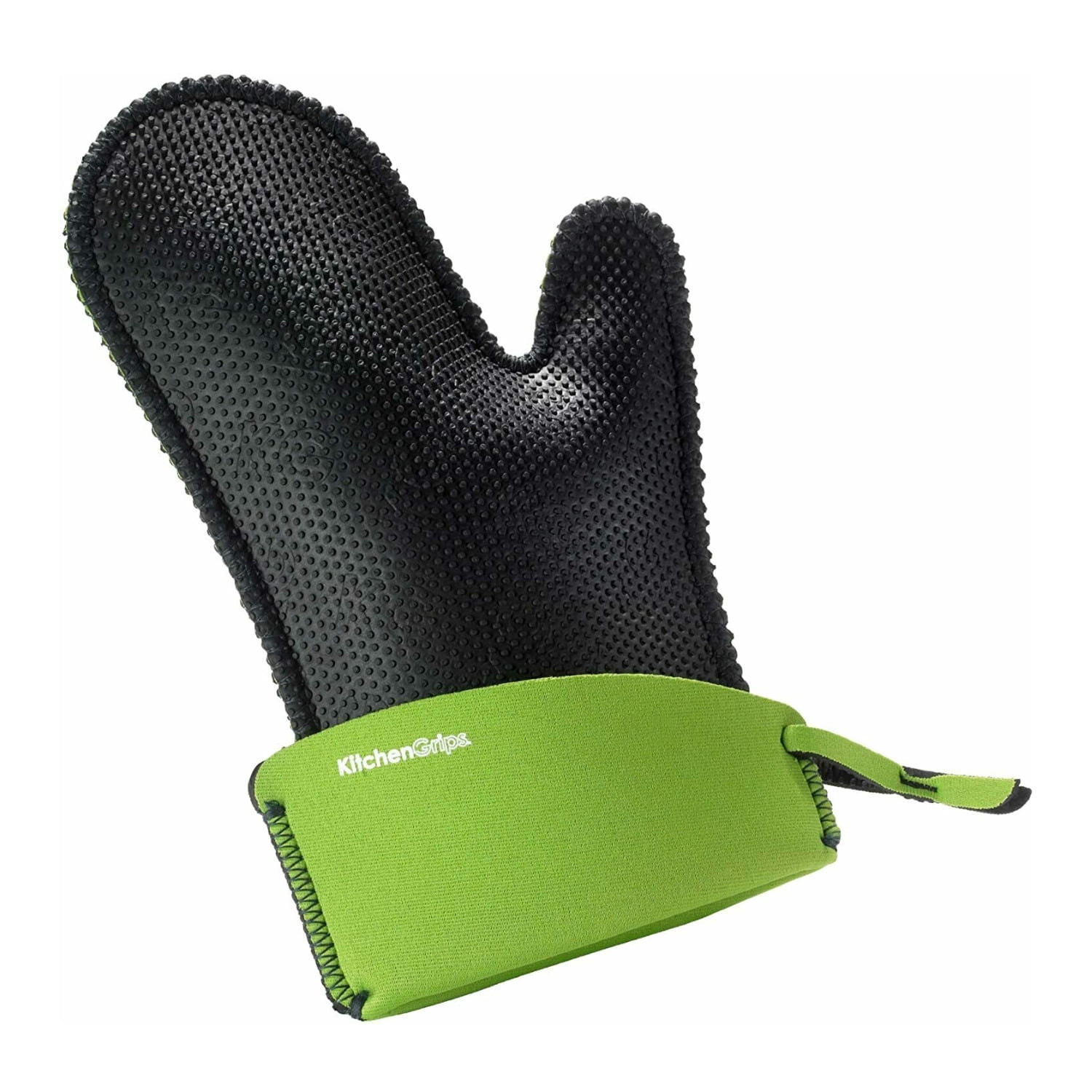
Kitchen grips are heat-resistant mitts, pads, or small silicone holders that help protect your hands when you handle hot pots, pans, baking trays, and dishes. The right type depends on the heat source, the size of the item, your grip, and the level of protection listed by the maker.
In American homes, kitchen grips are handy for daily cooking, baking, and outdoor grilling. A hot casserole from a 350-degree Fahrenheit oven can burn skin in seconds. A good grip adds a barrier between your hand and the hot dish, but it does not make every hot surface safe to touch.
The term kitchen grips can refer to several tools. Some look like small finger mitts, while others cover the whole hand like a chef’s mitt. Silicone pot holders and textured jar openers may also be sold as grips. These tools serve related needs, yet they are not always safe for the same tasks.
Before you buy a set, check its heat rating, size, fit, and care rules. A thick mitt may work well for a large roasting pan, while a small pinch grip may suit a quick lift of a baking dish. Neither should be used beyond its stated limits.
Kitchen grips are tools that help you hold, lift, or move hot or slippery kitchen items. They may be made from silicone, fabric, rubber-like materials, or combinations of these materials. Many have textured surfaces that help your fingers hold a pot handle or dish with less slipping.
The name does not describe one fixed design. A kitchen grip may cover just the fingers, protect the full hand, or sit between your hand and a hot dish. Some products also help open tight jar lids, although a jar opener is not a substitute for an oven mitt.
The main job is to create a barrier against heat while giving you enough control to move cookware safely. Heat resistance, grip strength, and coverage all matter. A product that feels thick in your hand may still have limits that make it unsuitable for a very hot pan.
Source: gfresh.com.au
Heat protection
A suitable grip slows heat transfer from cookware to your skin. The level of protection depends on the material, thickness, construction, contact time, and product rating.
A steadier hold
Textured surfaces may help you hold smooth cookware and baking dishes. A secure grip still depends on the shape and weight of the item.
Hand coverage
Small grips protect limited areas, while full mitts cover more of the hand. Extra coverage may help when reaching around a hot oven rack.
Kitchen Grips Versus Oven Mitts
Oven mitts usually cover most or all of the hand and extend over part of the wrist. Kitchen grips may be smaller and designed for quick handling. Some brands use the term kitchen grips for their own line of chef’s mitts, so the product name alone does not tell you how much protection it offers.
For a heavy Dutch oven or a large roasting pan, full mitts often provide more coverage. For a small dish, a pair of well-fitted pinch grips may be easier to use. Always choose a product rated for the intended task.
Choose a full mitt
Use a properly rated mitt when you need wrist coverage or must hold a large hot dish.
Choose a small grip
Use a pinch grip for tasks that fit its design and heat rating, such as briefly holding a suitable baking dish.
Types of Kitchen Grips and Their Uses
The best type of kitchen grip depends on what you handle most often. A baker may need full mitts for trays and cake pans, while someone who cooks on the stove may prefer grips that fit over pan handles. A home cook who opens jars may need a separate grip made for that job.
Look at the shape before buying. Small grips can be easy to store, but they may leave the wrist or part of the hand exposed. Full mitts offer more coverage, although bulky designs can make it harder to grasp small handles.
Source: walmart.com
Chef’s mitts
These cover much of the hand and are suited to lifting hot dishes when the product’s rating and design match the task.
Pinch grips
These small holders cover the fingertips or part of the hand. They are compact but require careful attention to fit and coverage.
Silicone pot holders
These flat or flexible pads can provide a barrier between a hot dish and your hand or counter, when rated for that use.
Pan handle grips
These sleeves fit over compatible handles. They may stay on the handle during cooking, so check whether the maker permits that use and whether the handle can become hot.
Jar-opening grips
These improve friction on lids and caps. Use them for opening containers, not for lifting hot cookware unless the maker clearly approves that use.
Small Silicone Pinch Grips
Small silicone pinch grips are often shaped like short pockets for the fingers and thumb. Their compact size makes them easy to keep in a drawer near the oven. They may also be easier to rinse than a large fabric mitt.
The trade-off is limited coverage. Your wrist and the back of your hand may remain exposed, and a short grip may not hold a wide dish securely. Check the opening size and test the fit with a cool dish before using the grips near heat.
Best fit
Choose them for smaller tasks that match the product instructions and do not require more coverage.
Main limit
Avoid using them to lift heavy pans or large trays if the grip does not fully support your hand and the dish.
Full Chef’s Mitts
Full chef’s mitts provide more coverage around the hand and wrist. Some have a silicone outer layer, while others use insulated fabric or several layers of material. Their design can make it easier to grasp a roasting pan or casserole dish with two hands.
A mitt should fit well enough to keep your fingers in control. If it is too loose, your hand may slide inside. If it is too tight, you may struggle to grasp a handle or remove the mitt quickly.
Best fit
Choose full mitts for baking, roasting, and handling larger dishes within the product’s rated use.
Main limit
A long mitt can still fail to protect you if its insulation is worn, damp, or exposed to heat beyond its rating.
Common Materials Used in Kitchen Grips
Kitchen grips use different materials because each offers a different mix of heat protection, flexibility, texture, and care needs. Silicone is common in compact grips, while fabric remains common in insulated oven mitts. Some designs combine an outer grip surface with an insulated inner layer.
No single material makes every grip safe for every job. A material name alone does not establish the product’s heat limit, ability to resist steam, or suitability for direct contact with a hot pan. Read the maker’s instructions for the exact item.
Source: walmart.com
Silicone
Silicone can be flexible and easy to clean. Textured surfaces may help with grip, but protection depends on the product’s thickness, construction, and stated limits.
Cotton and other fabrics
Fabric mitts can feel soft and flexible. Their protection depends on the insulation, stitching, condition, and whether the material stays dry.
Insulated blends
Some products combine a fabric lining with a heat-resistant outer layer. Check the care label because washing and drying rules may differ by layer.
Rubber-like materials
Some grips use flexible materials that provide friction. Do not assume they are suitable for high heat unless the product is clearly labeled for that use.
Are Silicone Kitchen Grips Better?
Silicone kitchen grips can be a practical choice when you want a flexible surface that is easy to rinse. Many designs have raised textures that help your fingers hold an object. Some are also useful for tasks such as gripping compatible jar lids.
However, silicone is not automatically better than fabric. A small silicone grip may leave too much skin exposed, and a product without clear heat instructions is hard to assess. A well-made insulated fabric mitt may suit a large oven dish better than a small silicone holder.
Look for adequate insulation, intact seams, full coverage, and a lining that remains comfortable without becoming loose.
How to Choose the Right Kitchen Grips
Choose kitchen grips by matching the design to your cookware and cooking habits. Start with the hottest task you expect to do, then check the product’s stated limits. After that, compare coverage, fit, grip texture, cleaning needs, and storage.
A low price or bright color does not tell you how well a grip protects your hands. A clear heat rating and useful product instructions are more helpful. If the seller does not provide enough information to judge safe use, consider a different product.
Source: target.com
Check the heat rating
Look for the maximum temperature and any stated contact-time limits. A rating may apply only under specific test conditions and does not mean unlimited contact is safe.
Match the coverage
Choose enough hand and wrist coverage for the task. Consider where your skin could touch the oven rack, pan edge, or hot dish.
Check the fit
Your fingers should stay in control, and the grip should not slide when you hold a cool, empty dish.
Review the texture
A textured surface may help prevent slipping. Make sure it does not prevent you from closing your fingers around the handle.
Read the care label
Check whether the item is machine washable, dishwasher safe, or meant for hand washing only. Do not assume all silicone products share the same care rules.
Look for damage
Avoid grips with holes, torn seams, cracks, peeling layers, or other defects that may expose your skin or weaken your hold.
A Simple Buying Checklist
Before ordering kitchen grips online, read the full product description rather than relying on the main photo. Confirm the material, size, heat limit, intended use, and care method. If you plan to use the grips for grilling, check whether the maker allows that use.
When possible, compare the measurements with your hand size and the handles you use most. A small grip may fit a narrow baking dish but fail to cover enough of your hand for a heavy roasting pan. For bulky cookware, full mitts may offer better control.
For frequent baking
Favor adequate insulation and coverage for trays, cake pans, and casserole dishes.
For small kitchens
Compact grips can save drawer space, provided they suit your common tasks.
For outdoor cooking
Check the heat rating and stated grill use. Keep fabric and silicone products away from direct flame unless the maker explicitly permits the exposure.
How to Use Kitchen Grips Safely
Safe use starts before you touch the hot item. Clear your path to the counter, make sure the grips are dry, and check that you can hold the cookware with control. A heavy pan can still spill even when your hands are protected from heat.
Use two hands when the dish is large or heavy and the product instructions allow it. Keep children and pets away from the path, and avoid rushing from the oven to the counter. If the item feels unstable, set it down in a safe place and reassess the grip.
Source: walmart.com
Step 1: Inspect the Grips
Check both sides for holes, cracks, loose seams, worn insulation, or peeling material. Make sure the grips are clean and fully dry. Replace damaged grips instead of relying on them for another hot pan.
Signs of a problem
Thin spots, splits, stiff areas, loose lining, or exposed inner layers may indicate that protection has weakened.
Step 2: Check the Fit and Route
Put on the grips before opening the oven or reaching toward a hot pan. Make sure your fingers can close around the handles. Move towels, utensils, and other items that could catch your hand or block your path.
Keep the route clear
Make space on a stable, heat-safe surface before lifting the dish.
Step 3: Lift With Control
Hold the dish by its intended handles and keep it level. Do not lift more weight than you can control. For a large pan, use a second hand or ask for help when needed, and keep the hot item close enough to control without pressing it against your body.
Watch for loose lids
A lid may shift or release steam as you move cookware. Keep your face and exposed skin away from escaping steam.
Step 4: Set the Item Down Safely
Place the hot dish on a stable surface that can withstand its heat. Keep the grips on until the cookware is secure. Then remove them without touching the hot pan, rack, or dish with bare skin.
Do not use a damaged grip again
If heat reaches your skin, the material slips, or the grip shows damage, stop using it and assess whether it needs replacement.
Kitchen Grip Heat Ratings and Their Limits
A heat rating helps you judge whether a grip is intended for a task, but the number needs context. Check the temperature unit, the type of heat exposure, and any limit on how long the material may touch a hot object. A rating for brief contact may not cover a long hold.
Oven temperature is not the only factor. A metal pan handle, a baking tray, hot oil, steam, and an open flame transfer heat in different ways. A grip that suits a brief lift of a dish may not be appropriate for holding a pan over a burner.
Do not treat a high temperature printed on a package as proof that you can safely touch any item at that temperature. Follow the exact product instructions, and do not exceed the stated limits.
Source: amazon.eg
Dry Heat, Steam, and Hot Liquids
Dry heat is only one concern. Steam can transfer heat quickly, and boiling water or hot oil can cause serious burns if it spills onto your skin. Some grips may be suitable for handling a dry baking tray but not for lifting a wet pot or draining boiling food.
Keep your hands away from rising steam when removing a lid. Tilt a lid away from your face and body when the cookware design permits it. Never rely on a grip to make direct contact with boiling liquid or escaping steam safe.
Wet grips
Moisture can increase heat transfer through some insulating materials. Dry fabric grips fully before use, and follow the maker’s rules for silicone or other materials.
Open flame
Do not expose a grip to a burner flame or grill flame unless the maker explicitly states that the product is designed for that exposure.
Long contact
Heat can pass through protective materials over time. Keep contact brief and within the product’s stated limits.
How to Clean and Maintain Kitchen Grips
Clean kitchen grips often enough to remove food residue, grease, and spills. The right method depends on the material and construction. Check the care label before using a washing machine, dishwasher, or cleaning product.
Silicone grips may be easy to rinse, while fabric mitts may need a full wash to remove grease. Some products have a fabric lining that can retain moisture even when the outer surface feels dry. Let washable grips dry fully before storing them.
Source: walmart.com
Cleaning Silicone Grips
For a washable silicone grip, begin with warm water and dish soap if the manufacturer permits it. Use a soft sponge to remove grease and food residue. Rinse well, then dry the item fully before putting it away.
Avoid harsh cleaners, sharp tools, or rough scrubbing pads unless the maker approves them. These can damage some surfaces or leave residue. If the grip becomes sticky, cracked, unusually stiff, or difficult to clean, check the product instructions and replace it if needed.
Remove grease
Wash the grip after oily spills so the surface remains easier to hold.
Read the washing instructions before cleaning a fabric mitt. Some can go in a washing machine, while others need spot cleaning or hand washing. Use the approved method and allow all layers to dry before using the mitt again.
A clean outer layer does not prove the inner insulation is dry. If the mitt has absorbed water, give it enough time to dry all the way through. Do not use a damp mitt to handle hot cookware.
Inspect the seams
Look for loose stitching, thin areas, or a lining that has shifted after washing.
Store in a dry place
Keep mitts away from standing water, grease, and direct contact with a hot stove.
Common Kitchen Grip Problems and How to Fix Them
A grip that slips, feels hot, or no longer fits should not be treated as a minor issue. Stop using it for hot cookware until you know what is wrong. Start with the simplest checks, such as moisture, fit, and visible wear.
Do not test a grip by touching a very hot pan with your hand to see whether it works. Use the maker’s stated instructions and limits. Replace the product if you cannot confirm that it still provides the intended protection.
Source: walmart.com
The grip slips off
Check whether the size matches your hand and cookware. Grease or food residue may reduce friction. Clean the grip as directed and replace it if the fit remains poor.
Heat reaches your fingers
The item may be too hot, contact may last too long, or the grip may be damaged or unsuitable. Stop the task, set the cookware down safely if possible, and use a suitable replacement.
The mitt feels damp
Do not use a damp fabric mitt for hot cookware. Dry it fully according to the care instructions.
The grip smells burnt
Move it away from heat and inspect it after it cools. Discard it if it has melted, charred, cracked, or otherwise deteriorated.
The mitt is too bulky
Try a better-fitting design that still provides the coverage and heat protection required for the task.
When Should You Replace Kitchen Grips?
Replace kitchen grips when they have holes, cracks, melted areas, exposed insulation, torn seams, or a lining that no longer stays in place. Also replace them if they repeatedly allow heat to reach your skin during tasks that match their stated use.
There is no single replacement schedule that fits every material and household. How often you cook, how you clean the grips, and how much heat they face all affect wear. Inspect them before use rather than waiting for a set number of months.
Replace at once
Stop using grips with visible heat damage, major tears, or failed seams.
Recheck after washing
Look for changes in shape, fit, stitching, and surface texture after cleaning.
Kitchen Grips Compared With Other Heat Protection Tools
Kitchen grips are one part of a safe cooking setup. Oven mitts, pot holders, pan handle covers, and dry kitchen towels may look similar in use, but their protection and intended jobs can differ. Pick a tool that is designed for the item you need to move.
A dry kitchen towel may help with some tasks, but it can bunch up, slip, or leave parts of your hand exposed. A towel is not a dependable replacement for a properly rated mitt when lifting heavy hot cookware. Keep any loose cloth away from burners and other heat sources.
Source: amazon.ca
Kitchen grips
Useful for short handling tasks that match the grip’s shape, coverage, and heat rating.
Oven mitts
Often better for large trays, roasting pans, and dishes that need more hand and wrist coverage.
Pot holders
Useful as a barrier under hot dishes or between a hand and cookware when the product is rated for the task.
Pan handle covers
Useful for compatible handles, but they may not protect the hand when moving a pan or touching other hot surfaces.
Jar grips
Designed to improve friction when opening lids. They should not be used as heat protection unless the maker explicitly approves that purpose.
Can You Use Kitchen Grips for Grilling?
Some kitchen grips are made for barbecue or grill tasks, while others are intended only for indoor cooking. Check the exact product instructions before using a grip near an outdoor grill. Do not assume that silicone or a dark outer surface makes it safe around open flame.
Keep your hands clear of flames, hot grates, and splashing grease. For long grilling tasks, use equipment designed for the heat and exposure involved. Replace any grip that melts, chars, or shows other heat damage.
Check the intended use
Confirm that the product is approved for the type of grill or cooking task you plan to do.
Avoid direct flame
Unless the manufacturer clearly permits direct flame exposure, keep the grip away from flames and hot fuel.
Are Kitchen Grips Worth Buying?
Kitchen grips can be useful if you often bake, roast food, or move hot dishes. Their value depends on how well they match your needs. A small set may be enough for light tasks, while frequent bakers may prefer full mitts with better coverage.
You do not need a large collection of kitchen grips. Start with a suitable pair of heat-resistant mitts or grips that fit your most common tasks. Add a separate pot holder or jar opener only if you have a clear use for it.
Before buying, compare the heat rating, fit, material, cleaning method, and replacement needs. Product photos can show the shape and color, but they cannot prove how well the item protects your hands. Clear instructions and a suitable design are more useful than broad claims about being heatproof.
Source: walmart.com
Worth considering for frequent baking
Choose mitts or grips that cover enough of your hand to lift your usual trays and dishes with control.
Worth considering for small kitchens
Compact grips take up little drawer space when they suit your common cooking tasks.
Not a good fit when details are missing
Avoid products with unclear heat limits, poor fit information, or no practical care instructions.
A Practical Setup for Most Home Cooks
For many US households, a sensible starting point is a pair of properly rated oven mitts and a heat-safe pot holder. This setup covers common oven tasks without relying on one small grip for every job. Your needs may differ if you cook outdoors often or use large cast-iron cookware.
Keep the tools dry, clean, and within easy reach of the oven. Check their condition before lifting hot food, and replace them when wear affects their fit or protection.
Start with coverage
Choose full mitts if you often handle large baking trays or heavy casserole dishes.
Add compact grips when useful
Choose small pinch grips for tasks they are designed to handle, not as a universal replacement for mitts.
Follow the label
Use each item within its stated heat, cleaning, and exposure limits.
Frequently Asked Questions
Q
What are kitchen grips used for?
Kitchen grips help you hold or move hot cookware, baking dishes, and other kitchen items when the product is designed and rated for that task. Some styles cover the fingers, while others protect the full hand. The intended use and heat rating determine which jobs are suitable.
Q
Are silicone kitchen grips heatproof?
Silicone kitchen grips are not automatically heatproof under every condition. Their safe use depends on the product’s design, stated heat limit, contact time, and exposure to steam or flame. Read the maker’s instructions and never assume that silicone can protect your hand from unlimited heat.
Q
Can kitchen grips go in the dishwasher?
Some silicone grips are dishwasher safe, but not all products are. Fabric mitts and grips with mixed materials may need hand washing or machine washing under specific conditions. Check the care label before cleaning them.
Q
Why do kitchen grips sometimes feel hot inside?
Heat may pass through a grip when the cookware is too hot, contact lasts too long, or the material is worn or unsuitable. A damp fabric mitt can also provide less protection than a dry one. Stop using the grip if heat reaches your skin, and replace it if it is damaged or fails during normal use.
Q
Are kitchen grips better than oven mitts?
Neither type is best for every task. Small kitchen grips can be easy to store and use for brief handling tasks, while full oven mitts usually provide more coverage for large dishes and trays. Choose the type that fits your hand, cookware, and the maker’s stated heat limits.
✦ Wrapping Up
Conclusion
Kitchen grips can make cooking and baking easier when you choose the right type for the job. Silicone pinch grips, chef’s mitts, pot holders, and pan handle covers all serve different needs. Their material, fit, coverage, and stated heat limits matter more than color or shape alone.
Before lifting a hot dish, check that your grips are dry, clean, and free from damage. Use them only as directed, keep your path clear, and never rely on a grip to protect you from unlimited heat or direct flame. A well-chosen pair can help with daily cooking, but safe handling still depends on care and control.
💡 Key Takeaway
Check the heat rating, fit, coverage, and care instructions before buying kitchen grips. Inspect them before each use, keep them dry, and replace any grip that shows damage or fails to protect your hands.