
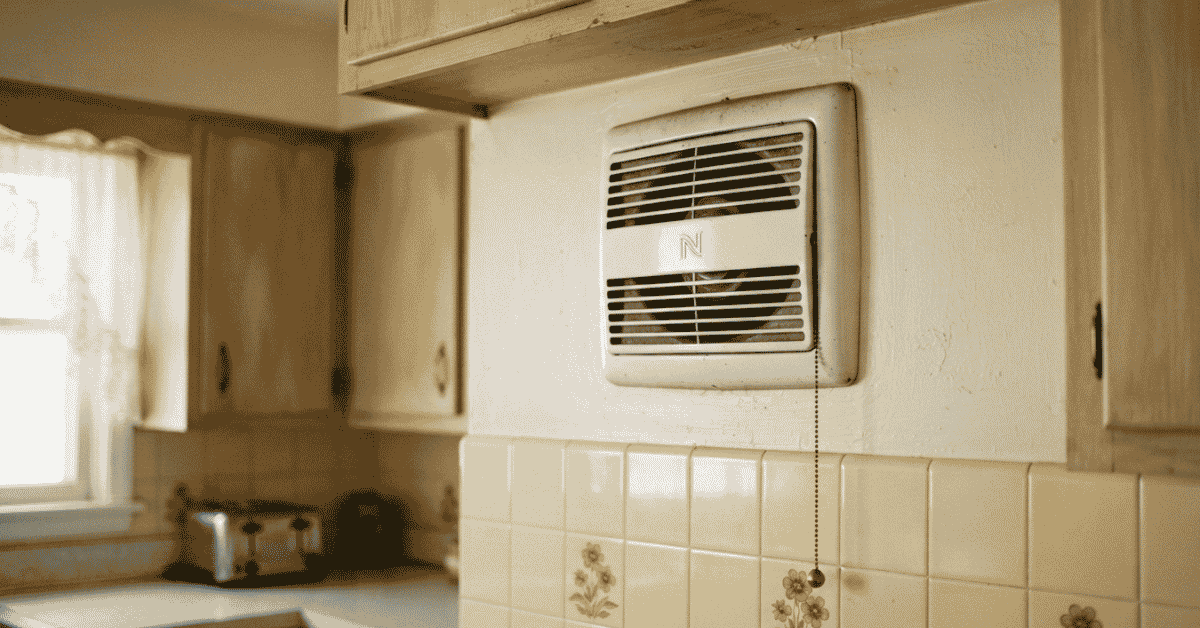
Vintage NuTone kitchen exhaust fan units have a charm I still notice at once. The old metal grille, pull chain, and soft motor hum feel far removed from today’s sleek fans. I dug into these fans because many are still found in older homes. Some date to the 1950s and 1960s. Here’s what I found about their design, use, care, parts, and real limits.
One documented NuTone fan was installed in a kitchen in 1957 and was still being used many years later. Its owner noted that the fan had been removed for cleaning and service more than once.
That long life is a big part of the appeal.
What Is a Vintage NuTone Kitchen Exhaust Fan?
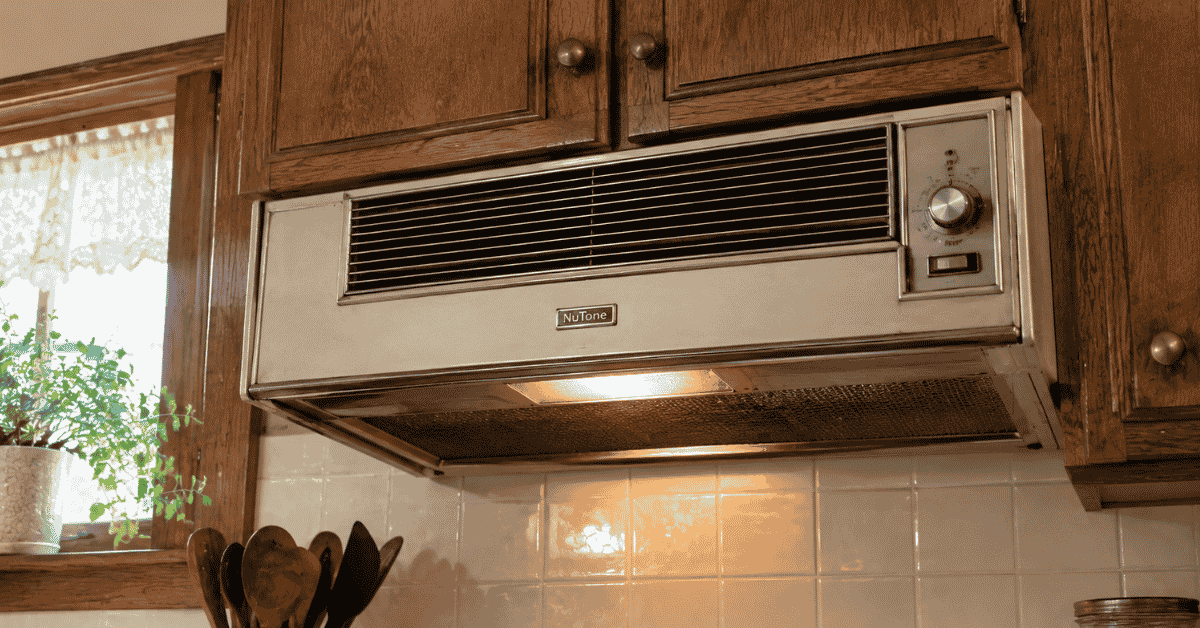
I see these fans as simple machines built around a motor, blade, housing, grille, and vent path. Many old NuTone units were made for wall or ceiling use.
Some models used a pull chain. Pulling the chain could start the fan and open a damper. A second pull could stop the motor and close the damper. Vintage appliance owners still describe this setup on older NuTone fans.
Common parts
A vintage unit may include:
- Metal grille
- Fan blade
- Electric motor
- Vent housing
- Pull chain
- Damper
- Exterior vent cover
- Mounting frame
The exact design can change by model. That is why I would never order a part based only on the word “NuTone.”
Why Were These Fans Popular?
I think the old design makes sense when you see one in place.
The fan did not need a large modern hood. A ceiling or wall unit could sit in the kitchen and move air through a duct.
Older kitchens also had a very different look. Metal appliances, wood cabinets, tile, and simple hardware were common. A vintage NuTone fan can fit that style much better than a new plastic grille.
One 1957 NuTone Model 800 listing describes an 8-inch wall vent fan with a metal body and original instructions.
That small size also shows how different older ventilation systems could be.
Which NuTone Models Are Vintage?
This is where I would slow down before buying anything.
NuTone made many fan models over the years. Numbers such as 800, 830, 831, 8200, 8210, and 8310 appear in old listings, owner posts, and repair discussions.
For example, a vintage Model 830 was reported in a kitchen from a 1960s-era building. The owner removed the motor after it stopped working and found that the motor itself had failed.
A Model 831 is also documented as an older 8-inch wall or ceiling exhaust fan.
Why the model number matters
I would check the model before doing anything else.
| Feature | Vintage NuTone | Modern Exhaust Fan |
|---|---|---|
| Main housing | Often metal | Often metal and plastic |
| Grille | Metal on many models | Often plastic or metal |
| Control | Pull chain or wall switch | Wall switch or electronic control |
| Motor | Simple electric motor | Modern motor design |
| Parts | Often used or specialty stock | Easier to source |
| Look | Retro | Modern |
| Maintenance | Often needs more care | Usually simpler |
| Best fit | Vintage homes | New builds and remodels |
This table is not a rule for every model. NuTone changed designs over time.
How Does a Vintage NuTone Fan Work?
I like the fact that the basic system is easy to understand.
Electric power runs the motor. The motor turns the fan blade. The blade pulls air from the kitchen and pushes it into the vent path.
Some older chain models also used the chain to control a damper. That means the fan was doing more than turning a blade. The outside opening could be opened and closed as part of the same action.
Why airflow can vary
A fan can be strong while still giving poor kitchen ventilation.
The duct matters.
A blocked duct, dirty blade, poor exterior vent, or long duct run can reduce airflow. Grease can also build up inside a kitchen fan.
One owner of a 1957 NuTone fan added a grease filter to catch much of the grease before it reached the duct.
That small detail makes sense to me.
How I Would Clean an Old NuTone Fan
I would start with the power off. I would not rush this step.
Then I would inspect the grille, motor, blade, and housing.
My basic cleaning steps
- Turn off power at the breaker.
- Remove the grille with care.
- Photograph the wiring and parts.
- Clean loose dust first.
- Wipe grease from removable metal parts.
- Clean the fan blade.
- Check the motor for damage.
- Inspect the vent path.
- Let wet parts dry fully.
- Reassemble with care.
I would avoid soaking an electric motor.
I would also avoid scraping old paint from a grille unless I knew what finish was used. A little worn paint can be part of the fan’s history.
Can You Still Find Vintage NuTone Parts?
Yes, but this is where patience helps.
Vintage parts still show up through resale sites and architectural salvage sellers. Current listings include old NuTone fans, grilles, motors, blades, and other parts.
I would search by model number first.
Useful search terms include:
- “NuTone 800 motor”
- “NuTone 830 grille”
- “NuTone 831 fan blade”
- “NuTone 8200 parts”
- “NuTone 8210 grille”
Watch for poor matches
A part can look right and still fail to fit.
A current resale listing for a vintage-style NuTone metal grille shows how fit can depend on the original cover and mounting setup. One recent buyer even noted that the metal cover fit a 1970s fan but did not work with its existing magnetic cover.
So I would measure first and buy second.
Should You Keep or Replace One?
This depends on the fan’s condition.
If the motor runs well, the housing is sound, the wiring is safe, and the fan vents properly, keeping it can make sense for a vintage kitchen.
If the motor is damaged, wiring is unsafe, or the duct setup is poor, replacement may be more practical.
I would not keep an old fan just because it looks cool.
Kitchen grease and electrical parts deserve respect.
A vintage fan that has been sitting still for years should be checked before regular use. A professional electrician or qualified repair person can inspect wiring and other electrical concerns.
What About the Old Pull Chain?
The pull chain is one of my favorite parts.
It gives the fan a very clear old-house feel. More important, it can be part of the original switching and damper system.
Some old NuTone designs used the chain to open the damper and turn on the motor.
If the chain breaks, I would not simply force the mechanism.
Recent owners of old NuTone fans have asked for help with broken chain and damper parts, showing that these small mechanisms can become repair issues after many decades.
A clear photo and exact model number can make part hunting much easier.
Is a Vintage NuTone Fan Worth Restoring?
I think restoration can be worthwhile when the fan is part of an original kitchen.
The biggest reason is not raw performance. It is the mix of function, history, and design.
A working 1950s or 1960s fan can still do its job while matching cabinets and hardware from the same era. That is hard to copy with a new plastic grille.
I would restore one when:
- The housing is in good shape.
- The motor can be serviced safely.
- Replacement parts can be found.
- The duct still works.
- The fan suits the kitchen.
I would replace it when repair costs become excessive or when the existing setup cannot provide safe, useful ventilation.
My Take on Vintage NuTone Kitchen Fans
After looking at these old fans, I understand why people hunt for them.
They are not perfect. Some are noisy. Some have worn motors. Parts can take time to find. Grease can make cleaning a chore.
Still, the simple metal build has a real appeal.
A vintage NuTone kitchen exhaust fan can also tell you something about the house itself. A Model 800 from the 1950s, for example, carries a very different design story from a modern fan. One documented example was made in 1957 and kept its original instructions and mounting parts.
That kind of detail makes an old appliance feel less like junk and more like part of the home’s past.
Frequently Asked Questions
How old is a vintage NuTone kitchen exhaust fan?
Many surviving examples date from the 1950s through the 1970s, but the exact age depends on the model. Learn more about yours.
Are old NuTone kitchen fans still useful?
Yes, some still work well, but check the motor, wiring, blade, and duct before use. Learn more about safe checks.
How do I identify my NuTone exhaust fan?
Look for the model number on the housing, grille, or motor area, then match parts to that number. Learn more about model checks.
Can I find a replacement motor for an old NuTone fan?
You may find used or replacement motors, but fit and electrical details must match. Learn more about motor options.
Why does my old NuTone fan sound loud?
Dust, worn bearings, loose parts, or an aging motor can cause noise. Learn more about cleaning and repair checks.
My Final Take
I still like the plain feel of a vintage NuTone kitchen exhaust fan. It has no glossy screen or smart app. It has a motor, a blade, a grille, and a job to do. As I type this, I can hear the soft sound of my keyboard while the fading light sits across the room. That old fan seems to fit that mood. It is simple, useful, and a small piece of kitchen history.