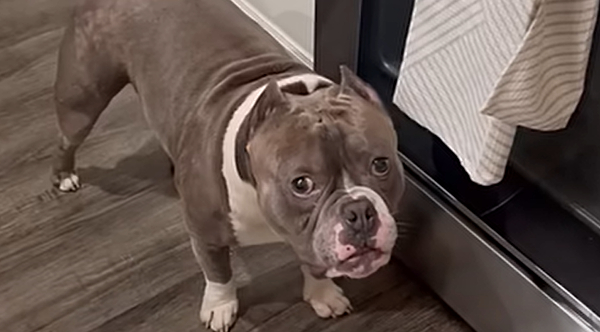
A dog stealing a kitchen towel may be bored, curious, playful, or drawn to its smell and feel. Keep towels out of reach, trade stolen items for safe rewards, and teach your dog what it can chew instead. Never chase, hit, or punish your dog for grabbing a towel. If your dog swallows any part of it, contact a veterinarian for advice.
In many American homes, a kitchen towel hangs from an oven handle, sits beside the sink, or rests on a counter near the stove. It is handy for wiping wet hands and cleaning small spills. For a curious dog, though, that loose cloth can look like a toy waiting to be grabbed. One quick tug can send the towel flying across the room.
A dog that runs off with a dish towel is not always trying to misbehave. The cloth may smell like food, feel good to carry, or make a fun game when someone tries to take it back. Puppies may explore it with their mouths, while adult dogs may repeat the act because it gets a strong reaction. The right fix starts with finding out what your dog gains from the habit.
A dog may steal a kitchen towel for several reasons, and more than one can apply at once. The smell, texture, movement, and reaction from people can all make the cloth worth grabbing. Watch what happens before and after each theft to find the most likely cause.
The behavior can become a habit when it works in the dog’s favor. If grabbing a towel starts a chase, the dog may learn that stealing cloth is a quick way to get people moving. If the towel carries food smells, the dog may keep checking the same spot even when nobody reacts.
Source: www.pinterest.com
Food smells
Dish towels can pick up the scent of meat, butter, cheese, crumbs, and other foods. A dog’s nose can make a used towel far more interesting than a clean one.
Play and movement
A hanging towel swings when touched. Pulling it down can feel like a game, and carrying it away may lead to a fun tug session.
Attention from people
Shouting, laughing, chasing, or repeatedly calling the dog can turn towel theft into a reliable way to get attention.
Boredom or unmet activity needs
Some dogs seek their own entertainment when they lack enough suitable play, sniffing, training, or rest. A towel is easy to reach and offers an immediate activity.
Comfort and familiar scents
A cloth that smells like familiar people may appeal to a dog that likes carrying or resting with scented items. This does not automatically mean the dog has separation anxiety.
Puppy exploration
Young dogs use their mouths to explore many objects. Soft fabric may attract them during play or teething, although a towel is not a safe chew item.
How to Tell Which Reason Fits Your Dog
Look for patterns rather than guessing from one incident. Note where the towel was, what happened just before your dog grabbed it, and how you responded. These small details can point to the reward that keeps the behavior going.
A dog that grabs a towel and immediately runs toward a family member may want a chase or social play. A dog that sniffs and licks a used dishcloth may be drawn to food residue. A dog that repeatedly chews cloth while alone needs closer observation because chewing and swallowing fabric pose different risks.
If your dog runs away
Check whether people usually chase it. Use a calm trade and teach a recall cue during separate practice sessions.
If your dog chews the cloth
Remove access to towels and offer a suitable dog toy. Watch closely for swallowed threads or fabric.
If your dog grabs towels only when cooking
Food smells and busy kitchen activity may be triggers. Set up a safe resting spot away from the cooking area and reward calm behavior there.
If the habit starts suddenly
Consider recent changes in routine, activity, stress, or health. Seek veterinary advice if the behavior comes with unusual eating, distress, or other new symptoms.
Is It Normal for Dogs to Steal Towels?
Grabbing household objects is a behavior many dog owners encounter, especially with young, active, and curious dogs. A single attempt to carry off a towel does not prove that your dog has a behavioral disorder. The key questions are whether the dog can be redirected, whether the habit is getting worse, and whether it puts the dog at risk.
Normal curiosity can still lead to an unsafe outcome. A dog may begin by carrying a towel and then chew or swallow pieces of it. Since fabric can lodge in the digestive tract, even a playful habit deserves attention before it becomes a repeated problem.
Source: www.youtube.com > ViralHog
Usually manageable
Your dog takes a towel now and then, releases it for a reward, and can learn to choose a toy instead.
Needs more training
Your dog repeatedly targets towels, ignores familiar cues, or starts a chase each time someone approaches.
Needs professional help
Your dog guards cloth aggressively, swallows fabric, damages many nonfood items, or seems unable to stop chewing and eating objects.
Stealing Is Not the Same as Eating Fabric
Carrying a towel in the mouth is different from chewing off and swallowing pieces. The first problem often calls for management and training. The second can become a medical emergency, even when your dog appears calm at first.
Repeated eating of nonfood materials can be associated with pica, a term for eating items that are not food. A veterinarian can assess possible medical and behavioral causes. Do not assume that every dog that steals a towel has pica, but do take repeated fabric ingestion seriously.
Carries without chewing
Prevent access, reward the dog for dropping the towel, and provide an approved item to carry.
Chews and tears
Keep fabric out of reach and supervise access to toys. Choose toys suited to the dog’s size and chewing style.
Swallows cloth
Call your veterinarian promptly for guidance. Do not wait for symptoms or try to make your dog vomit unless a veterinarian specifically directs you to do so.
How to Stop a Dog From Stealing Kitchen Towels
The most reliable approach combines prevention, rewards, and practice. Stop your dog from rehearsing the theft while teaching it a behavior that earns something better. Training works best when everyone in the home responds in the same calm way.
Start with the easiest changes first. You do not need to wait for perfect obedience before making the kitchen safer. Put the towels away today, then work on the skills your dog will need around tempting objects.
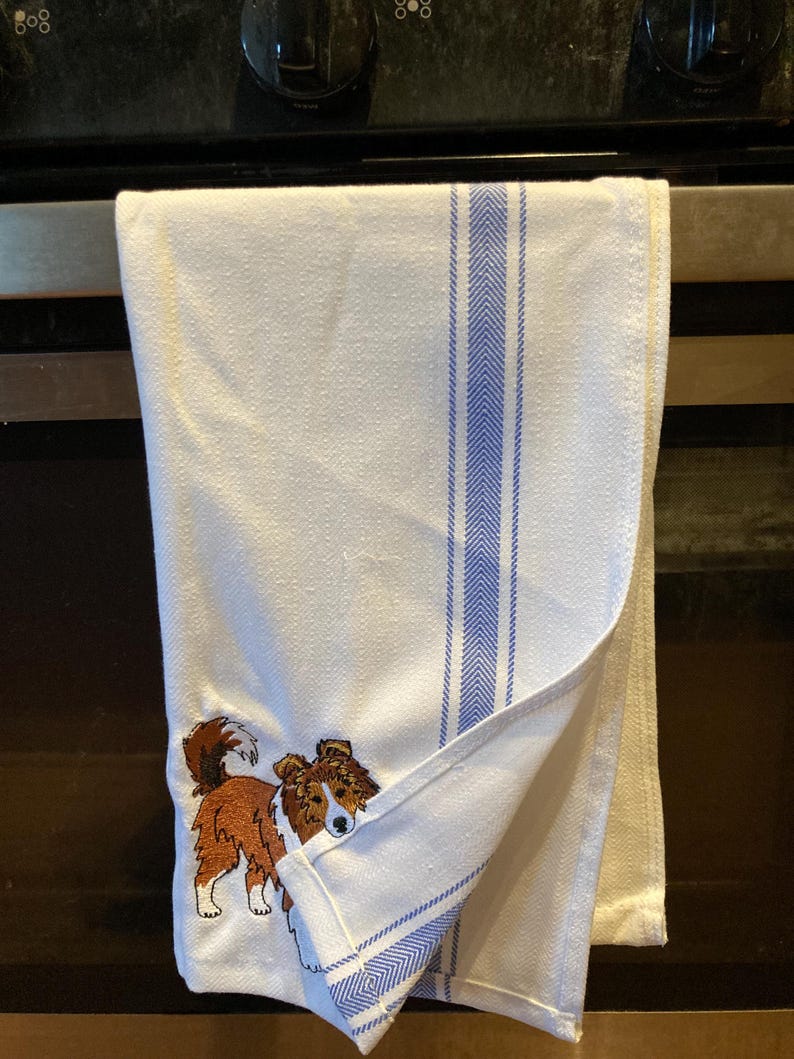
Source: etsy.com
Step 1: Remove Easy Access to Towels
Place dish towels in a drawer, a closed cabinet, or another spot your dog cannot reach. Avoid hanging them from low oven handles or the edge of a counter if your dog can pull them down. A towel hook mounted higher may help, but closed storage is more reliable for a determined dog.
Keep damp cleaning cloths, used dish towels, and food-stained rags out of reach as well. A dog may be more interested in a cloth that has wiped up a spill than in a fresh towel. Store cleaning products separately and never leave a cloth soaked in a chemical where a pet can chew it.
Use closed storage
Choose a drawer, cabinet, or lidded laundry container that your dog cannot open.
Check the whole kitchen
Look for towels near the sink, stove, dishwasher, trash can, and dining area.
Manage access during busy times
Use a suitable gate or another safe room if you cannot supervise your dog while cooking.
Step 2: Trade the Towel for Something Better
If your dog already has a towel, stay calm and reach for a reward. Hold a small dog-safe treat near the dog’s nose or present a favorite toy. When the dog releases the cloth, praise it and move the towel out of reach before giving the reward.
This is a trade, not a contest. Pulling hard on the towel can turn the moment into tug, and trying to pry open the dog’s mouth may cause a bite or make the dog guard objects more strongly. If the dog will not release the towel, avoid escalating the struggle and contact a qualified trainer for help if this happens often.
Keep your voice calm
Use a relaxed tone rather than shouting or running after the dog.
Offer a clear reward
Use a small treat or safe toy that your dog values more than the cloth.
Remove the towel quietly
Once your dog lets go, pick up the cloth without restarting the game.
Praise the release
Reward the act of giving up the object so the dog learns that letting go pays.
Step 3: Teach the Drop It Cue
Practice drop it when your dog is holding a safe toy, not when it has stolen a towel. Begin in a quiet room with a toy your dog enjoys but does not guard. Offer a treat near the dog’s nose, say the cue as the dog releases the toy, and reward the release.
After several successful repetitions, say the cue just before offering the reward. Give the toy back when appropriate so your dog learns that releasing an item does not always mean losing it forever. Keep sessions short and stop while the dog is still engaged.
Start with an easy toy
Choose an item that is safe to carry and easy for your dog to release.
Reward the release
Mark the moment the toy leaves the dog’s mouth with praise and a treat.
Add the cue
Use the words drop it just before the dog releases the toy during practice.
Raise the challenge slowly
Practice in new rooms and with different safe toys before expecting success around a kitchen towel.
Step 4: Teach Leave It
Drop it means release an object already in the mouth. Leave it means turn away from something the dog has not taken. Both skills can help, but they solve different problems.
To begin, place a treat in a closed hand. Let your dog sniff without opening your hand. When the dog backs away or turns its head, praise and reward it with a different treat from your other hand. Add the cue only after your dog begins to understand the action, then practice with safe objects under close supervision.
Reward moving away
Give the reward when your dog stops trying to reach the item.
Use a separate reward
Pay the dog from your other hand or another source rather than letting it take the forbidden item.
Keep practice easy
Do not begin with a highly exciting towel hanging within easy reach.
Step 5: Reward Calm Choices in the Kitchen
Give your dog a clear job while you prepare meals. A mat, bed, or safe resting area can help your dog learn where to settle while people work. Reward the dog for staying there, resting quietly, or choosing a toy instead of approaching the towel rack.
At first, reward calm behavior often enough that your dog understands what works. As the habit improves, vary the rewards while continuing to praise good choices. If your dog repeatedly leaves the resting spot to grab cloth, make the task easier by moving farther from the kitchen or using a gate.
Choose a safe resting spot
Place a mat away from hot pans, open ovens, knives, and busy walking paths.
Provide a suitable activity
Offer an appropriate chew or food puzzle if it is safe for your dog and suitable for its diet.
Reward before trouble starts
Praise and reward your dog while it is calm rather than waiting until it grabs a towel.
What to Do When Your Dog Runs Away With a Towel
When your dog grabs a towel and bolts, your first job is to prevent swallowing and avoid turning the event into a chase. Move calmly, keep other pets and children away, and use a familiar recall or trade cue if your dog responds to it. Do not corner a frightened dog or grab at its face.
The right response depends on what the dog is doing with the cloth. A dog carrying a whole towel may release it for a reward, while a dog actively tearing and eating it needs more urgent attention. If fabric is swallowed, stop the training session and call a veterinarian for guidance.
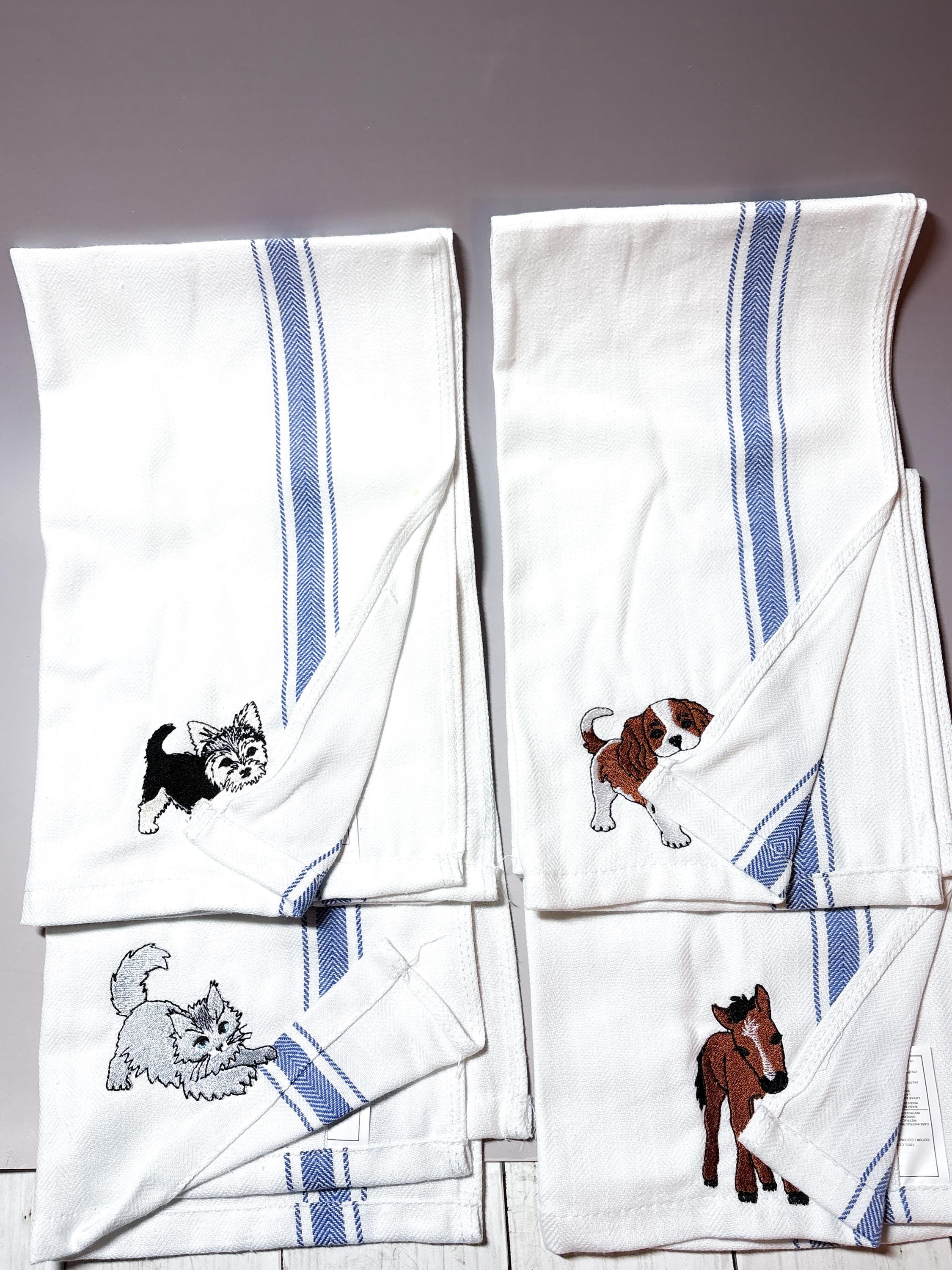
Source: etsy.com
If Your Dog Is Carrying the Towel
Get a treat or safe toy and invite your dog to come toward you without chasing it. Offer the trade, reward the release, and remove the towel. If the dog is happy to play, switch to an approved toy after the cloth is safely out of reach.
Later, practice recall and drop it with safe objects. Training outside the heat of the moment gives your dog a chance to learn without the excitement of a real theft.
Avoid a chase
Running after the dog can make the stolen towel more exciting.
Use a known cue
Call the dog in a friendly voice if recall has been trained and the setting is safe.
End the game calmly
Once the towel is recovered, put it away and redirect your dog to an approved activity.
If Your Dog Growls or Guards the Towel
A growl is a warning that the dog is uncomfortable. Do not punish the growl, lean over the dog, or try to snatch the towel. These actions can increase the risk of a bite and may suppress warning signals without resolving the dog’s discomfort.
Give the dog space and keep children away. If the towel can be left safely without the dog swallowing it, avoid confrontation and seek help from a qualified, reward-based trainer or a veterinary behavior professional. If the dog is eating the fabric, contact a veterinarian immediately for situation-specific advice.
Do not force a trade
A dog that guards objects may need a carefully planned training program.
Protect children
Never let a child approach or take an item from a dog that is guarding it.
Get qualified help
Repeated growling, snapping, or biting calls for professional assessment.
Can a Dog Get Sick From Eating a Kitchen Towel?
Yes. Swallowed kitchen towels can cause serious problems because fabric does not break down like ordinary food. A piece may pass through the digestive tract, but it can also become lodged in the stomach or intestines and cause an obstruction. The risk depends on factors such as the amount swallowed, the material, and the dog’s size, but there is no reliable home test that proves the cloth will pass safely.
A towel may also contain food residue, grease, cleaning products, or other substances that add to the concern. Contact your veterinarian promptly if you know or suspect that your dog swallowed any fabric. Explain what was eaten, approximately how much is missing, when it happened, and whether the dog has shown any symptoms.
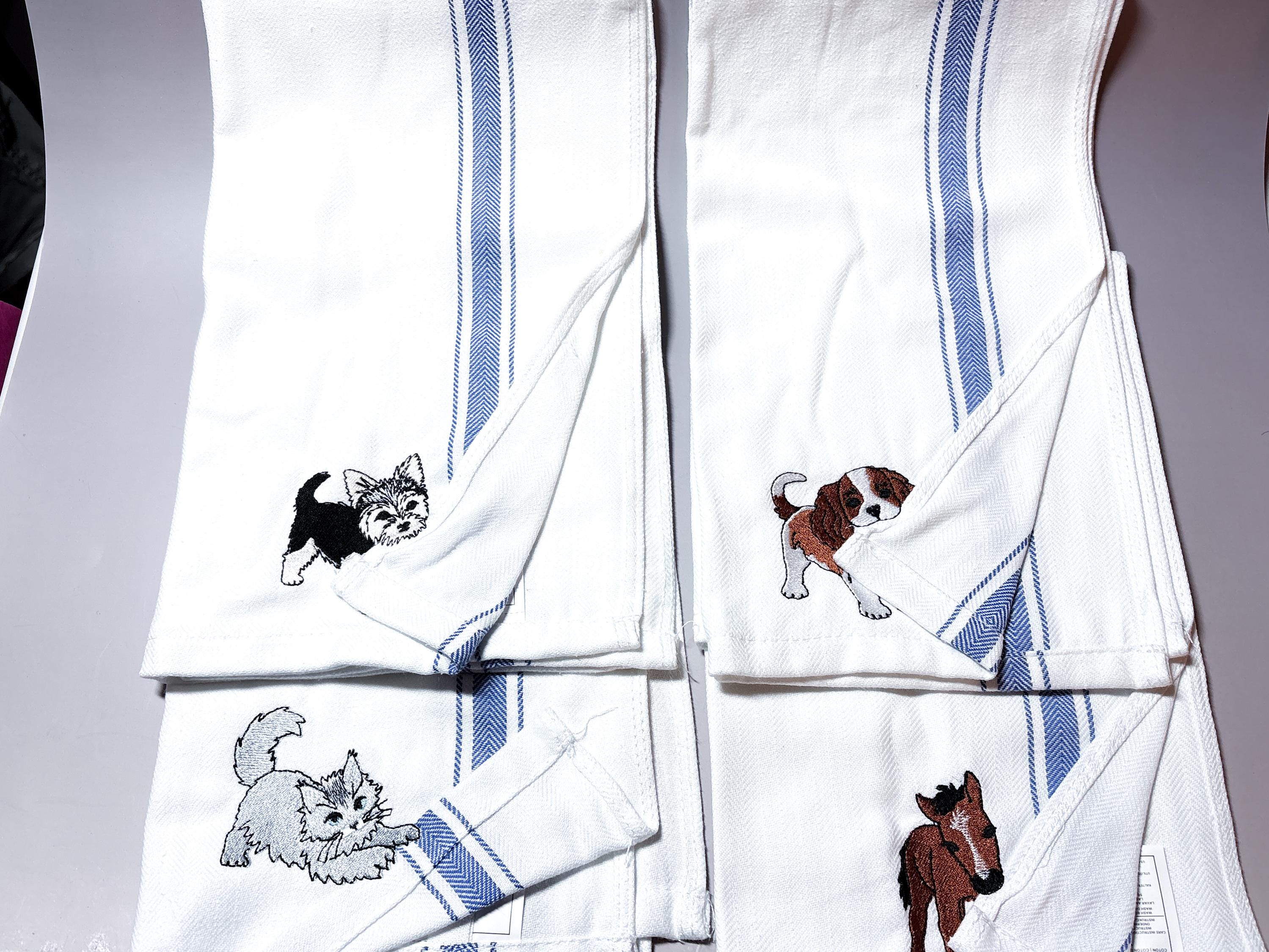
Source: etsy.com
Repeated vomiting or retching
Vomiting after fabric ingestion can be a warning sign of a digestive problem.
Loss of appetite
A dog that refuses food after swallowing cloth needs veterinary assessment.
Abdominal pain or a swollen belly
Restlessness, a hunched posture, or discomfort when moving may signal a serious problem.
Lethargy or weakness
Unusual tiredness, reduced response, or weakness after swallowing fabric warrants urgent care.
Difficulty passing stool
Straining or producing little stool can occur with an obstruction, although normal stool does not rule one out.
What to Do if Your Dog Swallows Fabric
Call your veterinarian or an emergency veterinary clinic as soon as you realize that your dog has swallowed a towel or part of one. Do not wait for symptoms to appear. Early advice gives the veterinary team a chance to assess the risk and explain the safest next step.
Do not induce vomiting, give oil or laxatives, or try home remedies unless a veterinarian specifically instructs you to do so. Do not pull a strip of cloth if it is hanging from your dog’s mouth or anus, because pulling can injure the digestive tract. Seek urgent veterinary care if your dog has repeated vomiting, severe pain, trouble breathing, collapse, or marked weakness.
Save details for the veterinarian
Note the towel material, missing amount, time of ingestion, dog size, and any symptoms.
Keep the remaining cloth
A matching piece can help the veterinary team understand what may have been swallowed.
Follow professional advice
The veterinarian can decide whether your dog needs an examination, imaging, monitoring, or treatment.
Give Your Dog Better Things to Do
A dog with safe ways to sniff, chew, play, and rest may have less reason to invent its own kitchen games. The goal is not to keep every dog busy all day. It is to provide activities that suit the dog’s age, health, energy level, and normal routine.
Exercise alone will not solve every case of towel stealing. A dog may be well exercised and still enjoy the taste or movement of a dishcloth. Pair suitable activity with towel storage and reward-based training so your dog has both fewer chances to steal and a better choice to make.
Source: etsy.com
Choose Safe Chew Toys
Offer toys designed for dogs and suited to their size and chewing style. Check them for loose parts, tears, or damage, and supervise use when needed. A toy that is too small can pose a choking risk, while a toy that breaks into swallowable pieces may create a different hazard.
Do not use old kitchen towels, socks, or similar cloth items as casual chew toys if your dog already steals fabric. It can be hard for the dog to tell which household cloth is allowed and which one is off-limits. A clear difference between approved toys and household items makes training easier.
Use dog-specific toys
Select an item with an appropriate size and firmness for your dog’s jaw and chewing habits.
Check toys often
Remove damaged toys before loose pieces can be swallowed.
Supervise new items
Watch how your dog uses an unfamiliar toy before leaving it available without supervision.
Add Sniffing, Play, and Short Training Sessions
Sniffing games can give dogs a useful task without encouraging them to grab household objects. Hide a few pieces of the dog’s usual food in easy, safe places or use a suitable food puzzle. Start with a simple setup and supervise to make sure the dog does not chew the container.
Short training sessions also help build useful habits. Practice recall, drop it, leave it, and settling on a mat for a few minutes at a time. Adjust the plan to your dog’s needs instead of relying on a fixed exercise target that may not suit its age or health.
Use food puzzles carefully
Choose a puzzle that fits the dog’s eating style and dietary needs.
Rotate safe toys
Offer a small selection and change them from time to time to keep familiar toys interesting.
Reward calm behavior
Pay attention to moments when your dog rests, chews an approved toy, or leaves a towel alone.
Common Mistakes That Can Make Towel Theft Worse
A quick reaction can solve the problem for that moment while making the next theft more likely. Dogs learn from what happens after they grab an object, so the response matters as much as the prevention plan. Focus on reducing access and rewarding the behavior you want to see.
Chasing the dog
A chase can turn the towel into a game. Use a calm trade and practice recall at other times.
Yelling or punishing
Harsh reactions can create fear, increase conflict, or teach the dog to steal items when people are not nearby.
Pulling the towel from the dog’s mouth
Force can trigger guarding or cause an accidental bite. Use a safe trade unless an immediate emergency requires professional guidance.
Offering another cloth as a reward
Giving an old towel or sock may blur the line between permitted and forbidden fabric.
Leaving towels in the same spot
Training takes time. Keep the cloth out of reach while the dog learns a new response.
Assuming every theft means boredom
Food smells, attention, play, comfort, and learned routines can all play a role. Observe the pattern before choosing a fix.
When to Ask a Trainer or Veterinarian for Help
Seek help from a qualified, reward-based dog trainer if the behavior continues despite good management, if your dog guards stolen items, or if family members cannot safely recover objects. A veterinary behavior professional may be appropriate when fear, anxiety, or aggression is part of the pattern.
Speak with your veterinarian if your dog repeatedly eats cloth, suddenly starts chewing and swallowing nonfood items, or shows a change in appetite or other health signs. Behavior training can help with access and habits, but it cannot rule out medical causes or treat an intestinal obstruction.
Repeated fabric eating
Ask your veterinarian to assess the behavior and any possible medical concerns.
Growling or biting
Use a professional behavior plan that protects people and the dog without forced confrontations.
No progress with basic training
A trainer can help identify the reward maintaining the habit and set up safer practice steps.
A Simple Seven-Day Plan to Reduce Towel Stealing
A short plan can help everyone in the home follow the same steps. Seven days is a starting period, not a promise that the habit will disappear in a week. Dogs learn at different speeds, and repeated fabric chewing or guarding may need more support.
Day 1: Secure the towels
Move kitchen cloths into closed storage. Check the sink, oven handles, counters, and laundry area for other tempting fabric.
Day 2: Find the trigger
Watch for patterns linked to cooking, attention, play, or times when the dog has little to do. Prevent access while you observe.
Day 3: Practice drop it
Use a safe toy and small rewards in a quiet room. Keep sessions short and easy.
Day 4: Practice leave it
Teach the dog to move away from a low-value item before working near more tempting objects.
Day 5: Set up a kitchen resting place
Reward your dog for settling on a mat or bed away from hot surfaces and foot traffic.
Day 6: Add suitable activities
Try a sniffing game, a safe chew, or a short training session before a busy cooking period.
Day 7: Review and adjust
Look at whether towel access has dropped, whether the dog responds to cues, and whether any swallowing or guarding risk remains. Keep the steps that help and seek professional advice if safety concerns persist.
How to Know Whether the Plan Is Working
Success means more than getting the towel back once. Look for fewer attempts to grab cloth, quicker responses to cues, more calm behavior near the kitchen, and less need for emergency trades. These changes show that your management and training may be helping.
If theft continues, do not assume your dog is being stubborn. Check whether towels are still easy to reach, whether family members chase the dog, and whether the rewards are valuable enough. If the dog swallows fabric or guards objects, prioritize safety and seek professional advice rather than extending the home plan.
Good sign
Your dog leaves towels alone more often and chooses an approved toy or resting spot.
Needs adjustment
Your dog keeps grabbing cloth when a particular person cooks or when towels hang within reach.
Stop and seek help
Your dog eats fabric, becomes aggressive around stolen objects, or shows signs of illness.
Quick Comparison: Which Fix Should You Try First?
The best first step depends on what your dog does with the towel and what seems to trigger the behavior. Use this table to match the problem with a practical response. These are starting points, not a diagnosis.
Dog pulls a hanging towel down
First fix: move towels to closed storage. Then reward the dog for leaving the area or settling elsewhere.
Dog steals towels during cooking
First fix: block access to the towel and create a safe resting place away from the cooking area.
Dog runs when approached
First fix: stop chasing and use a calm trade. Practice recall and drop it with safe toys.
Dog chews the towel into pieces
First fix: remove access to fabric and offer a suitable dog toy. If any piece was swallowed, call your veterinarian.
Dog growls over the towel
First fix: avoid forced removal, keep children away, and arrange qualified behavior support.
Dog repeatedly eats cloth
First fix: contact a veterinarian to assess the risk and possible causes. Do not rely on training alone.
Frequently Asked Questions
Q
Why does my dog steal kitchen towels but ignore its toys?
A kitchen towel may smell like food, move when pulled, or earn a strong reaction from people. Those rewards can make it more appealing than a toy your dog sees every day. Store the towel away and make approved toys more rewarding through play, praise, and safe food-based activities when suitable.
Q
Should I punish my dog for stealing a dish towel?
No. Punishment can increase fear or conflict and may make your dog more likely to run away or guard the towel. Calmly trade for a reward, remove the cloth, and prevent access while teaching drop it and leave it with safe objects.
Q
Why does my puppy keep stealing and chewing towels?
Puppies explore objects with their mouths and may enjoy the soft texture and movement of fabric. Curiosity, play, and the reaction they receive can also keep the habit going. Store towels securely, provide suitable puppy-safe toys, supervise closely, and reward calm choices. If your puppy swallows cloth, contact a veterinarian promptly.
Q
Can a dog pass a swallowed kitchen towel naturally?
It is possible for some foreign material to pass, but a towel can also cause a dangerous blockage. You cannot reliably tell at home which outcome will occur. Call a veterinarian as soon as you suspect ingestion, even if your dog seems fine. Do not induce vomiting or give home remedies unless the veterinarian directs you to.
Q
How do I stop my dog from stealing towels when guests visit?
Put towels away before guests arrive and give your dog a safe resting area with a suitable toy. Ask guests not to chase, tease, or reward the dog for grabbing cloth. Reward your dog for calm behavior and use a gate or another safe setup if you cannot supervise.
Q
Does stealing kitchen towels mean my dog has separation anxiety?
Not by itself. A dog may steal towels because of their scent, texture, or the attention the behavior earns. Separation-related distress becomes more concerning when other signs appear during absences, such as persistent vocalizing, escape attempts, destruction near exits, or marked distress. A veterinarian or qualified behavior professional can help assess the full pattern.
Q
What should I do if my dog growls when I take its towel?
Do not grab the towel, punish the growl, or force your hand into the dog’s mouth. Give the dog space, keep children away, and seek guidance from a qualified, reward-based trainer or veterinary behavior professional. If the dog is swallowing the cloth or may have ingested some, contact a veterinarian promptly.
✦ Wrapping Up
Conclusion
A dog stealing a kitchen towel may be looking for a game, following a food smell, seeking attention, or exploring with its mouth. The habit can be frustrating, but chasing or scolding your dog often adds more excitement to the situation. Secure the towels, learn what triggers the behavior, and reward your dog for choosing a safe alternative.
Work on drop it, leave it, recall, and calm settling in short sessions. Use toys made for dogs rather than old socks or kitchen cloths, and keep the kitchen safe while your dog learns. If your dog swallows fabric, guards stolen items, or shows signs of illness, get the right professional help instead of treating the issue as simple mischief.
💡 Key Takeaway
Today, put every kitchen towel out of your dog’s reach, choose a safe toy for redirection, and practice a calm trade with a low-risk toy. If your dog has swallowed any towel material, call your veterinarian promptly.