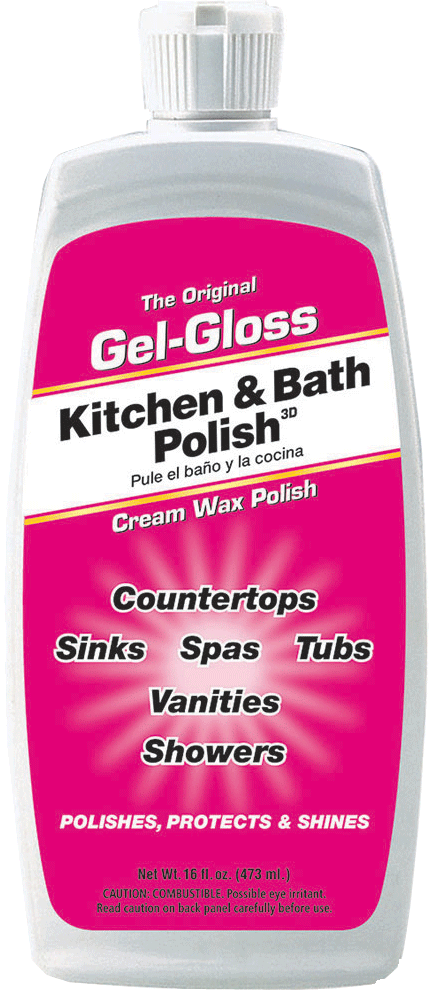
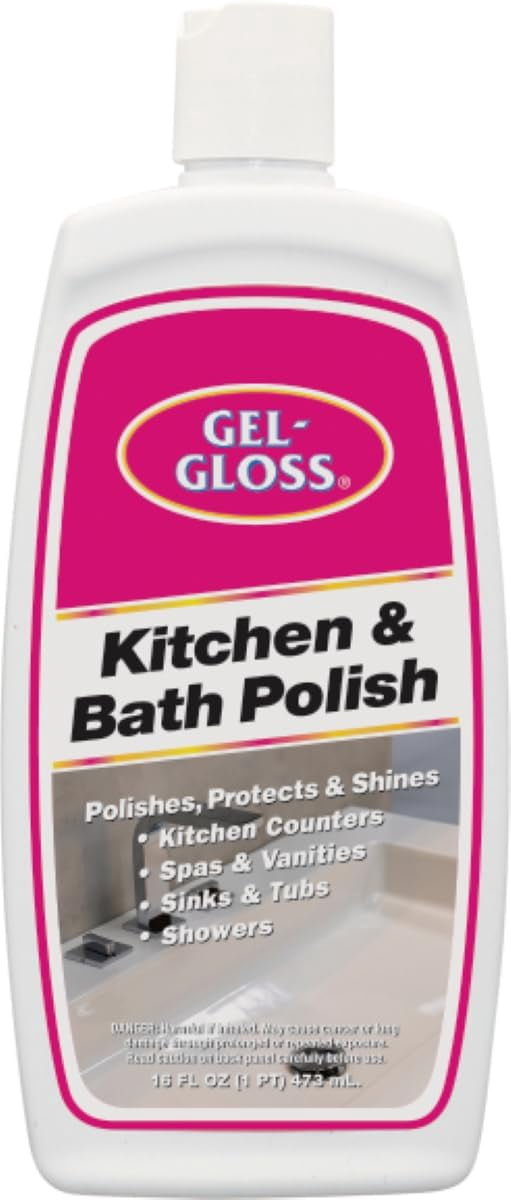
Gel Gloss Kitchen and Bath Polish is a cleaner, polish, and surface protector made for many common household surfaces, including fiberglass, acrylic, porcelain, ceramic, cultured marble, and stainless steel. It can restore shine and help reduce the look of light surface marks and water spots. However, the original formula is not recommended for natural stone or floors where a slick finish could cause a fall.
In American homes, kitchen sinks, bathroom vanities, shower walls, and bathtubs face daily wear. Hard water can leave spots. Soap can leave a dull film. Frequent use can also make some surfaces look less bright than they once did. Gel Gloss Kitchen and Bath Polish is made for people who want to clean and polish certain surfaces without using a separate product for each step.
The product is sold in liquid sizes, including 8-ounce, 16-ounce, 64-ounce, and gallon containers. An aerosol version is also available, but its directions and formula may differ from those of the liquid polish. The original liquid product uses polishing agents and leaves a Carnauba wax coating. That coating can improve the finish, but it does not repair deep damage or make every material safe to polish.
This guide explains what the polish does, where it may be useful, how to apply it, and when to choose another cleaner. The advice is based on published product information and manufacturer guidance, not hands-on testing. Always check the label on your own container, since product versions and directions can change.
Gel Gloss Kitchen and Bath Polish is a household surface-care product made to clean, polish, and protect selected hard surfaces. The original liquid formula is often sold in a white container and is known for leaving a glossy finish. The product is commonly used on tubs, sinks, shower walls, bathroom vanities, and some kitchen surfaces.
The manufacturer describes the liquid polish as a three-in-one product. It cleans the surface, improves its appearance, and leaves a protective coating. Its formulation includes polishing agents, Carnauba wax, and silicone. These ingredients help explain why it behaves differently from a basic soap or spray cleaner.
A regular cleaner mainly removes dirt and residue. A polish may also improve shine and leave a surface coating. That extra finish can be useful on a suitable material, but it also creates limits. A product that works well on a fiberglass tub may be unsuitable for a natural marble counter or a floor that people walk on.
Source: lumberworld.net
Cleaning
The formula helps remove certain surface soils, residue, and water marks from compatible materials. Heavy buildup may need separate cleaning first.
Polishing
Polishing agents can improve the look of dull surfaces and reduce the appearance of some light marks.
Protection
The Carnauba wax coating can add shine and help resist some water spotting and surface buildup. It does not make a surface stain-proof.
Liquid Polish Versus Aerosol Spray
The liquid polish is a practical option for planned cleaning and polishing. The manufacturer describes the aerosol version as a faster way to handle touch-ups and routine detailing. The two forms should not be assumed to have identical ingredients or directions.
For a surface with stubborn residue, the manufacturer recommends starting with the liquid cream formula when appropriate, then using the aerosol for later touch-ups. Check the exact product label before combining products or changing the method.
Liquid formula
Consider it for a careful cleaning and polishing session on a compatible surface.
Aerosol formula
Consider it for quicker application when its label lists the surface you want to treat. Follow the ventilation and application directions.
Which Surfaces Can You Use Gel Gloss On?
The safest way to choose a surface is to check both the polish label and the material maker’s care guide. Gel Gloss lists several manufactured surfaces for its original kitchen and bath polish. These include fiberglass, acrylic, porcelain, ceramic, cultured marble, stainless steel, and plastic laminate. Some decorative chrome fixtures and other household surfaces may also be suitable when the product directions allow them.
Material names matter here. Cultured marble is a manufactured material that often contains mineral fillers and resin. Natural marble is stone formed in nature. Although the names sound similar, they need different care. The original Gel Gloss formula is not recommended for real marble, granite, or other natural stone because its abrasive ingredients may damage the finish.
A surface’s coating also matters. A counter may look like stone but have a protective layer over another material. A tub may be acrylic, fiberglass, or a coated composite. If you cannot identify the surface, check the installation paperwork or contact the manufacturer before applying a polish.
Source: walmart.com
Fiberglass tubs and shower walls
The original product is intended for suitable fiberglass surfaces. Follow the tub maker’s care instructions and keep the polish off the floor where people stand.
Acrylic tubs and sinks
Acrylic is listed among the intended materials. Use the product only if the fixture maker permits this type of polish.
Cultured marble vanity tops
The original polish is listed for cultured marble. Test a hidden area first, especially on older or worn finishes.
Porcelain and ceramic
These materials are listed for use, but grout, coatings, decorative finishes, and nearby surfaces may have separate care needs.
Stainless steel
The polish may improve the finish of suitable stainless steel surfaces. Test in a hidden spot and follow the grain when wiping.
Plastic laminate
The product is listed for laminate countertops. Confirm that your counter’s finish and care guide permit its use.
Can You Use It on Granite or Real Marble?
No. The manufacturer does not recommend the original Gel Gloss Kitchen and Bath Polish for granite, real marble, or other natural stone. The abrasive formula can damage the stone’s surface or finish.
Use a cleaner and polish made for the exact stone instead. Gel Gloss sells a separate Counter Gloss product intended for granite and natural stone. Confirm the current label and suitability for your particular stone before use.
Natural stone
Choose a stone-specific product rather than the original kitchen and bath polish.
Unknown countertop material
Identify the material before cleaning. Do not rely on color or appearance alone.
Can You Use It on Shower or Bathtub Floors?
No. The manufacturer warns against using the original polish on high-traffic floor surfaces, including the floors of tubs and showers. The coating can leave the surface slippery immediately after application.
Keep the polish on approved walls, sinks, and countertops. For a shower floor or tub bottom, use a cleaner designed for that surface that will not leave a slick polishing film. Rinse as directed and make sure the floor is safe to walk on before use.
Avoid walking areas
Do not polish shower floors, tub bottoms, or other surfaces where people need firm footing.
Protect nearby surfaces
Keep drips and residue away from the floor while working on shower walls or a vanity.
How to Apply Gel Gloss Kitchen and Bath Polish
A good result depends on surface preparation, a light application, and complete buffing. Before starting, read the instructions on your container and confirm that the material is approved. Work in a well-ventilated space and keep children and pets away from the work area.
Gather two clean microfiber cloths, the polish, and any separate cleaner needed to remove dirt or soap scum first. Avoid rough pads or abrasive tools unless the fixture maker specifically allows them. A soft cloth helps reduce the risk of adding new scratches while you work.
Source: lumberworld.net
What you need
The original polish, two clean microfiber cloths, a suitable surface cleaner if needed, and enough time to let the finish be buffed properly.
Before you begin
Check the surface type, read the label, clear away nearby items, and make sure the work area is dry enough for the directions you will follow.
Step 1: Clean the Surface First
Remove loose dirt, dust, soap scum, and other buildup before polishing. A layer of grit under a cloth can scratch the surface as you rub. Use a cleaner suitable for the material, then rinse or wipe away any residue according to that cleaner’s directions.
Do not mix cleaning products. In particular, never combine bleach with ammonia or acidic cleaners. If you used another cleaning product, remove its residue as directed before moving on.
Check for damage
Look for cracks, peeling coatings, deep scratches, or areas that feel rough. A polish will not repair structural damage.
Step 2: Test a Small Hidden Area
Apply a small amount to an inconspicuous spot if the label permits testing. Follow the product directions, including the drying and buffing steps. Inspect the area for a change in color, gloss, texture, or coating appearance before treating the full surface.
A hidden-area test is useful, but it does not override a manufacturer’s warning. Do not test the original polish on natural stone or another material that the manufacturer excludes.
Wait and inspect
Look at the test spot under good light. Stop if the finish becomes cloudy, dull, tacky, or visibly damaged.
Step 3: Apply a Small Amount
Use a clean cloth to apply the product in line with the package directions. Work in a small section rather than coating a whole countertop or tub at once. A thin, even layer is easier to buff than a thick coat.
Avoid getting polish on the floor, rubber seals, areas that contact food directly, or any part the label does not approve. Do not let the product enter a sink drain in large amounts. Wipe up accidental drips promptly.
Use less at first
Start with a small amount. Add more only if the directions and surface condition call for it.
Step 4: Let the Product Dry as Directed
Follow the label for any required drying or waiting time. Do not invent a set number of minutes, since directions may differ by formula and can change with a product revision.
If the product begins to haze, that may be part of the polishing process. Keep the surface out of use while you finish the job, and prevent anyone from stepping on or leaning against the treated area.
Follow the label
Use the stated drying method and timing instead of guessing or speeding up the process with extra heat.
Step 5: Buff With a Second Cloth
Use a second clean microfiber cloth to remove the haze and buff the surface. Work with gentle, even strokes. On stainless steel, follow the direction of the grain where it is visible.
Check the surface from more than one angle. A good finish should look even and should not have obvious smears, thick residue, or a greasy film. If you see a haze, try a clean cloth before adding more product.
Look for an even finish
The surface should have a consistent appearance without thick patches or visible residue.
Step 6: Check the Result Before Use
Inspect the treated area and make sure no polish has spread onto a walking surface. Keep the area out of service until it is ready for use under the label directions. For sinks or counters, follow any relevant instructions for rinsing or food-contact areas.
If the finish looks right, there is no need to keep adding coats. The manufacturer notes that repeated applications can improve protection in some cases, but the right schedule depends on the surface and its condition.
Do not overapply
Stop once the surface looks even and clean. A thicker layer can be harder to remove and may leave a cloudy finish.
What Results Can You Expect?
Gel Gloss can improve the appearance of certain dull surfaces by removing some surface residue and light marks, then leaving a polished coating. The result depends on the material, its current finish, the type of buildup, and how well the product is applied and buffed. A well-kept fiberglass tub may respond differently from an older vanity with worn areas.
The manufacturer’s claims include restoring luster, removing water spots, and reducing the appearance of light surface scratches and oxidation. These claims do not mean every mark will disappear. Deep scratches, chips, cracks, permanent discoloration, and damage to a factory finish may need repair or replacement rather than polish.
The protective coating can help resist some water spotting and everyday residue, but it is not a permanent shield. Frequent use, repeated cleaning, hard water, and the type of surface all affect how long the finish lasts. There is no single application schedule that fits every home.
Source: amazon.com
A more even shine
A compatible surface may look brighter when residue and dullness are reduced.
Less visible light marking
Some minor surface marks may become less noticeable, but deep damage is unlikely to be fixed by polish.
Help with water spotting
The coating may make some water marks easier to manage. It will not prevent every mineral deposit.
No guaranteed lasting period
How long the finish remains visible depends on use, cleaning habits, water quality, and surface condition.
Why Some Water Spots Do Not Come Off
Water spots can form when minerals remain after water evaporates. A light deposit may respond to a suitable cleaner, while a stubborn mineral deposit can need a different method. On natural stone, acids can damage the finish, so use a cleaner made for that stone.
If a spot remains after the surface is cleaned, do not keep rubbing harder or adding more polish. Identify the material and the stain first. Persistent marks may be etching, coating damage, or mineral buildup that needs a different treatment.
Light residue
Clean with a compatible product before polishing.
Deep or permanent marks
Seek guidance from the surface maker or a qualified repair professional if routine cleaning does not help.
How to Fix Common Gel Gloss Problems
A cloudy or streaky result does not always mean the surface is ruined. Too much product, an unclean cloth, or incomplete buffing can leave a visible film. Start with the simplest correction and avoid adding another layer before you know why the first one looks wrong.
The manufacturer advises using less product rather than more. Its product FAQ also describes soap and water or mineral spirits for removing leftover product. These methods are not interchangeable for every material, and mineral spirits may damage some coatings or finishes. Follow the product label and the surface maker’s guidance before using a solvent.
Source: gel-gloss.com
Cloudy or hazy finish
Try buffing with a clean, dry microfiber cloth. If the haze remains, stop and check the manufacturer’s removal instructions before using another cleaner.
Streaks or smears
Check for excess polish or a dirty cloth. Use a fresh cloth and gentle strokes rather than adding more product.
No change in water spots
The marks may be mineral deposits or surface damage rather than ordinary dirt. Identify the stain and choose a suitable treatment.
Surface looks duller
Stop polishing. The material may be unsuitable, the coating may be damaged, or the product may not have been removed correctly.
Sticky or greasy feel
Excess residue may remain. Check the label for a safe removal method and do not apply another coat.
When Should You Stop and Ask for Help?
Stop using the product if the finish changes in a way that a clean cloth cannot correct. The same applies if the surface becomes rough, develops unusual patches, or shows new damage. More rubbing can make the problem worse, especially on coated or delicate materials.
Contact the fixture maker or a qualified surface-care professional when the material is uncertain or the damage is significant. Keep the product container available so you can provide its exact name and formula.
Unknown material
Identify the surface before trying a different solvent, abrasive, or polish.
Visible damage
Do not keep testing products on a cracked, peeling, etched, or badly scratched surface.
Safety, Storage, and Cleaning Precautions
Treat Gel Gloss as a household chemical, not as a harmless skin cream. Read the current label and any safety information supplied with your container. Use it as directed, avoid eye contact, and wash your hands after handling it. Keep the product out of reach of children and pets.
Good ventilation is sensible when using household cleaning products. Avoid breathing aerosol mist if you use the spray version, and follow its specific ventilation instructions. Do not eat, drink, or prepare food while applying the polish. Keep it away from food, cookware, and any surface that needs a special food-contact cleaning step.
Never mix the polish with bleach, ammonia, drain cleaners, or other cleaning products. Mixing household chemicals can cause harmful reactions or fumes. If a product gets in your eyes or causes a reaction, follow the container’s first-aid instructions and seek medical advice when needed. In the United States, Poison Control can be reached at 1-800-222-1222 for exposure guidance.
Source: gel-gloss.com
Read the current label
Directions and warnings on your container take priority over general online advice.
Protect your eyes and skin
Avoid splashes and use protective equipment if the label calls for it.
Keep it away from children
Store the container closed in its original packaging, away from food and out of reach.
Prevent slips
Keep polish off floors and other walking surfaces. Clean accidental drips promptly using a suitable method.
Do not mix products
Use one product at a time and follow its directions for removing residue before switching cleaners.
Can Gel Gloss Be Used on Food Preparation Counters?
A kitchen countertop may be listed as a suitable surface, but that does not automatically mean the dried polish is approved for direct food contact. Keep the product away from food and utensils during application. Follow the container’s directions for wiping, rinsing, and preparing the counter for use.
If the label does not clearly address a surface that contacts food, contact the manufacturer before applying the product there. A basic food-safe surface cleaner may be a better choice for daily cleaning.
Keep food away
Move food, cutting boards, and kitchen tools before you begin.
Check the intended use
Do not assume that a product suitable for a countertop is automatically approved for direct food contact.
Choosing the Right Size and Comparing Alternatives
Gel Gloss Kitchen and Bath Polish is available in several container sizes. A smaller bottle can make sense if you need to polish one vanity or a tub once in a while. A larger bottle may suit a household that has several compatible surfaces to maintain. The amount you need depends on the surface area, its condition, and how thinly the polish can be applied.
Do not choose a size based on the assumption that every surface in the home can use the same formula. A larger container is not a bargain if it is unsuitable for your countertops or if you rarely polish the surfaces listed on the label. Check the current price, container size, product code, and return terms before buying.
The original liquid polish is not a replacement for every household cleaner. Daily soap and water or a material-specific cleaner may be enough for routine care. A polish is more useful when the surface is compatible and you want to improve its appearance or leave a protective finish.
Source: walmart.com
Small container
A practical starting point for occasional use on a limited number of suitable surfaces.
Larger container
May suit repeated use across several compatible surfaces, provided you can store it safely and use it within its stated shelf-life guidance.
Aerosol version
May be convenient for touch-ups. Review its label, application method, and safety instructions separately.
Stone-specific polish
Use a product made for granite, real marble, or other natural stone instead of the original abrasive formula.
Routine surface cleaner
Often the better option for everyday dirt when you do not need a glossy protective finish.
Is Gel Gloss Worth Using?
It may be useful if you have a compatible fiberglass tub, cultured marble vanity, acrylic fixture, or other approved surface that has lost some of its shine. The main appeal is combining cleaning and polishing in one product. You may not need it for a surface that already looks good and only needs routine washing.
The best choice depends on the material and the result you want. If your goal is to remove deep scratches, repair a cracked fixture, or restore etched natural stone, this polish is not the right solution. Match the treatment to the problem instead of expecting one product to fix every surface.
Consider it when
The surface is approved for use, the finish looks dull, and a polishing coat is suitable for the intended area.
Choose another method when
The surface is natural stone, the damage is deep, or the area needs a non-slip finish.
A Simple Care Plan for Polished Kitchen and Bath Surfaces
Regular care can help a polished surface stay clean without repeated heavy treatment. Wipe up water and spills as they happen, use a cleaner that suits the material, and dry the area when the care instructions recommend it. These small steps can reduce the amount of residue that builds up between deeper cleaning sessions.
Use Gel Gloss only when the surface and the job call for it. You do not need to apply polish every time you clean the sink or wipe the counter. The manufacturer does not set one universal use interval for all surfaces, so let the condition of the finish and the care instructions guide your schedule.
Keep a simple record of the product used on each surface if your home has several countertop and fixture materials. This is especially helpful when a kitchen has natural stone beside stainless steel or a bathroom has ceramic tile next to an acrylic tub. Knowing the material helps prevent the wrong cleaner from reaching the wrong surface.
Source: gel-gloss.com
For daily care
Use a compatible routine cleaner and remove spills before they dry.
For periodic polishing
Inspect the finish first and apply polish only if the surface is approved and needs it.
For stubborn buildup
Identify the residue and use a suitable cleaner before polishing. Do not scrub harder without checking the material.
For damaged finishes
Seek material-specific repair advice instead of applying more polish.
Frequently Asked Questions
Q
What is Gel Gloss Kitchen and Bath Polish used for?
It is a cleaner, polish, and protector for certain household surfaces. The original formula is intended for materials such as fiberglass, acrylic, cultured marble, porcelain, ceramic, plastic laminate, and stainless steel, subject to the product label. It can improve shine and help reduce the appearance of light surface marks and water spots.
Q
Can I use Gel Gloss on a natural marble countertop?
No. The manufacturer does not recommend the original Gel Gloss Kitchen and Bath Polish on real marble, granite, or other natural stone because its abrasive ingredients may damage the surface. Choose a product designed for the exact type of stone instead.
Q
Does Gel Gloss remove scratches?
It may reduce the appearance of light surface scratches on compatible materials. It cannot be relied on to repair deep scratches, cracks, chips, or major finish damage. Stop if the surface becomes dull or shows new damage, and seek material-specific repair advice.
Q
Why does Gel Gloss leave a cloudy or streaky finish?
A cloudy finish may result from applying too much product, using a dirty cloth, or failing to buff away the haze. Try a clean microfiber cloth first. If the film remains, follow the current label and surface maker’s removal instructions before trying a solvent or another cleaner.
Q
Can I use Gel Gloss on a shower floor or bathtub bottom?
No. The manufacturer warns that the coating can make these areas slippery. Use a suitable cleaner intended for the walking surface, and keep the original polish away from shower floors, tub bottoms, and other places where people need firm footing.
Q
How often should I apply Gel Gloss?
There is no single schedule for every home and surface. The need depends on the material, how often it is used, the condition of its finish, and the care directions. Apply it only when appropriate rather than adding repeated coats on a fixed schedule.
Q
Can Gel Gloss be used on stainless steel appliances?
The original product lists stainless steel among its intended materials. Check the appliance maker’s instructions first, since some appliances have special coatings or finishes. Test a hidden area when permitted and wipe in the direction of the grain if it is visible.
Q
What should I do if I get Gel Gloss in my eyes?
Follow the first-aid instructions on your container and rinse the eyes promptly as directed. Remove contact lenses if they are easy to remove while rinsing. Seek medical advice if irritation continues. In the United States, Poison Control is available at 1-800-222-1222 for exposure guidance.
✦ Wrapping Up
Conclusion
Gel Gloss Kitchen and Bath Polish can be useful for cleaning and polishing many common household surfaces. Its main benefit is the combination of surface cleaning, improved shine, and a Carnauba wax coating. It is most useful when the material is compatible and the surface needs more than a basic wipe-down.
The key is knowing where not to use it. Keep the original formula off natural stone and walking surfaces, and do not expect it to fix deep scratches or damaged finishes. A small amount, clean microfiber cloths, and careful buffing can help prevent residue and uneven results.
Before using the product, check the label on your exact container and confirm the surface material. If the material is unknown or the finish is delicate, ask the fixture maker for guidance. The right cleaner for the surface is more useful than a one-product approach to every cleaning job.
💡 Key Takeaway
Identify the surface, confirm that the original Gel Gloss formula is approved, clean away loose dirt, test a hidden spot when appropriate, apply a thin layer as directed, and buff with a clean microfiber cloth. Never use it on natural stone or shower and bathtub floors.