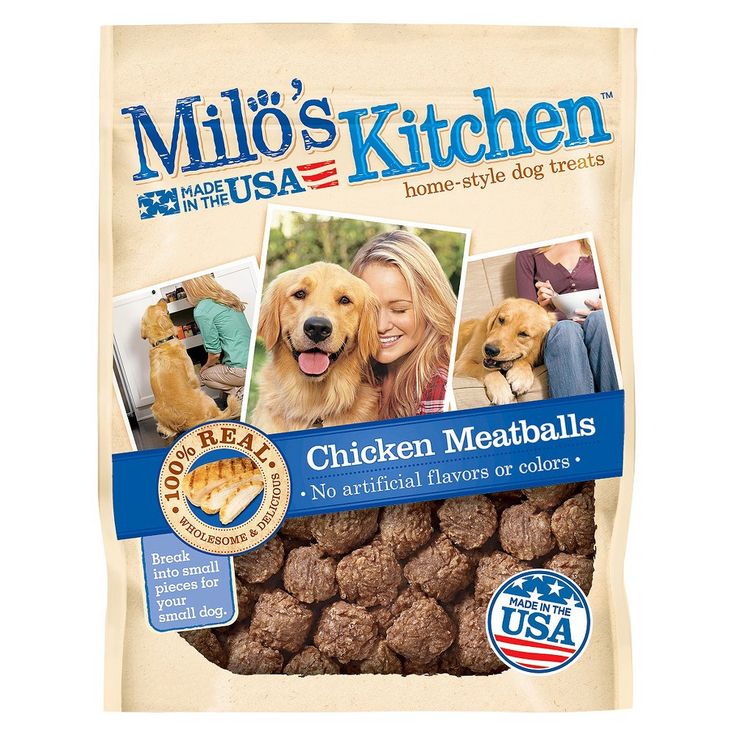
Milo’s Kitchen meatballs are chicken-based dog treats made for rewarding dogs, not serving as a complete meal. The recipe includes chicken, beef, soy ingredients, sugar, salt, and preservatives. Check the current package for its full ingredient list, feeding directions, and any updated product details before giving these treats to your dog.
In the United States, dog owners can find Milo’s Kitchen Chicken Meatballs through pet supply stores, grocery retailers, and online shops. These small, meatball-shaped snacks are designed for dogs and offer a different option from crunchy biscuits. Their soft style may suit dogs that prefer a chewy treat, although dogs with dental or swallowing problems may need a different option recommended by a veterinarian.
The main things to check are the ingredients, calorie content, serving size, and your dog’s health needs. Retail listings describe chicken as the first ingredient and report about 27 calories per treat for a listed version. Recipes and package details can vary, so use the label on the bag you buy rather than relying on an older online listing.
This guide explains what Milo’s Kitchen meatballs contain, how to serve them, and what to consider before making them a regular snack. It also covers food sensitivities, weight control, storage, and ways to compare these treats with other options. The goal is to help you make a clear choice based on your dog’s needs.
Milo’s Kitchen meatballs are meatball-shaped snacks made for dogs. The Chicken Meatballs variety is marketed as a homestyle treat with chicken as its first listed ingredient. Retail descriptions also identify beef and soy-based ingredients in the recipe.
These treats are meant to reward a dog between meals. They may be used during training, after a walk, or as a small snack at home. They should not replace a dog’s regular food because a treat does not automatically provide the full range of nutrients a dog needs each day.
Product listings have shown bags in several sizes, including 10-ounce and 18-ounce options. Other sizes may appear in some stores or online listings. Availability, package design, and formulas can change, so check the exact item rather than assuming every bag is identical.
Source: www.pinterest.com
Product type
A meatball-shaped dog treat intended for occasional rewards or snacks.
Main recipe ingredient
Chicken appears first in the listed ingredient panel for the standard Chicken Meatballs recipe.
Other ingredients
The listed recipe includes beef, soy grits, textured soy protein, vegetable glycerin, sugar, salt, flavorings, and preservatives.
Main use
Rewarding a dog while keeping its regular meals as the main source of nutrition.
Are These Meatballs Made for People?
No. Milo’s Kitchen Chicken Meatballs are formulated and sold as dog treats. Their shape may look like a small human meatball, but that does not make them suitable for people to eat. Keep pet treats separate from food prepared for the family and wash your hands after handling them.
Do not use them as human food
Follow the package directions for pet use and keep the treats away from children who may mistake them for a snack.
Milo’s Kitchen Meatballs Ingredients Explained
The ingredient list gives you a better picture of a treat than its name or package image alone. One published listing for Milo’s Kitchen Chicken Meatballs names chicken, beef, soy grits, vegetable glycerin, sugar, textured soy protein, salt, natural flavors, citric acid, monoglycerides, sorbic acid, and BHA.
Ingredient panels may differ between product versions or over time. Some retail listings also show details such as garlic powder or onion extract. Read the exact package you have, especially if your dog has food allergies or follows a veterinary diet.
Chicken appearing first means it is the first ingredient in that listed recipe. It does not mean the treat contains only chicken. Beef and soy are also relevant for dogs that react to particular proteins or ingredients.
Source: listex.online
Chicken
The first listed ingredient in the standard recipe. Dogs with a chicken allergy or suspected food reaction should not be given the treat without appropriate veterinary advice.
Beef
Adds another animal protein source. Dogs that must avoid beef need a different treat with a suitable ingredient list.
Soy grits and textured soy protein
These soy-based ingredients contribute plant protein and other components to the recipe. They matter when checking a dog’s known food sensitivities.
Vegetable glycerin
A food ingredient commonly used to help retain moisture and support a soft or chewy texture.
Sugar and salt
These ingredients contribute to the recipe but may be a concern for owners who prefer treats with less added sugar or sodium.
Preservatives and flavorings
The listed recipe includes ingredients used for preservation or flavor. Check the label if you want to avoid a specific additive.
Do Milo’s Kitchen Meatballs Contain BHA?
BHA, short for butylated hydroxyanisole, appears in published ingredient listings for this product. It is used as an antioxidant preservative in some foods and pet foods. Its presence alone does not tell you the amount in a serving or settle every question about a dog’s individual risk.
If you prefer to avoid BHA, choose a treat whose current ingredient panel does not list it. Do not assume a product is free of an ingredient simply because a retailer’s short description leaves it out.
Check the complete label
Look at the full ingredient panel, not just the claims on the front of the package.
Ask about special needs
If your dog has a health condition that affects diet, ask your veterinarian which ingredients and treat types are appropriate.
Are Garlic and Onion Ingredients a Concern?
Garlic and onion belong to the allium family, which can damage dogs’ red blood cells. Risk depends on the ingredient, amount eaten, and the dog’s size and health. Some product listings show garlic powder or onion extract, while other listings present a different ingredient order or wording.
Do not use a general online comment to decide that a particular amount is safe for your dog. If the label includes garlic or onion and you are unsure whether the treat suits your pet, ask your veterinarian. If your dog eats a large amount or develops weakness, vomiting, pale gums, or unusual tiredness after eating a questionable product, contact a veterinarian or animal poison service promptly.
For routine feeding
Choose a different treat if your veterinarian advises avoiding allium ingredients.
After accidental overconsumption
Keep the package, note the amount eaten and time, and seek prompt veterinary advice rather than waiting for symptoms.
Calories and Nutritional Value
Treat calories can add up quickly, even when each piece looks small. One retailer’s listing gives the Chicken Meatballs recipe an energy value of 3,210 kilocalories per kilogram and 27 calories per piece. Treat this as a reference for that listed version, not a guaranteed value for every bag.
Dogs need different amounts of food based on age, body size, activity, and health. A small dog may use a large share of its daily calorie allowance on just one or two treats. A larger dog may have more room for treats, but the daily total still matters.
Veterinary nutrition guidance commonly advises keeping treats and other extras to no more than about 10 percent of a dog’s daily calories. The rest should come from complete and balanced food suited to the dog. Your veterinarian may recommend a different plan for weight loss or a medical condition.
Source: instacart.com
Energy
A published listing reports 27 calories per treat for one version. Verify the current package or contact the manufacturer if calorie information is not shown.
Protein
Retail listings report a guaranteed crude protein minimum of 20 percent for a listed version. Guaranteed analysis values are not the same as the calories in one treat.
Fat
One published guaranteed analysis reports a crude fat minimum of 12 percent. Dogs on a low-fat diet need advice based on their own food plan.
Fiber and moisture
One listing reports crude fiber at a maximum of 3 percent and moisture at a maximum of 25 percent. These values describe the listed product, not every possible formula.
How Many Calories Can Treats Add?
Consider a hypothetical dog with a daily calorie target of 500 calories. Ten percent of that target is 50 calories. If each meatball contains 27 calories, two treats provide 54 calories, which is already above that example allowance.
This simple calculation shows why a treat count should not be based on size alone. Your dog’s actual calorie target may be higher or lower. Ask your veterinarian for a suitable daily target if weight control is a concern.
Example calculation
500 daily calories multiplied by 0.10 equals 50 calories for all treats and extras combined.
Two meatballs
At 27 calories each, two provide 54 calories, based on the cited listing.
Practical step
Count every treat, table scrap, chew, and food topper when tracking daily intake.
How Many Milo’s Kitchen Meatballs Can You Give Your Dog?
The right number depends on your dog’s weight, total food intake, activity, and health. A retailer’s feeding directions for one product version list maximum daily amounts by weight. These directions are a starting point for that package, not a reason to ignore calorie limits or veterinary advice.
The published directions for a listed version suggest up to half a piece for dogs under 5 pounds, half to one for dogs weighing 5 to 10 pounds, and one to two and a half for dogs weighing 11 to 25 pounds. Larger weight groups have higher listed limits. Check the current bag because instructions can change.
Maximum amounts are not a target every dog needs to reach. If your dog already gets treats during walks and training, fewer meatballs may fit its day. Start with a small amount when introducing any new treat and watch for changes in stool, appetite, or skin.
Source: medium.com
Under 5 pounds
A listed guide gives a maximum of half a piece per day. Use extra care with very small dogs and ask your veterinarian if the treat size or calories are unsuitable.
5 to 10 pounds
A listed guide gives a range of half to one piece per day.
11 to 25 pounds
A listed guide gives a range of one to two and a half pieces per day.
26 to 50 pounds
A listed guide gives a range of two and a half to four pieces per day.
51 to 75 pounds
A listed guide gives a range of four to five and a half pieces per day.
Over 75 pounds
The same guide says to add one treat for each 15 pounds of body weight above 75 pounds. Check your own package and keep total treat calories in mind.
Can You Break the Meatballs Into Smaller Pieces?
Breaking a treat into smaller pieces can help you reward a dog more often without giving a full piece each time. It can also make portions easier to manage for small dogs. However, a smaller piece still contributes calories, so count the total amount served.
Use clean hands and a clean surface. If the treat is firm or sticky, do not force it into pieces that could create a choking risk. Dogs that gulp food or have trouble chewing may need a different treat texture.
For training
Use small pieces and reward the behavior you want to reinforce.
For small dogs
Check that each piece is easy to manage and does not become a choking hazard.
For dogs that gulp
Supervise every treat and ask your veterinarian about safer options if swallowing is a concern.
Are Milo’s Kitchen Meatballs Good for Dogs?
These treats may fit the routine of a healthy dog that enjoys them and tolerates the ingredients. Chicken is the first listed ingredient in the standard recipe, and the soft meatball format offers an alternative to hard biscuits. Neither point proves that the treats are the best choice for every dog.
The full ingredient list matters just as much as the main ingredient. These meatballs contain beef and soy ingredients, along with sugar, salt, and preservatives in the published recipe. Owners who want a very simple recipe or must avoid certain proteins may prefer another product.
A treat can be enjoyable without being essential to a dog’s diet. If your dog has a balanced meal plan and a healthy weight, an occasional suitable treat may fit. If your dog has a health issue, ask a veterinarian before adding a product with ingredients or nutrients that may affect its care.
Source: www.pinterest.com
Possible benefit
The soft, meatball-shaped format can provide variety for dogs that prefer chewy treats.
Main limitation
The recipe contains several ingredients, so it may not fit dogs that need a limited-ingredient diet.
Weight management
Treat calories must fit within the dog’s total daily intake.
Individual tolerance
A dog may react differently from another dog, even when both eat the same product.
Are They Suitable for Puppies?
Age suitability depends on the current product label and the puppy’s size and chewing ability. A young puppy may not manage a chewy treat safely, especially if it swallows pieces whole. Follow the package directions and ask your veterinarian if you are unsure.
Puppies need a complete diet designed for growth. Treats should remain a small part of daily intake and should not displace the food that supplies the nutrients needed for healthy development.
Check the label
Confirm that the current package permits use for your puppy’s age or life stage.
Supervise closely
Watch how your puppy chews and swallows each piece.
What About Senior Dogs?
Some senior dogs enjoy soft treats, but age alone does not tell you which treat is best. A dog with dental pain, swallowing trouble, kidney disease, digestive problems, or a special diet may need another option. A soft texture does not make a treat suitable for every senior dog.
If your older dog has trouble chewing or starts coughing while eating, stop offering the treat and seek veterinary advice. Sudden changes in chewing or swallowing deserve attention rather than a simple switch to a softer snack.
Check chewing ability
Choose a size and texture the dog can handle without struggling.
Review health needs
Confirm that the ingredients and nutrient profile fit any prescribed diet.
Potential Side Effects and Safety Concerns
A new treat can upset a dog’s stomach or trigger a reaction to an ingredient. Possible signs include loose stool, vomiting, gas, itching, or a change in appetite. These signs can have many causes, so do not assume the meatballs are responsible without considering the full situation.
Dogs with known food allergies should have the ingredient list checked before a new treat is offered. The standard recipe includes chicken, beef, and soy, which means it is not a single-protein treat. A dog on an elimination diet should not receive unapproved snacks because they can interfere with the diet trial.
Dogs with pancreatitis, obesity, diabetes, kidney disease, or other conditions may need a specific treat plan. The product’s fat, calorie, salt, and ingredient profile should be considered in context. Ask your veterinarian for advice that matches the dog’s diagnosis and daily food plan.
Source: in.pinterest.com
Digestive upset
Stop the new treat if your dog develops vomiting or diarrhea and contact your veterinarian if signs persist, worsen, or are severe.
Food allergy
Avoid ingredients your veterinarian has identified as triggers and check the entire ingredient panel.
Choking risk
Supervise your dog, offer a suitable size, and do not leave a dog alone with a treat it may swallow whole.
Special diet
Get veterinary approval before adding treats when a medical condition requires strict food control.
Excessive intake
If your dog eats many treats at once, contact a veterinarian for advice based on the amount, ingredients, and dog size.
When Should You Call a Veterinarian?
Seek urgent veterinary help if your dog has trouble breathing, collapses, has repeated vomiting, develops marked weakness, or shows other severe symptoms after eating a treat. Do not wait for a reaction to become worse.
If you suspect that your dog ate a large amount of a product containing an ingredient of concern, call a veterinarian or animal poison service. Keep the package nearby so you can share the exact product name, ingredient list, amount eaten, and time of ingestion.
Record what happened
Note the product, estimated quantity, time eaten, and any signs you have seen.
Keep the packaging
The label can help a veterinary team identify ingredients and product details.
How to Store Milo’s Kitchen Meatballs
Follow the storage directions printed on the package. Store the bag in the way the manufacturer recommends, keep it away from excess heat and moisture, and close it securely after each use. Do not assume that all versions have the same storage instructions.
Check the best-by date and inspect the treats before serving them. Do not feed treats from a damaged, wet, or unsealed package if their condition is uncertain. Discard treats that show mold, an unusual odor, or other signs of spoilage.
Keep dog treats in their original packaging when practical. The label contains product details and may be needed if you contact the manufacturer about a quality issue. Store the bag where children and pets cannot get into it and eat an excessive amount.
Source: www.pinterest.com
Seal after use
Close the package as directed to reduce exposure to air and moisture.
Check freshness
Review the best-by date and inspect the product before giving it to your dog.
Prevent overeating
Keep the bag out of reach and avoid leaving it open near a curious pet.
Keep the label
Retain the package information in case you need to check ingredients or report a product concern.
What If the Treats Look or Smell Different?
Do not serve a treat if it looks moldy, feels unexpectedly wet, or has an unusual odor. A change in appearance does not always prove that food is unsafe, but it is a good reason not to take a chance with your pet.
Take a photo of the package and the affected product if you need to contact the retailer or manufacturer. Keep the product away from pets while you seek advice.
Do not taste the treat
It is a pet product, and tasting it will not reliably show whether it is safe.
Contact the seller
Share the lot code, best-by date, and package details if you report a quality concern.
Where to Buy Milo’s Kitchen Meatballs in the USA
Milo’s Kitchen Chicken Meatballs have appeared in listings from US grocery retailers, pet supply shops, and online stores. Chewy, Target, CVS, and other retailers have published product pages for this treat. A listing does not guarantee that a nearby store has it in stock today.
Compare the cost per ounce rather than looking only at the total bag price. A larger bag may offer a lower price per ounce, but it is not automatically a better deal if your dog cannot use it before the product’s recommended freshness period or if the recipe does not fit its needs.
Before ordering, confirm the exact flavor, package size, ingredient panel, and delivery details. Retail pages may show different sizes, old photos, or information that has not been updated to match a new package. Use the current seller listing and the label on arrival to confirm what you received.
Source: listex.online
Grocery stores
Check local store websites or call ahead to confirm stock and package size.
Pet supply retailers
Compare available sizes and current feeding directions.
Online shops
Review the seller, delivery date, return policy, and exact product description before ordering.
Compare unit prices
Divide the price by the net weight to compare packages of different sizes.
How Can You Check for a Recall?
Check official recall notices and the manufacturer’s current product information if you have a safety concern. Match the brand, product name, package size, lot code, and date details instead of relying on a social media post or a similar product name.
A recall involving another pet food with a similar name does not establish that Milo’s Kitchen Chicken Meatballs are affected. Verify the exact product and follow any instructions in an official notice. If you cannot confirm whether your bag is involved, stop serving it while you contact the manufacturer or retailer.
Match product details
Check the exact name, lot code, size, and date information listed in the notice.
Use official information
Look for notices from the relevant regulator or manufacturer rather than assuming an unrelated recall applies.
Keep purchase details
Retain your receipt and package until any product concern is resolved.
Milo’s Kitchen Meatballs Compared With Other Dog Treats
The best comparison depends on your dog’s needs, not just the meatball shape or package claims. A simple chicken treat, a crunchy biscuit, and a veterinary diet treat can serve different purposes. Check calories, ingredients, texture, and feeding guidance before deciding which one fits your routine.
Milo’s Kitchen Chicken Meatballs contain both chicken and beef, along with soy ingredients and added preservatives in the listed recipe. A limited-ingredient treat may be easier to assess for a dog with specific food sensitivities, but the phrase limited ingredient alone does not guarantee suitability. Review the full label and seek veterinary advice when needed.
Crunchy treats may be useful for dogs that prefer a firm texture, while soft treats can be easier to break into small rewards. Neither texture replaces tooth brushing or professional dental care. Dogs with swallowing problems may need a treat selected with a veterinarian.
Source: instacart.com
Milo’s Kitchen Chicken Meatballs
Consider them when your dog tolerates the listed ingredients and the calories fit its daily food plan.
Single-protein treats
Check that the product contains only the protein your dog can eat and does not include hidden or additional protein sources.
Crunchy biscuits
These may suit dogs that enjoy a crisp texture, but check their size, calories, and ingredient list.
Veterinary treats
These may be useful when a dog has a medical condition or needs a diet that supports a specific care plan.
What Should You Look for in an Alternative?
Start with the reason you want a different treat. If your dog has a food allergy, focus on the specific ingredients your veterinarian says to avoid. If weight is the concern, compare calories per piece and how easily you can serve small portions.
For training, a small treat that is easy to divide may be more practical than a large piece. For a dog with a medical condition, follow veterinary guidance rather than choosing based on a front-of-package claim.
Read the full ingredient list
Do not rely only on words such as natural, homestyle, or chicken recipe.
Compare calories
Look at calories per piece or serving, not only calories per bag.
Check size and texture
Choose a form your dog can chew and swallow without trouble.
Review feeding directions
Use the product’s instructions alongside your dog’s overall diet and veterinary advice.
Frequently Asked Questions
Q
Are Milo’s Kitchen meatballs complete dog food?
No. Milo’s Kitchen Chicken Meatballs are sold as dog treats, not as a complete and balanced daily meal. Feed a complete dog food suited to your pet’s life stage and use treats only as a small part of the overall diet.
Q
How many calories are in one Milo’s Kitchen meatball?
One retailer listing reports 27 calories per piece for a listed Chicken Meatballs version. Recipes and package details can change, so check the current label or contact the manufacturer to confirm the calorie value for your bag.
Q
Do Milo’s Kitchen meatballs contain chicken and beef?
Yes. The published ingredient list for the standard Chicken Meatballs recipe begins with chicken and also lists beef. Soy ingredients and other components appear in the recipe as well. Read your package if your dog must avoid a particular protein.
Q
Can small dogs eat Milo’s Kitchen meatballs?
Some small dogs may be able to eat them when the product is suitable for their needs, but portion size and swallowing safety matter. Follow the current package directions, consider the calories, supervise your dog, and break a piece into a suitable size only when it can be done safely.
Q
Can puppies have Milo’s Kitchen meatballs?
Check the current label for age and life-stage guidance before serving them to a puppy. Puppies need complete food designed for growth, and treats should make up only a small share of their daily intake. Ask your veterinarian if your puppy is very young or has chewing or digestive concerns.
Q
Are Milo’s Kitchen meatballs safe for dogs with food allergies?
They may not suit dogs that need to avoid chicken, beef, or soy ingredients. The exact recipe should be checked against your dog’s known triggers. If your dog is on an elimination diet or has a confirmed food allergy, ask your veterinarian before introducing a new treat.
Q
Do Milo’s Kitchen meatballs need refrigeration?
Follow the storage instructions printed on the package you buy. Do not assume every package or product version has the same requirements. Close the bag as directed, keep it away from excess heat and moisture, and discard treats that appear spoiled.
Q
Are Milo’s Kitchen meatballs made in the USA?
Retail listings for the Chicken Meatballs product describe it as made in the United States, with one listing identifying production in Spanish Fork, Utah. Check your current package for the country-of-origin statement because product sourcing and manufacturing details can change.
Q
Can I give Milo’s Kitchen meatballs every day?
A suitable treat may fit into a dog’s routine, but the amount matters. Count the calories from all treats and extras, keep them within an appropriate share of daily intake, and follow any veterinary diet restrictions. Daily use may not be suitable for dogs with allergies, weight concerns, or medical conditions.
✦ Wrapping Up
Conclusion
Milo’s Kitchen meatballs are chicken-based dog treats that may suit dogs that enjoy a soft, chewy snack. The standard published recipe also contains beef, soy ingredients, sugar, salt, and preservatives, so the full label matters more than the product name alone.
The main things to check are calories, ingredients, feeding directions, and your dog’s ability to chew and swallow the treat. One retailer reports 27 calories per piece, but the value should be confirmed for the package you buy. Treats should remain a small part of a complete daily diet.
For a healthy dog that tolerates the recipe, a small, measured serving may fit into a normal reward routine. Dogs with allergies, medical conditions, weight concerns, or strict diet plans need more careful selection. When in doubt, your veterinarian can help you choose a treat that fits your dog’s needs.
💡 Key Takeaway
Before serving Milo’s Kitchen meatballs, read the current package, check every ingredient against your dog’s dietary needs, confirm the feeding guidance, and count each treat toward the daily calorie budget.