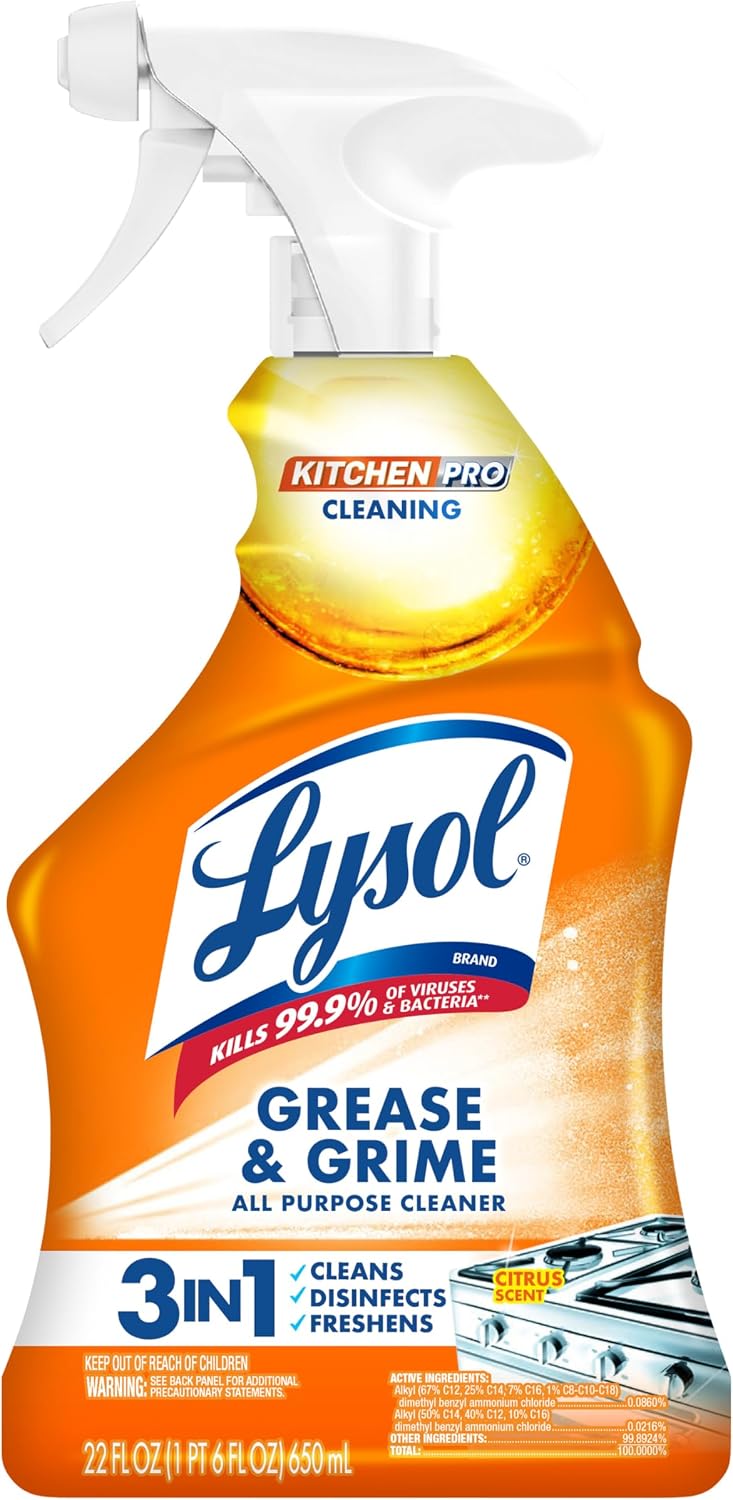
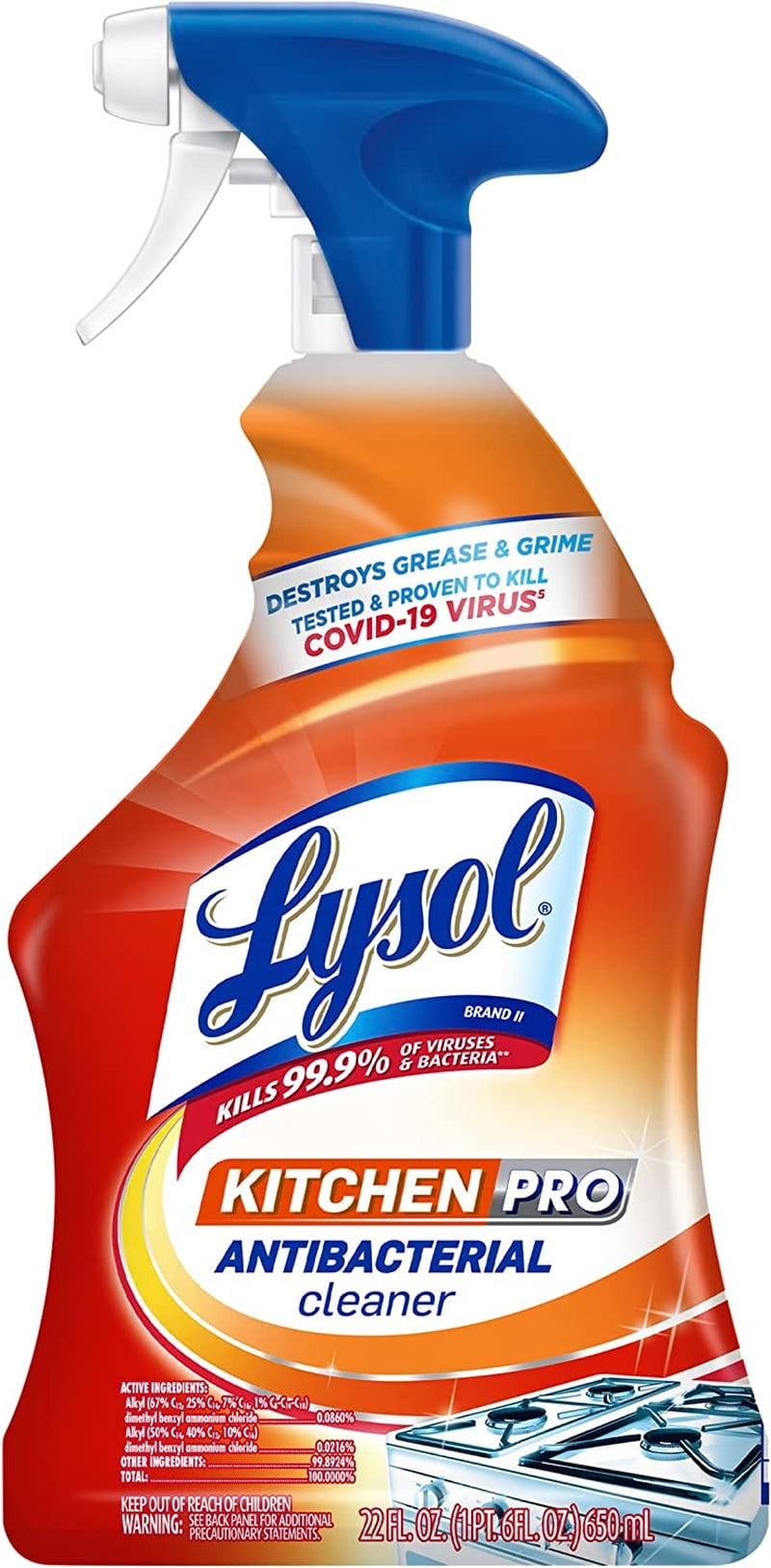
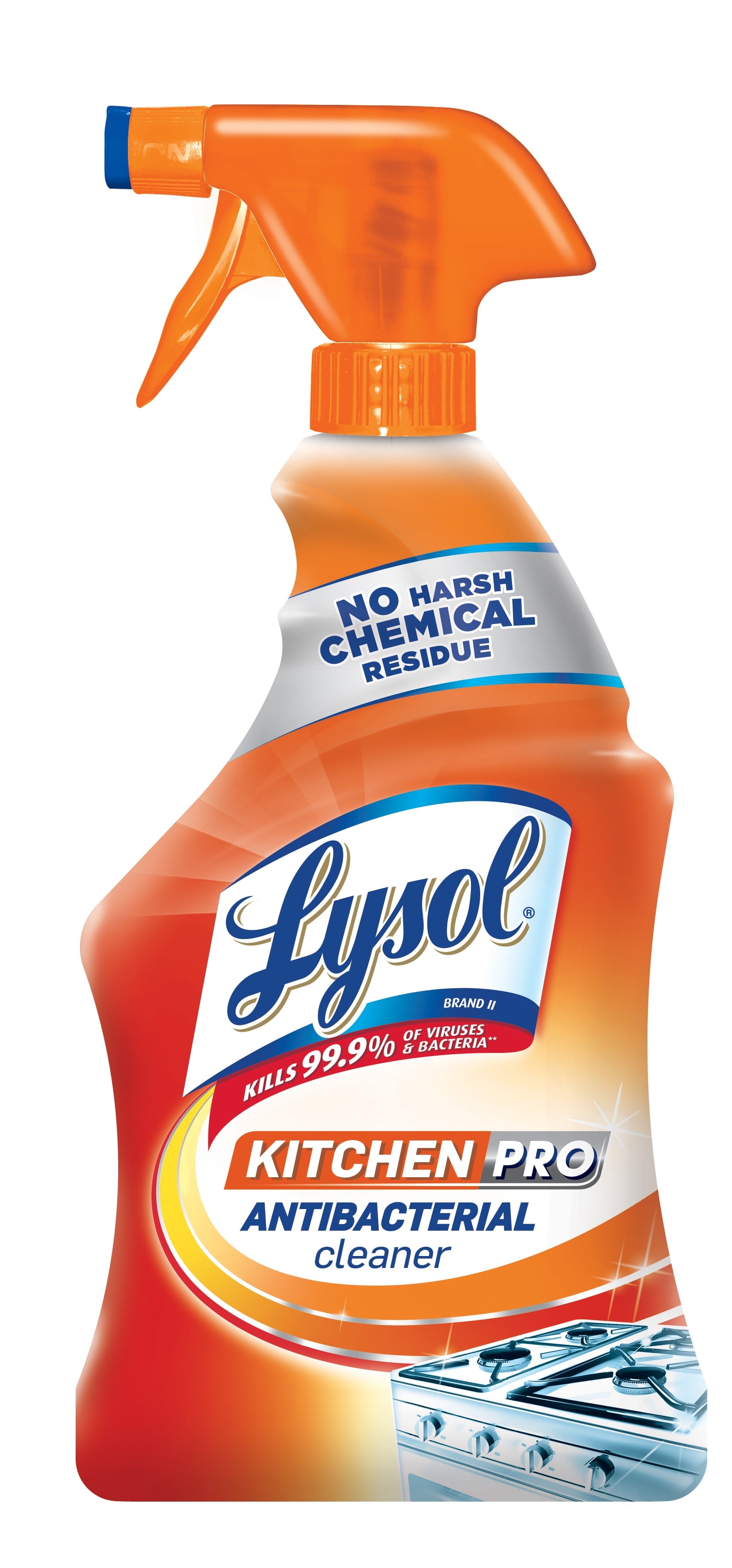
Lysol Pro Kitchen Spray Cleaner and degreaser is a ready-to-use spray for removing kitchen grease, cleaning hard surfaces, and disinfecting eligible surfaces when used according to the US product label. Check the label for approved surfaces, required wet contact time, and food contact rinsing instructions.
In American homes, kitchen mess can build up fast. A few fried eggs, a pan of bacon, or a busy family dinner can leave oily spots on the stove, counters, and appliance doors. Lysol Pro Kitchen Spray Cleaner and Degreaser is made for these common cleaning jobs. Its citrus scent also helps leave the kitchen smelling fresh.
The spray serves more than one purpose, but each task calls for the right method. Wiping away grease is not the same as disinfecting a surface. For disinfection, the surface must stay wet for the full contact time listed on the US label. Food contact surfaces also need the rinse step stated on the label.
This guide covers the product’s uses, cleaning steps, surface limits, and safety tips. It also explains how to handle stubborn grease and when a different cleaner makes more sense. Product directions can vary by formula and market, so use the instructions on your own bottle as the final guide.
Source: walmart.com
What Is Lysol Pro Kitchen Spray Cleaner and Degreaser?
Lysol Pro Kitchen Spray Cleaner and Degreaser is a household surface cleaner sold in a ready-to-use spray bottle. The US Lysol Kitchen Pro Antibacterial Cleaner listing identifies a 22-fluid-ounce trigger bottle and EPA registration number 777-91. Check your bottle to confirm that its name and registration details match the product you intend to use.
The product is designed for kitchen cleaning tasks such as removing greasy soil from counters, sinks, stovetops, cabinets, and appliance exteriors. Its citrus scent is another feature listed for this product line. The exact approved uses depend on the formula and its current label.
The words cleaner, degreaser, and disinfectant describe different jobs. A cleaner removes dirt and soil. A degreaser helps loosen oily buildup. A disinfectant is used to kill specified germs on approved surfaces under stated conditions. One product may serve all three roles, but the directions for each job are not identical.
Source: 05e8ed.myshopify.com
Cleaner
Removes everyday dirt, spills, and surface soil when used according to the cleaning directions.
Degreaser
Helps remove cooking oil, greasy fingerprints, and residue from suitable hard kitchen surfaces.
Disinfectant
Can kill the germs named on its approved US label when the surface, application method, and contact time meet the directions.
What Does the Product Claim to Do?
The US product information describes Lysol Kitchen Pro Antibacterial Cleaner as a product for cleaning, deodorizing, and disinfecting approved kitchen surfaces. Its germ-kill claims apply under the stated label conditions. They should not be treated as proof that the spray kills every germ on every material.
The product is also promoted for greasy soil. That makes it useful for common cooking messes, though old or baked-on residue may need extra time or another cleaning pass. Avoid scraping a delicate finish just to remove a stubborn spot.
Check the exact bottle
The US Kitchen Pro Antibacterial Cleaner and the Canadian Kitchen Pro Power Degreaser may have different directions and contact times.
Read the label claims
Use only the germ-kill claims and surface uses listed for your product.
Which Kitchen Surfaces Can You Clean With It?
The US product information lists counters, sinks, stovetops, cabinets, and appliance exteriors among its uses. These surfaces can collect oil, food splashes, fingerprints, and other daily grime. Even so, the finish and material matter, so check the full label before spraying an unfamiliar surface.
A smooth, sealed counter may handle a product differently from natural stone or unfinished wood. A finish can also react to repeated exposure even when a single use leaves no clear mark. When the label allows use on a painted or uncertain surface, test a small hidden spot first and check for changes.
Do not treat a kitchen cleaner as a universal spray for every object in the room. The US product directions warn against use on eating or cooking utensils, glasses, dishes, and cookware. Some materials, including natural marble, brass, acrylic plastic, and unfinished, oiled, or waxed wood, may be unsuitable for this product.
Source: shop.app
Counters
Check the counter material and finish first. Follow the food contact rinse direction after treating a surface where food is prepared.
Stovetops
Use on an approved, cool surface. Check the appliance manual before cleaning specialty coatings or delicate control areas.
Sinks
Suitable sink surfaces may be cleaned according to the label. Avoid letting the product sit on an unapproved finish.
Cabinets
Check the cabinet finish. Test a hidden area first if the label permits use on that material.
Appliance exteriors
Use only on compatible exterior surfaces. Keep spray away from electrical openings, switches, and exposed connections.
Surfaces and Items That Need Extra Care
Natural marble, brass, acrylic plastic, and unfinished wood need particular care because the US product information does not recommend this cleaner for these materials. Unfinished, oiled, or waxed wood floors are also listed among the surfaces to avoid. A test spot does not override a clear warning on the label.
Never spray the cleaner onto a plate, pan, glass, cutting board, or cooking utensil unless the exact label explicitly allows that use. A product approved for a countertop is not automatically approved for direct use on kitchenware.
Natural stone
Check the stone maker’s care advice. Use a stone-safe cleaner when the material is not approved for this spray.
Wood finishes
Avoid unapproved unfinished, oiled, or waxed surfaces. Use a cleaner made for the specific finish.
Dishes and cookware
Do not use this product on these items when the US label prohibits it.
How to Use Lysol Pro Kitchen Spray Cleaner and Degreaser
The right method depends on whether you want to remove dirt, cut grease, or disinfect a surface. Start by checking the US directions on your bottle. Keep children and pets away from the work area, and make sure the room has suitable airflow.
For routine cleaning, the US product directions say to spray the surface until thoroughly wet and wipe with a clean cloth or sponge. For greasy soil, the label may direct you to allow a short dwell time before wiping. For disinfection, pre-cleaning may be required, and the surface must stay wet for the full contact time shown on the label.
A surface that dries too soon may not meet the stated disinfection conditions. Apply the product again only as the label directs, rather than guessing at the amount or mixing it with another cleaner. After treating a food contact surface, rinse it with potable water as directed.
Source: organicdreaming.com
Step 1: Read the label
Confirm the approved surface, the task you need to perform, any required pre-cleaning, and the contact time.
Step 2: Clear the area
Move food, dishes, utensils, and other items out of the spray zone. Protect nearby items from overspray.
Step 3: Apply the cleaner
Spray the approved surface as directed. Avoid breathing the mist and keep the spray away from your face.
Step 4: Allow the required time
For grease removal, follow the label’s dwell-time instructions. For disinfection, keep the surface wet for the full stated contact time.
Step 5: Wipe and rinse when required
Use a clean cloth or sponge. Rinse food contact surfaces with potable water after treatment as directed by the US label.
Step 6: Store the bottle safely
Close the nozzle as instructed and keep the product out of children’s reach.
Cleaning Is Not the Same as Disinfecting
A quick wipe can remove visible grease and crumbs, but it may not meet the conditions needed for disinfection. The US product information for Lysol Kitchen Pro Antibacterial Cleaner lists a 10-second contact time for sanitizing and a two-minute contact time for disinfecting. These times apply to the product and claims described by that US label, not to every Lysol spray.
Follow the instructions on the exact bottle in your hand. A different product or market version may require a longer wet time. If the surface dries before the stated time has passed, follow the label instructions for reapplication.
Routine cleaning
Use the cleaning directions to remove visible dirt and grease.
Sanitizing
Use the specific label method and contact time for the sanitizing claim.
Disinfecting
Pre-clean when required and maintain the stated wet contact time.
Does Lysol Pro Kitchen Spray Remove Tough Grease?
The spray is intended to help remove greasy soil from approved kitchen surfaces. Fresh oil splashes are usually easier to wipe away than old residue that has been heated, dried, or mixed with dust. The product label and the type of surface determine the right method.
Begin with a small area rather than soaking the whole stove or counter. Apply the spray as directed and allow the recommended time for grease removal. Wipe with a clean cloth or sponge, then check whether any film or residue remains.
A second pass may help with a stubborn spot when the label permits repeat use. Do not use steel wool, a sharp blade, or a harsh scouring pad on a finish that can scratch. If the grease does not lift, use a cleaning product approved for that surface instead of increasing the chemical exposure without guidance.
Source: ubuy.co.it
Fresh cooking oil
Wipe up excess oil with a disposable towel first, then clean the remaining film according to the label.
Greasy stovetop marks
Let the cleaner work for the stated grease-removal time. Use a soft cloth to reduce the chance of scratching.
Old baked-on residue
Check the appliance manual and product label. A cleaner may not remove every burned deposit in one pass.
Sticky cabinet spots
Check the finish and test a hidden area when allowed. Stop if the finish becomes dull, tacky, or discolored.
Why Grease May Not Come Off in One Pass
Several factors can affect the result. The residue may be thick, the surface may be too delicate for scrubbing, or the cleaner may not have been left on for the time stated on the label. A cloth that is already loaded with grease can also spread the soil instead of lifting it.
Use a fresh cloth face as you work. Remove heavy loose soil first when practical, then apply the product according to the directions. Do not mix cleaners or extend the contact time beyond the label in an attempt to force a better result.
Use a clean cloth
Turn the cloth to a clean side or replace it when grease starts to spread.
Work in small sections
Clean one manageable area at a time so the spray is not left to dry while you work elsewhere.
Check the material
Choose another surface-safe method if the material is not approved for the cleaner.
Food Contact Surfaces and Kitchen Hygiene
A food contact surface is a surface that touches food during preparation, storage, or serving. Kitchen counters are one example, and other work areas may also fall into this group. The US label for Lysol Kitchen Pro Antibacterial Cleaner directs users to rinse food contact surfaces with potable water after treatment.
Potable water means water that is safe to drink. The rinse step helps remove product residue from the treated surface. Do not assume that a claim about cleaning without harsh chemical residue means rinsing is unnecessary when the label says otherwise.
Keep food away from the spray while cleaning. Remove crumbs and visible food soil as directed, use the cleaner on an approved surface, and complete the required wipe and rinse steps before placing food there again. Keep the cloth used for dirty surfaces away from clean dishes and food.
Source: chefsdepot.ca
Clear food first
Move open food, fruit, bread, and cooking items away from the spray area.
Follow the rinse rule
Rinse food contact surfaces with potable water after use when the label directs it.
Use clean tools
Choose a clean cloth or sponge and avoid spreading grease or soil from another area.
Let the surface finish drying
Follow the label’s instructions before using the area for food preparation again.
Can You Spray It on Plates, Pans, or Cutting Boards?
The US Kitchen Pro Antibacterial Cleaner directions say not to use the product on eating or cooking utensils, glasses, dishes, or cookware. A food contact surface claim does not cancel these restrictions. Do not use the spray directly on these items when the label prohibits it.
For cutting boards, read the board maker’s care instructions and select a cleaner approved for that material and use. A counter-safe spray should not be treated as a substitute for a product specifically approved for the item.
Plates and glasses
Wash with a suitable dishwashing product instead of applying a cleaner that prohibits this use.
Pots and pans
Use a product approved for cookware and follow the cookware maker’s care instructions.
Cutting boards
Check both the board material and the cleaner’s approved uses before treating the surface.
Safety Tips and Common Mistakes to Avoid
Use Lysol Pro Kitchen Spray Cleaner and Degreaser only as directed. The US product information warns that the cleaner can irritate the eyes. It also notes that prolonged or repeated skin contact may cause allergic reactions in some people. Avoid contact with eyes and wash your hands after handling the product.
Never mix the spray with bleach, ammonia, vinegar, toilet cleaner, or another household chemical. Mixing cleaning products can release harmful gases or cause other dangerous reactions. Use one product at a time and follow its label.
Keep the bottle in its original container and store it where children cannot reach it. Do not transfer the liquid to a drink bottle or food container. Keep the product away from food, and follow the label for storage and disposal.
Source: globaltradesupply.com
Protect your eyes
Avoid splashes and spray mist. If the product gets in your eyes, follow the label’s first-aid directions and seek medical help if irritation persists.
Limit skin contact
Wash skin with soap and water after handling. Stop use and seek advice if a rash or other reaction develops.
Do not mix chemicals
Never combine the cleaner with bleach, ammonia, acids, or another cleaning product.
Keep it away from children
Close the bottle and store it in a secure place after use.
Avoid spray near electrical parts
Do not spray into outlets, appliance vents, switches, or exposed electrical connections.
What Should You Do After Accidental Exposure?
If the spray gets in your eyes, immediately flush them thoroughly with water. Remove contact lenses if present and easy to remove, then continue flushing for 15 minutes as directed by the US product safety information. Seek medical attention if irritation continues, and follow the current label for any additional first-aid steps.
If the product gets on your skin, wash the area with plenty of soap and water. Get medical advice if irritation develops. If someone swallows the product or has trouble breathing after exposure, contact Poison Control or emergency services in the United States as appropriate. Do not induce vomiting unless a qualified medical professional or the product label directs you to do so.
Eye exposure
Flush with water right away and follow the label’s first-aid guidance.
Skin exposure
Wash with soap and water and seek advice if a reaction occurs.
Swallowing or severe symptoms
Seek urgent professional guidance. Keep the product container available so responders can identify it.
Lysol Pro Kitchen Spray Cleaner vs. Other Cleaning Options
The best kitchen cleaner depends on the surface, the mess, and the job you need done. Lysol Pro Kitchen Spray Cleaner and Degreaser may suit everyday grease and approved disinfection tasks. A mild dish soap may be enough for some food spills, while a stone-safe cleaner may be a better fit for natural stone.
A general-purpose cleaner is not automatically a disinfectant, and a disinfectant is not automatically safe for every surface. Compare the intended use and directions on each product rather than choosing by scent or brand name alone.
Price and availability can change by store and location. Check the bottle size, current label, and total price before buying. A larger bottle is not a better value if it is unsuitable for your surfaces or if you rarely need its extra features.
Source: tiendamia.com
How to Store and Maintain the Cleaner
Store the bottle at room temperature when the label permits, away from direct heat and places where children can reach it. Keep the original label attached so the use directions and first-aid information remain available. Close the nozzle after use and check the bottle for leaks or damage before storing it.
Do not refill the bottle with a different cleaner. The US product information for this cleaner describes a refillable bottle and directs users to refill it only with the same product. Follow the exact refill instructions on your bottle, and do not reuse the container for food, drinks, or another household purpose.
For disposal, follow the current label and local waste rules. Do not pour leftover cleaner into a drain or outdoor area unless the label and local rules allow it. If the packaging differs from the instructions described here, the directions on your actual product take priority.
Keep the label readable
Retain the original bottle and instructions for future use and first aid.
Use the correct refill
Refill only as directed and only with the same product when the label allows it.
Check the bottle
Do not use a leaking or badly damaged container without first checking the manufacturer’s guidance.
Follow local disposal rules
Use the product label and local waste guidance to decide how to dispose of leftover cleaner and its container.
Common Problems and Practical Fixes
A few simple checks can help when the spray does not seem to work as expected. Start with the surface, the type of soil, and the directions for the task. Do not respond to a poor result by mixing chemicals or using a stronger product on an unapproved material.
The grease remains
Remove loose soil first, use a clean cloth, and follow the label’s grease-removal directions. Repeat only if permitted.
The surface looks streaky
Check whether the cloth is dirty or the surface needs a rinse under the label. Test any new method in a small hidden area.
The surface changes color or shine
Stop using the product on that material. Follow the surface maker’s care advice and do not keep spraying to remove the change.
The surface dries before disinfection time ends
Follow the product label’s directions for maintaining the required wet contact time. Do not assume a short application is enough.
The scent feels too strong
Stop spraying, leave the area if you feel unwell, and improve ventilation when safe. Follow the label’s exposure advice.
A Simple Decision Guide Before You Spray
Use this quick guide to match the cleaning task with the right next step. It is a practical summary, not a replacement for the label on the exact US product.
Everyday counter dirt
Check that the counter material is approved, spray as directed, and wipe with a clean cloth.
Grease on a stovetop
Confirm the surface is suitable, follow the grease-removal directions, and use a soft cloth.
A need to disinfect
Pre-clean if required, then keep the surface wet for the exact contact time on the US label.
A food preparation area
Complete the required rinse with potable water before using the surface for food.
Natural marble or unfinished wood
Choose a compatible product if the label says not to use this spray on the material.
Dishes or cookware
Do not use the spray where the label prohibits it. Use a suitable dishwashing product instead.
Research Notes and Reader Question Gaps
This guide focuses on the US Lysol Kitchen Pro Antibacterial Cleaner because the product name in online listings can overlap with versions sold in other markets. The reviewed US manufacturer information documents the 22-fluid-ounce bottle, EPA registration number 777-91, approved kitchen uses, and product-specific cleaning and disinfection directions. A Canadian product sheet describes a different Kitchen Pro Power Degreaser and should not be used to set the US product’s contact time.
The most useful follow-up questions concern surface compatibility, grease removal, disinfection time, and food contact rinsing. These questions follow directly from the way the product is intended to be used. They are inferred reader needs, not verified search-volume findings or confirmed People Also Ask results.
A key limitation is that this is a document-based guide, not a hands-on product test. It does not claim to have measured grease removal, tested every countertop, or compared the cleaner against competing products in a lab. Readers should rely on the current US label and their surface maker’s instructions for material-specific decisions.
Question: Can I use it on natural marble?
Reader stage: before cleaning. Basis: material compatibility is a practical safety need. Coverage: answered in the surface section. Benefit: helps prevent finish damage.
Question: How long should it stay wet?
Reader stage: during cleaning. Basis: the contact time changes the disinfection method. Coverage: answered using the US product information, with a warning to check the actual bottle.
Question: Do food contact surfaces need rinsing?
Reader stage: after application. Basis: the US label directs a potable-water rinse. Coverage: answered in the hygiene section.
Question: Why is grease still there?
Reader stage: troubleshooting. Basis: stubborn soil may need a different method. Coverage: answered with steps for cloth choice, dwell time, and surface limits.
Question: Is the Canadian formula the same?
Reader stage: product identification. Basis: the reviewed product documents show different market names and directions. Coverage: answered by separating US directions from Canadian guidance.
Frequently Asked Questions
Q
What is Lysol Pro Kitchen Spray Cleaner and Degreaser used for?
It is designed to clean kitchen messes, help remove greasy soil, and disinfect approved surfaces when used according to its US label. Listed uses for the US Kitchen Pro Antibacterial Cleaner include counters, sinks, stovetops, cabinets, and appliance exteriors. Always check the exact product label before applying it to a surface.
Q
Does Lysol Pro Kitchen Spray Cleaner kill germs?
The US product information lists disinfection claims for specified germs when the cleaner is used as directed. The surface must meet the label conditions, including any required pre-cleaning and wet contact time. Do not assume the spray kills every germ on every surface.
Q
How long should Lysol Kitchen Pro stay on a surface?
The US Kitchen Pro Antibacterial Cleaner information lists 10 seconds for sanitizing and two minutes for disinfecting. These times are product-specific. Read the directions on your bottle because other Lysol products and market versions may require different contact times.
Q
Do I need to rinse after using Lysol Pro Kitchen Spray?
The US product directions say to rinse food contact surfaces with potable water after use. Follow the label for other surfaces and uses. Do not assume that a surface is ready for food preparation just because it looks clean.
Q
Can I use Lysol Kitchen Pro on natural marble?
The US product information does not recommend this cleaner for natural marble. Use a cleaner approved for your stone and follow the stone maker’s care instructions. A small test spot does not make a clearly prohibited use appropriate.
Q
Can I use this spray on dishes, pots, and pans?
The US Kitchen Pro Antibacterial Cleaner directions prohibit use on eating or cooking utensils, glasses, dishes, and cookware. Use a suitable dishwashing product for those items. A product’s approval for kitchen counters does not automatically extend to cookware.
Q
Can Lysol Pro Kitchen Spray remove baked-on grease?
It is intended to help remove greasy soil, but very old or baked-on residue may need more than one cleaning pass. Follow the label, use a suitable soft cloth, and repeat only when permitted. Check the appliance manual before using a cleaner on a specialty finish.
Q
Can I mix Lysol Kitchen Pro with bleach or vinegar?
No. Do not mix this spray with bleach, vinegar, ammonia, acids, or other cleaning products. Chemical mixtures can release harmful gases or cause dangerous reactions. Use one product at a time and follow its label.
Q
Is Lysol Kitchen Pro the same in the United States and Canada?
Not necessarily. The reviewed US information covers Lysol Kitchen Pro Antibacterial Cleaner, while a Canadian product sheet covers Kitchen Pro Power Degreaser and Disinfectant. Names, directions, and contact times can differ, so use the instructions for the market and exact product you have.
Q
Where can I find the product’s official safety information?
Use the Lysol and Reckitt product information pages for the US Kitchen Pro Antibacterial Cleaner and its safety data sheet. Check that the product name, bottle size, and EPA registration number match your container. The current package label is the main guide for safe use.
✦ Wrapping Up
Conclusion
Lysol Pro Kitchen Spray Cleaner and Degreaser can be useful for everyday kitchen messes, greasy spots, and approved disinfection tasks. Its main value is that one ready-to-use spray can handle several common jobs on suitable hard surfaces. The right result still depends on the surface, the soil, and the way the product is applied.
Read the US label before each new type of use. Keep the surface wet for the required disinfection time, rinse food contact surfaces with potable water when directed, and avoid materials that the label excludes. Never mix the cleaner with other household chemicals, and store it away from children.
The best next step is simple: check your bottle’s product name and directions, then match the cleaner to the surface and task. If the material is delicate or the instructions are unclear, choose a compatible product rather than taking a chance on the finish.
💡 Key Takeaway
Before spraying, confirm the surface is approved, read the correct US label, follow the required wet contact time, and rinse food contact surfaces with potable water when directed.