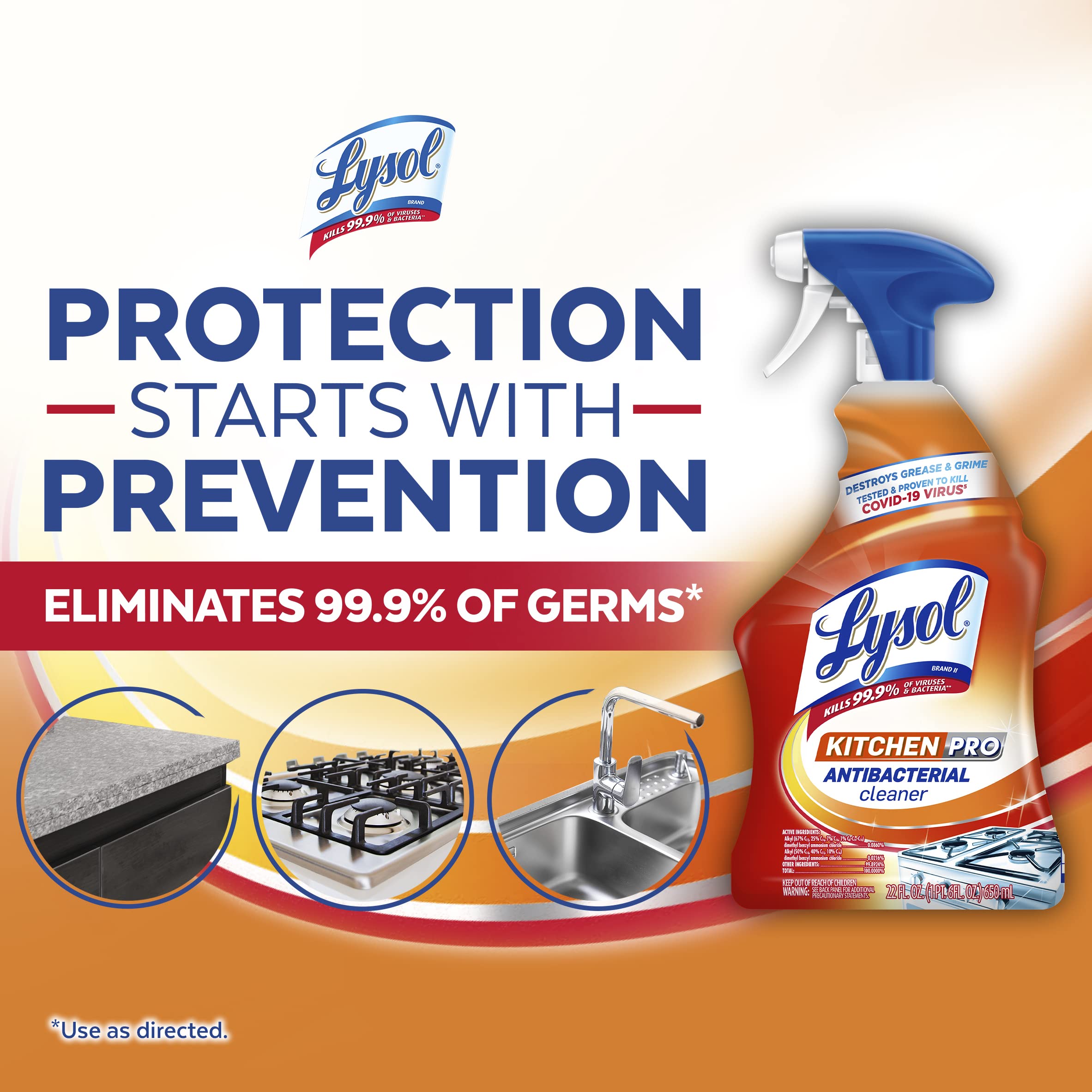
As of October 27, 2026, the official product information reviewed identifies Lysol Kitchen Pro Antibacterial Cleaner as discontinued in March 2022 and Lysol Kitchen Pro Antibacterial Wipes as discontinued in July 2020. This is not the same as a product recall. The available information reviewed does not establish that either product was subject to a nationwide recall. Check the manufacturer’s current notices and the exact product label before deciding what to do with a bottle or pack you own.
In the United States, a search for a household cleaner recall can raise a fair concern. You may have an old bottle under the kitchen sink, a pack of wipes in a drawer, or a product bought online years ago. Before you throw it away, check whether the item was recalled, discontinued, or simply removed from store shelves.
Reckitt, the company behind Lysol, maintains official product information for its household cleaners. Its records list the Lysol Kitchen Pro Antibacterial Cleaner as discontinued in March 2022. The company also lists Lysol Kitchen Pro Antibacterial Wipes as discontinued in July 2020. Those dates describe product status, not a confirmed recall.
This guide explains how to check the Lysol Kitchen Pro recall question, identify the product, review official notices, and handle an old cleaner with care. The distinction matters because discontinuation alone does not prove a product is dangerous. At the same time, a lack of a confirmed recall is not a guarantee that every old bottle remains suitable for use.
The key finding is that the official product records reviewed show discontinuation, not a confirmed nationwide recall of Lysol Kitchen Pro Antibacterial Cleaner. The records also list Kitchen Pro Antibacterial Wipes as discontinued. Neither status, by itself, establishes that a product was recalled because of a safety defect.
A recall is a formal action taken to address a product that may violate a safety requirement or pose a stated risk. Depending on the product and the issue, the action may involve stopping use, returning the item, seeking a refund, or following specific disposal instructions. A discontinued product has simply been taken out of production or no longer offered as a current product.
The distinction is useful for shoppers in the United States who still have an older bottle at home. An old product may be discontinued while existing units remain in use. A recalled product, however, must be assessed against the specific notice, including the affected product details and the stated hazard.
This assessment reflects the official product information reviewed for this article on October 27, 2026. It should not be read as a guarantee that no recall, warning, or other notice has ever existed or could be issued later. Consumers should check current official records if they need to make a decision about a specific bottle.
Source: gosupps.com
Discontinued
The product is no longer listed as a current product in the manufacturer’s records. This does not, on its own, mean it was recalled.
Recalled
A specific product or group of products is covered by an official recall notice that describes the issue and the action consumers should take.
Safety warning
A company or regulator may issue a warning about a product or a way of using it without announcing a recall of every version.
Unverified online claim
A social post, product listing, or search result may use the word recall without providing an official notice. Check the original source before accepting the claim.
What the Official Product Records Say
Reckitt’s official Lysol product information identifies Lysol Kitchen Pro Antibacterial Cleaner as discontinued in March 2022. The listed US product is a 22-fluid-ounce trigger spray bottle with UPC 0-19200-00888-4. These details can help a reader compare an older bottle with the manufacturer’s record.
The manufacturer’s official information also lists Lysol Kitchen Pro Antibacterial Wipes as discontinued in July 2020. The listed US wipes product has UPC 0-19200-96268-1 and contains 35 wipes in a plastic bottle. The wipes are a separate product, so their status should not be confused with the spray cleaner’s status.
These records establish the stated discontinuation dates and product identifiers. They do not establish that every bottle or pack is safe, nor do they prove that a recall has never occurred. For a recall decision, look for a notice that names the affected item and explains the reason for the action.
Cleaner record
Official Lysol product information lists March 2022 as the discontinuation date for Kitchen Pro Antibacterial Cleaner.
Wipes record
Official Lysol product information lists July 2020 as the discontinuation date for Kitchen Pro Antibacterial Wipes.
Why Search Results Can Be Confusing
Old store pages can remain online long after a product leaves the market. A retailer may still show a photograph, price, or product description for an item that is no longer sold. That page does not confirm the current safety status of the product.
Search engines may also group the words recall, discontinued, safety, and product update together. These terms are not interchangeable. Read the full notice, check its publication date, and confirm that it applies to the exact product you own.
Check the source
Give priority to official manufacturer notices and relevant US government recall records.
Check the date
Make sure the notice is current enough to guide your decision and is not an old retailer listing.
Check the product
A notice for another Lysol cleaner does not automatically apply to Kitchen Pro.
What Is Lysol Kitchen Pro Antibacterial Cleaner?
Lysol Kitchen Pro Antibacterial Cleaner is a household surface-cleaning product intended for certain kitchen surfaces as stated on its label. The listed US spray product comes in a 22-fluid-ounce trigger bottle. Its manufacturer record identifies it as a surface antimicrobial product.
An antibacterial cleaner is designed to clean surfaces and control certain bacteria under the conditions stated on its label. Its name alone does not mean it kills every type of germ, works on every material, or makes a surface safe for direct contact with food without any further steps.
Kitchen cleaning products can have different directions for different tasks. One label may allow use on a countertop after food debris is removed, while another surface or task may require different instructions. The product label is the main guide for its permitted uses, contact time, ventilation, rinsing, and other precautions.
If you have an old bottle, do not rely only on a photograph from a retailer. Compare the front label, back label, UPC, and any lot or date code with the official product information. If the label is missing or the directions cannot be read, do not guess how to use the cleaner.
Source: walmart.com
Product type
A household kitchen surface cleaner with antibacterial claims tied to the product’s approved label.
Listed package
The official US record identifies a 22-fluid-ounce trigger spray bottle.
Use instructions
Follow the directions on the exact bottle, including any surface restrictions, contact time, and rinse instructions.
Cleaner, Sanitizer, and Disinfectant Are Not Always the Same
A cleaner removes dirt, grease, and other soil from a surface. A sanitizer reduces certain germs to a stated level under defined conditions. A disinfectant is intended to kill specified microorganisms when used as directed. Some products have more than one function, but their claims and permitted uses depend on the label.
This matters in a kitchen because a surface can look clean while still needing a separate sanitizing or disinfecting step for a particular task. Do not assume that every product with the word antibacterial is approved for every food-contact surface or every type of germ.
For regulated antimicrobial claims in the United States, the Environmental Protection Agency maintains product registration information. The manufacturer’s product record identifies EPA registration number 777-91 for the listed Kitchen Pro Antibacterial Cleaner. That number is a useful identifier, but it is not proof that the product is currently sold or that a recall has occurred.
Read the claim
Look at the exact organisms, surfaces, and uses stated on the label instead of relying on a broad product name.
Follow contact time
If a label requires a surface to remain visibly wet for a set time, follow that direction.
Check food-contact directions
Rinse a food-contact surface when the label requires it. Never assume rinsing is optional or unnecessary.
How to Check Whether Your Bottle Is Affected
Start with the exact product in your home, then compare its details with official records. A brand name alone is not enough because a manufacturer may sell several cleaners, wipes, sprays, and formulas under similar names.
Keep the bottle or package nearby while checking the information. Write down the full product name and UPC, and photograph the front and back labels if you need to contact the manufacturer. Do not open a damaged container just to read a code.
The goal is to find a notice that matches your product, not merely a result that mentions Lysol. A valid notice should explain which items are affected, what the issue is, and what action the consumer should take.
Source: rbnainfo.com
Step 1: Read the full name
Check whether the package says Kitchen Pro Antibacterial Cleaner, Kitchen Pro Antibacterial Wipes, or a different Lysol product.
Step 2: Find the UPC
Compare the barcode number with the official product record. The listed cleaner UPC is 0-19200-00888-4, while the listed 35-count wipes UPC is 0-19200-96268-1.
Step 3: Record the lot or date code
Look for the manufacturer’s production or lot code on the package. Use the label and official guidance to interpret it rather than assuming that a code is a recall number.
Step 4: Review official recall notices
Search the US Consumer Product Safety Commission recall database and the relevant EPA product information. Check manufacturer notices for the exact product and any stated hazard.
Step 5: Ask the manufacturer
If the information conflicts or the code is unclear, contact Lysol or Reckitt through the official company website and provide the product details.
Step 6: Follow any matching notice
If an official notice covers your product, follow its instructions for stopping use, returns, refunds, disposal, or other remedies.
Where Should You Look for Official Information?
The manufacturer’s Lysol product pages are a useful first stop for product names, package details, ingredients, and status. Reckitt also provides product safety information and contact options. Use the official company domain rather than a seller’s copy of a label when you need an authoritative answer.
The US Consumer Product Safety Commission maintains recall information for many consumer products. Its database is useful for checking whether a product has a listed recall, but it does not cover every type of regulated chemical or product issue. Household antimicrobial cleaners may also fall under Environmental Protection Agency oversight.
The EPA regulates antimicrobial pesticide products, including many surface disinfectants. Its records and the product’s EPA registration details can help identify the item and review permitted claims. For a suspected issue involving a chemical cleaner, use the regulator that oversees the product and follow any instructions in the actual notice.
Manufacturer
Use the official Lysol or Reckitt website for product identification, safety documents, and consumer support.
CPSC
Search the Consumer Product Safety Commission recall database for applicable consumer product notices.
EPA
Check official pesticide registration and product information for relevant antimicrobial cleaner details.
What If You Cannot Find a Matching Notice?
Not finding a matching notice does not prove that an old bottle is safe in every circumstance. It means that the sources checked have not established that the item is covered by the notice you were looking for. Product condition, storage, label integrity, and the directions for use still matter.
If the bottle is in poor condition, has leaked, or cannot be identified, do not use it while you seek an answer. Keep it away from children and pets. Ask the local household hazardous waste program how to handle the product if you cannot confirm the correct disposal method.
Unclear identity
Do not use an unlabeled cleaner or one whose directions cannot be confirmed.
Damaged package
Avoid handling a leaking or swollen container more than needed. Keep people and pets away and seek local disposal guidance.
Is an Old Lysol Kitchen Pro Bottle Safe to Use?
An old bottle should be judged by its identity, condition, storage history, and label directions, not by its age alone. The discontinuation record does not establish that every remaining bottle is unsafe. It also does not certify that an older bottle has retained its original quality or effectiveness.
Household cleaners can be affected by poor storage, damaged seals, heat, contamination, and changes to the container. The exact risks depend on the formulation and the condition of the package. If you cannot confirm the product’s identity or the directions, the safest choice is to avoid using it.
Look for leaks, a damaged trigger, a loose cap, a cracked bottle, a missing label, or unusual changes in the liquid. These signs do not prove a particular chemical reaction, but they are practical reasons to stop and assess the item rather than spray it on a kitchen surface.
Do not taste or smell a cleaner closely to identify it. Do not mix it with bleach, ammonia, vinegar, drain cleaner, or another household product. Mixing cleaning chemicals can produce dangerous fumes or reactions, even when each product is sold for normal household use.
Source: officecityexpress.com
The label is clear
You can read the exact product name, permitted uses, first-aid advice, and directions.
The container is intact
There is no leak, crack, major damage, or sign that the contents have escaped.
Storage was suitable
The bottle was stored as directed and was not exposed to conditions that could damage the product or package.
No matching recall applies
You have checked relevant official notices for the exact product and have not found a notice covering it.
The directions remain usable
You can follow the label’s directions without guessing about dilution, contact time, surface restrictions, or rinsing.
What About Expiration Dates and Lot Codes?
Some household products carry a date or lot code that helps identify when or where they were made. A code is not always an expiration date, and its meaning can vary by product. Use the manufacturer’s code guidance for the exact item rather than interpreting the numbers on your own.
Reckitt’s product information explains a date-code format for certain Lysol products. That format should not be assumed to apply to every cleaner or every package. If you cannot interpret the code, send the manufacturer a clear photograph of it and the full product label.
An old code by itself does not prove that a product has been recalled. It can help the manufacturer identify the batch if there is a quality question or a safety notice.
Do not guess
Ask the manufacturer to explain an unclear code rather than treating it as a recall identifier.
Keep the details
Record the UPC, lot code, package size, and any printed date when requesting help.
When Should You Stop Using It?
Stop using the product if an official notice covers it, the container is damaged, the label is missing, or you cannot establish what the contents are. Do not continue using a product merely because it worked in the past.
If you find a matching recall notice, follow its specific instructions. Some notices require consumers to stop using an item immediately, while others provide a return or disposal process. Do not sell, donate, or give away a product covered by a stop-use notice.
Matching recall
Follow the notice’s exact stop-use, return, refund, and disposal instructions.
Unknown contents
Keep the container closed if safe to do so and seek advice from the manufacturer or local hazardous waste service.
What to Do If You Already Used the Cleaner
If you used the cleaner as directed and have no symptoms or other signs of a problem, do not assume that harm has occurred simply because you later read that the product was discontinued. Discontinuation is not proof of an exposure hazard. Review the label and check for a relevant official notice.
If you used the product in a way the label does not allow, take the situation seriously without guessing about the level of risk. The right response depends on the amount, route of exposure, product ingredients, and symptoms. Do not try home remedies or mix another chemical into the area to counteract the cleaner.
For an eye or skin splash, follow the first-aid directions on the label. If the label is unavailable, rinse affected skin or eyes with plenty of running water and seek advice from Poison Control or a medical professional. Do not delay urgent care for a severe reaction.
If anyone swallows the cleaner, contact Poison Control promptly in the United States at 1-800-222-1222. Do not induce vomiting unless a qualified medical professional or Poison Control specifically instructs you to do so. Keep the container or a photograph of its label available when seeking help.
Source: www.webstaurantstore.com
Eye exposure
Begin rinsing with clean running water and follow the label’s first-aid directions. Get urgent medical advice for severe pain, vision changes, or ongoing irritation.
Skin exposure
Remove contaminated clothing and rinse the affected skin with water as directed on the label. Seek medical advice if symptoms persist or worsen.
Swallowing
Call Poison Control at 1-800-222-1222. Do not induce vomiting or give a home remedy unless instructed by a qualified professional.
Breathing fumes
Move to fresh air if you can do so safely. Seek emergency help for trouble breathing, collapse, confusion, or other severe symptoms.
When Is Emergency Help Needed?
Call 911 in the United States if a person has severe trouble breathing, collapses, has a seizure, becomes difficult to wake, or shows another life-threatening symptom. Do not wait for an online answer or a manufacturer response in an emergency.
For less severe but concerning symptoms, Poison Control can help assess the exposure and explain what to do next. Its advice is based on the substance and the details of the exposure. Have the product name, label, approximate amount, time of exposure, and symptoms ready if possible.
A product recall search cannot determine whether an individual exposure is harmful. Medical advice should be based on what happened and how the person feels, not only on the product’s discontinued status.
Emergency
Call 911 for severe or life-threatening symptoms.
Poison advice
Call 1-800-222-1222 in the United States for suspected poisoning or chemical exposure.
How to Handle and Dispose of an Old Bottle
Do not pour an unidentified or unwanted cleaner down a drain simply to get rid of it. The right disposal method depends on the formulation, the amount left, local rules, and any official recall instructions. Check the product label first, then ask your local waste authority if the directions are unclear.
Many US communities offer household hazardous waste programs for certain household chemicals. These programs can explain whether a product should be brought to a collection site and how to transport it. Do not assume every cleaner is accepted at every site.
If a recall notice tells you to return or dispose of a product in a particular way, follow that notice rather than general advice. Do not transfer the liquid to a drink bottle or another unmarked container. Clear labels help prevent accidental use and protect other people in the home.
Source: walmart.com
Read the label
Check the disposal and precaution statements before moving or discarding the cleaner.
Keep the product contained
If the container is intact, keep it closed and upright while seeking disposal advice.
Ask local officials
Contact your municipal waste service or household hazardous waste program for instructions specific to your area.
Follow recall instructions
Use the return, refund, or disposal process stated in any official notice that matches your product.
Can You Put It in the Trash?
There is no single disposal rule that applies to every household cleaning product in every US community. Some products may be accepted in regular trash under local rules, while others require special handling. The label and local waste authority are the best starting points.
Do not puncture, burn, crush, or deliberately open a container to empty it unless official instructions for that product specifically direct you to take an appropriate action. If the bottle is leaking, avoid direct contact and seek local guidance on safe handling.
Avoid drain disposal by guesswork
Do not pour the product into a sink or toilet unless the label or relevant disposal authority says that method is appropriate.
Do not mix leftovers
Never combine unwanted cleaners in one bottle or waste container.
How to Contact Lysol or Reckitt About a Suspected Recall
If you cannot match your bottle to an official record, contact Lysol or Reckitt through the company’s official US website. Provide the exact product name, UPC, package size, lot code, and any printed date. A clear photo of the front and back labels can help the company identify the item.
Explain why you are contacting the company. For example, you may want to know whether a particular lot is covered by a notice, whether an older bottle has a known quality issue, or how to dispose of a product with a damaged package. Clear questions are more useful than a general request to confirm whether all Lysol products are safe.
Keep any reply, case number, and recall notice for your records. If the company confirms that the item is affected, follow the instructions it provides. If the answer is unclear or conflicts with an official notice, ask for clarification before using the product.
Source: nordisco.com
Product details
Include the full name, UPC, package size, and lot code.
Photos
Provide readable photographs of the front label, back label, and code when requested.
Reason for contact
State whether you are asking about a recall, a quality concern, a damaged bottle, or disposal.
Written record
Save the company’s response and any instructions that apply to your product.
What Information Should You Have Ready?
Gather the details before calling or sending a message. The package may have several numbers, so distinguish the UPC from the lot or date code. A UPC helps identify a product type, while a lot code can help identify a particular production batch.
Do not post your full home address or other private details in a public comment just to ask about a cleaner. Use the company’s official contact channel and share only the information needed to resolve the question.
Product identity
Full name, size, package type, and UPC.
Production details
Lot code or date code, if present and readable.
Purchase information
Approximate purchase date and retailer, if known.
Concern
A short description of the issue, exposure, or notice you want to verify.
Common Mistakes When Checking a Cleaner Recall
The most common mistake is treating an old product listing as a recall notice. Retailers can keep product pages online after an item has been discontinued. A photograph and product name do not explain whether a recall exists or whether your particular bottle is affected.
Another mistake is assuming that all products under the Lysol name share the same status. Different formulations, package sizes, and product types may have different records. A notice for wipes, a bathroom spray, or another cleaner should not be applied to Kitchen Pro unless the notice says it covers that item.
It is also unwise to treat the absence of a notice as proof that a damaged or unidentified bottle is safe. Product identity, container condition, storage, and the directions for use still matter. When key details are missing, stop using the product until you obtain reliable guidance.
Source: encarguelo.com.ec
Mistake: Discontinued means recalled
Correction: Discontinuation describes product availability. A recall requires a specific safety or compliance action.
Mistake: Every Lysol product is the same
Correction: Match the exact product, formulation, package, and lot details to the notice.
Mistake: An online seller proves safety
Correction: A retailer listing does not replace a current manufacturer or regulator notice.
Mistake: A lack of a recall means an old bottle is fine
Correction: Check the bottle’s condition and label, and do not use an unidentified or damaged cleaner.
Mistake: Another cleaner can fix a problem
Correction: Never mix products to counteract a spill or suspected chemical issue.
A Simple Decision Guide
Use the table below to decide what to check next. It separates a product-status question from a condition problem or an actual exposure. If two situations apply, follow the more cautious action.
Official notice matches the bottle
Stop using the item and follow the notice’s specific directions.
Bottle is damaged or unidentified
Do not use it. Keep people and pets away and seek safe handling or disposal advice.
Bottle is intact but old
Check the exact label, product status, storage history, and current official notices before deciding whether it can be used as directed.
Exposure has occurred
Follow the label’s first-aid advice and contact Poison Control or emergency services according to the symptoms and exposure.
Research Notes and Questions Worth Checking Next
The main reader need is to determine whether a bottle of Lysol Kitchen Pro is covered by a recall and what to do next. The strongest available starting point is the manufacturer’s official product record, supported by the relevant US regulator databases. The reviewed records establish the cleaner’s and wipes’ discontinuation dates, but they do not establish a confirmed nationwide recall.
Several follow-up questions are useful because they change the action a reader should take. A person with an intact old bottle needs product-identification guidance. Someone with a leaking bottle needs handling advice. A person who has swallowed or inhaled a cleaner needs exposure-specific guidance rather than a general product-status answer.
The official sources reviewed for this article were the Reckitt product information for Lysol Kitchen Pro Antibacterial Cleaner, the Reckitt product information for Lysol Kitchen Pro Antibacterial Wipes, the US Consumer Product Safety Commission recall database, and the US Food and Drug Administration recall information page. The EPA is also relevant to registered antimicrobial surface products.
A review of these records is document research, not laboratory testing. No physical bottle was tested for this article, and no claim is made that the product was independently tested for safety or effectiveness. The next step for a reader is to match the actual package to a current official record.
Source: www.webstaurantstore.com
Question: Was the cleaner discontinued?
Basis: Observed in the manufacturer’s official product record. Reader benefit: Establishes the listed product status without confusing it with a recall.
Question: Is my lot affected?
Basis: Inferred next need because recall notices can identify specific products or batches. Reader benefit: Helps avoid applying an unrelated notice to the wrong bottle.
Question: How should a damaged bottle be handled?
Basis: Inferred next need from the risk of leakage and chemical contact. Reader benefit: Encourages cautious handling and local disposal advice.
Question: What if the cleaner has already been swallowed or splashed into an eye?
Basis: Inferred next need because exposure changes the priority from recall research to first aid. Reader benefit: Directs the reader to Poison Control or urgent medical care as appropriate.
Question: Where can I confirm a later recall notice?
Basis: Inferred next need because product information can change after publication. Reader benefit: Encourages checking the manufacturer’s latest notice and the regulator responsible for the product.
Research Limits
This article does not claim that every possible state, local, or historical notice was exhaustively reviewed. The product-status finding is limited to the official records examined for the article. A new notice or a notice for a particular lot could change the advice for that item.
The reviewed retailer pages were useful for identifying the product’s appearance, but they are not proof of recall status. Product images can also show older packaging. For an actual safety decision, the package in hand and a matching official notice carry more weight than a seller’s photograph.
Readers should verify changing details before acting, especially if a suspected recall involves a specific lot, an exposure, or a return process. If official sources disagree, contact the manufacturer or relevant regulator and do not use the product while the concern remains unresolved.
Evidence type
Manufacturer product records and regulator information, not first-hand product testing.
Confidence limit
The records establish listed product status but do not prove that every old container is safe or that no later notice exists.
Frequently Asked Questions
Q
Was Lysol Kitchen Pro Antibacterial Cleaner recalled?
The official records reviewed for this article identify Lysol Kitchen Pro Antibacterial Cleaner as discontinued in March 2022. They do not establish a confirmed nationwide recall of that product. Check the latest manufacturer notices and relevant US regulator records before making a decision about a specific bottle.
Q
Why was Lysol Kitchen Pro discontinued?
The reviewed product record gives a discontinuation date but does not establish a specific reason for the decision. A product may be discontinued for business, product-line, supply, or other reasons. It would be inaccurate to claim that a safety problem caused the discontinuation without a reliable source confirming that reason.
Q
Are Lysol Kitchen Pro Antibacterial Wipes recalled?
The manufacturer’s official product information lists Lysol Kitchen Pro Antibacterial Wipes as discontinued in July 2020. That date is not proof of a recall. Check the exact package details and current official notices to determine whether any notice applies to your wipes.
Q
Can I still use an old bottle of Lysol Kitchen Pro?
Do not decide based on age alone. Check the exact product identity, label directions, storage history, container condition, and applicable official notices. Do not use a bottle that leaks, has a damaged container, lacks an identifiable label, or cannot be used according to clear directions.
Q
How do I check the Lysol Kitchen Pro lot number?
Look for the lot or date code printed on the bottle or package, then compare it with the manufacturer’s code guidance. Do not assume that every Lysol product uses the same format. If the code is hard to read or interpret, contact Reckitt through its official website and provide a photo of the code and label.
Q
Where can I check official Lysol recall information?
Start with the official Lysol or Reckitt website and search for the exact product name. The US Consumer Product Safety Commission maintains a recall database, while the Environmental Protection Agency provides relevant information for registered antimicrobial products. Check the date, affected product details, stated hazard, and required action in any notice you find.
Q
What should I do if I accidentally swallowed Lysol Kitchen Pro?
Call Poison Control in the United States at 1-800-222-1222 for immediate exposure guidance. Do not induce vomiting or try a home remedy unless a qualified professional tells you to do so. Call 911 for severe symptoms, trouble breathing, collapse, or another life-threatening emergency.
Q
Can I pour an old Lysol cleaner down the kitchen sink?
Do not pour an unwanted or unidentified cleaner down the sink by guesswork. Check the product label and local household hazardous waste guidance. If the bottle is leaking, the contents are unknown, or a recall notice gives special disposal directions, follow the appropriate safety instructions instead.
✦ Wrapping Up
Conclusion
The main point about the Lysol Kitchen Pro recall search is simple: the official product information reviewed lists the Antibacterial Cleaner as discontinued in March 2022 and the Antibacterial Wipes as discontinued in July 2020. Those dates do not, by themselves, prove that either product was recalled. The records reviewed for this article do not establish a confirmed nationwide recall of the cleaner.
If you still have a bottle or pack at home, check its full name, UPC, lot code, label, and condition. Search current official notices and contact Reckitt if the product details remain unclear. Avoid using a damaged or unidentified cleaner, never mix cleaning products, and follow the label and any matching recall instructions.
A careful check is more useful than a guess based on an old store page or a social media post. If an exposure has already happened, put recall research aside and get advice based on the actual exposure. Poison Control and emergency services can help when the situation calls for it.
💡 Key Takeaway
Before using or discarding an old Lysol Kitchen Pro product, compare its label and UPC with the official manufacturer record, check current recall notices, and follow the label or official disposal instructions. If the product is damaged or unidentified, do not use it.