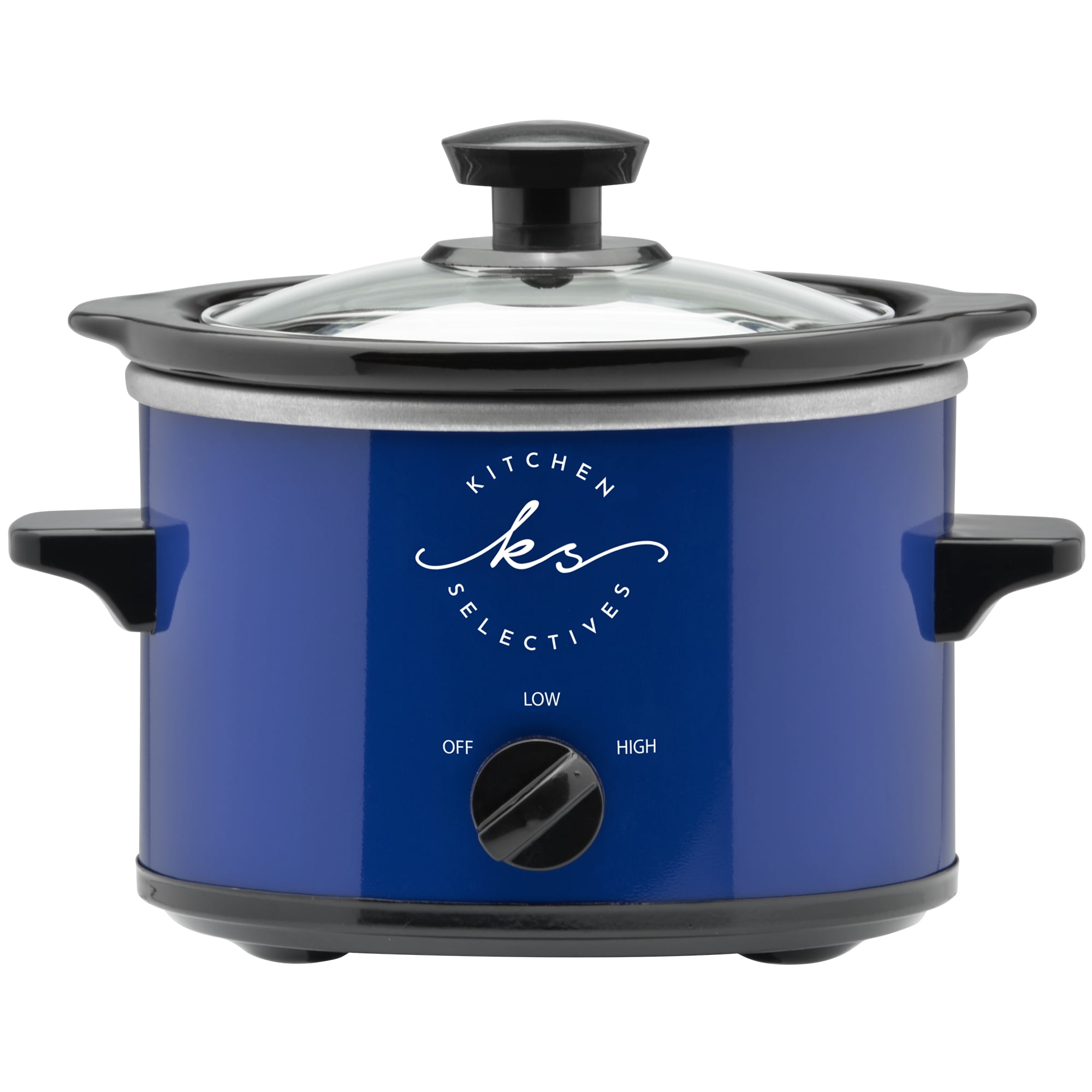
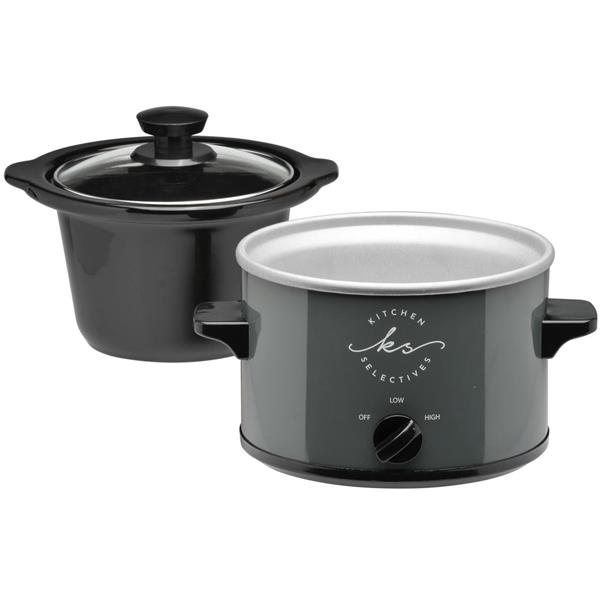
The Kitchen Selectives slow cooker is a compact electric cooker made for small meals, dips, sauces, and side dishes. Many models hold about 1.5 quarts, but the brand has also sold larger cookers. Check your exact model number before choosing recipes, parts, or cooking times.
In American kitchens, a small slow cooker can help with busy weekdays, game-day snacks, and meals for one or two people. It takes up less counter space than many family-size cookers. You can use it for warm dips, oatmeal, small batches of soup, and other dishes that benefit from gentle heat. The best results depend on the model, the recipe, and the amount of food inside.
Kitchen Selectives has sold compact cookers in several colors and designs. Product listings and secondhand sales may use different names for similar-looking units. A blue, mint green, black, or gray cooker does not always identify the exact model. Before using an older appliance, inspect its label, lid, cooking pot, cord, and controls. If you have no manual, use the model number to seek the correct instructions rather than guessing.
A Kitchen Selectives slow cooker is a countertop electric appliance that cooks food with steady, gentle heat over time. The heating base warms the cooking vessel, while the lid helps hold in heat and moisture. This cooking method works well for dishes that need time for flavors to blend. It can also keep suitable prepared foods warm when the model’s instructions allow that use.
The brand has sold both small personal cookers and larger designs. The compact versions are often listed as 1.5-quart models, while other versions may have different capacities and features. That difference matters because a recipe made for a large cooker may not fit or cook as intended in a small one. Do not identify a cooker by color or appearance alone.
Source: selectbrands.com
Compact size
Small models suit individual servings, small households, dips, sauces, and side dishes.
Simple controls
Many basic slow cookers use a small set of heat settings, but the available controls depend on the model.
Moist cooking
The covered pot helps limit moisture loss, which is useful for soups, soft vegetables, and saucy dishes.
Model-specific care
The cooking pot, lid, base, and electrical parts may have different care limits. Follow the instructions for your unit.
Why Model Numbers Matter
Look for a rating label on the bottom or back of the appliance. It may show a model number, electrical rating, or manufacturer details. Record that information before searching for a manual. Similar model names can refer to different versions, so a manual for a related cooker may not describe your controls or parts correctly.
Check the label
Write down the full model number and any suffix or letter at the end.
Match the manual
Compare the model number and product shape with the manual or official product information.
Kitchen Selectives Slow Cooker Sizes and Uses
Choose a cooker by capacity and the amount of food you plan to make. A compact 1.5-quart unit can work well for a small batch, but it may be too small for a whole roast or a meal for several people. A larger cooker offers more room, though it also needs more storage space. Check the capacity printed on your appliance or in its manual before planning a meal.
The table below gives general examples of how cooker sizes may fit common kitchen tasks. These are planning guidelines, not confirmed capacity specifications for every Kitchen Selectives model. The shape of the pot, recipe volume, and safe fill limits all affect the amount you can cook.
Source: i.ebayimg.com
For one or two people
A small cooker may handle a side dish, a modest portion of soup, or a warm dip.
For snacks and gatherings
Small cookers can keep a suitable dip warm, provided the appliance is designed for that use and the food stays at a safe temperature.
For larger meals
Choose a cooker with enough room for the recipe and follow its required fill range.
What Can You Make in a 1.5-Quart Cooker?
A 1.5-quart slow cooker is a useful size for small recipes. Try a modest batch of queso dip, warm apple topping, a small amount of barbecue sauce, or a side of tender vegetables. You can also adapt some soup and oatmeal recipes if their ingredients fit the pot and the recipe gives suitable slow-cooking directions. Avoid assuming that a standard family-size recipe will work when reduced without adjustment.
Dips
Stir the mixture as needed and use only an approved setting for warming or cooking.
Sauces
Use a recipe suited to a small batch and stir if the instructions call for it.
Side dishes
Small servings of beans or vegetables may work when the recipe accounts for the cooking time and liquid.
Can You Cook a Full Meal in It?
Sometimes, but the meal must fit the pot and cook safely. A small cooker is not the right tool for every cut of meat, large chicken pieces, or a deep pot of stew. Choose a recipe developed for a similar capacity. Do not pack the pot tightly or change the cooking time based only on appearance.
Check volume
Leave the required space at the top and meet the fill guidance in the manual.
Check doneness
Use a food thermometer when needed rather than relying on color or texture alone.
How to Use a Kitchen Selectives Slow Cooker
Start with a clean cooker, the correct cooking pot, and a recipe suited to its size. Place the appliance on a dry, level surface that can handle heat. Keep it away from the edge of the counter, water, loose cloth, and anything that could block ventilation. Before adding food, make sure the pot and lid have no cracks or chips.
The exact control labels vary by model. Some basic cookers offer low and high heat settings, while other versions may have different controls. Use the settings listed in your manual. If you cannot confirm how a control works, do not guess and leave the appliance running unattended.
Source: m.media-amazon.com
Step 1: Read the manual
Confirm the capacity, approved use, control settings, cleaning limits, and electrical rating.
Step 2: Prepare the ingredients
Cut food into suitable pieces and measure liquids according to a tested recipe.
Step 3: Fill the pot correctly
Follow the manual’s minimum and maximum fill guidance. Do not use the heating base as a cooking vessel.
Step 4: Set the cooker
Choose the setting required by the recipe and the model’s instructions.
Step 5: Keep the lid in place
Open the lid only when the recipe calls for a check or stir. Each opening lets heat escape.
Step 6: Check the food
Confirm that the food has reached a safe temperature and is fully cooked before serving.
How Much Food Should You Add?
The safe fill range depends on the cooker and the recipe. Many slow-cooker recipes work best when the pot is neither nearly empty nor packed to the rim, but you should follow the range in your own manual. A very small amount of food may heat differently from a normal batch. An overfilled pot can cook unevenly or spill as the contents bubble.
Use a suitable recipe
Pick one written for a similar cooker size rather than shrinking every ingredient by guesswork.
Measure liquids
Slow cookers often need less added liquid than open-pot cooking because the lid limits evaporation, but the recipe and ingredients still matter.
Should You Brown Meat First?
Browning meat in a separate skillet can add color and a deeper roasted flavor. It is usually an optional flavor step, not proof that the meat is cooked through. Follow the recipe for preparation and safe handling. Do not put raw meat into the cooker and assume that any setting or time will make every piece safe.
For flavor
Brown meat in a separate pan when the recipe calls for it or when you want a richer taste.
For safety
Use reliable cooking guidance and a food thermometer to verify doneness.
Cooking Times and Food Safety
Cooking time depends on the recipe, starting temperature, amount of food, ingredient size, and cooker design. A time listed for a large cooker may not work the same way in a small one. Use a recipe designed for slow cooking and follow the instructions for your model. Do not treat the control setting alone as proof that food has reached a safe temperature.
Food safety matters most when cooking meat, poultry, seafood, and other foods that can support harmful bacteria. The U.S. Department of Agriculture advises against using a slow cooker to cook frozen meat or poultry because the food may remain too long at temperatures that allow bacteria to grow. Thaw frozen meat in the refrigerator before adding it to the cooker. Keep raw ingredients separate from ready-to-eat foods and wash hands and tools after handling them.
Source: m.media-amazon.com
Thaw first
Thaw meat and poultry in the refrigerator before slow cooking. Do not use the slow cooker to thaw frozen food.
Use a thermometer
Check the thickest part of meat or poultry and follow the safe minimum temperature for that food.
Avoid unsafe holding
Do not leave cooked food sitting for long periods without verified temperature control.
Follow the recipe
Do not shorten or extend cooking times at random, especially when preparing meat or poultry.
Can You Leave It On While You Are Away?
A slow cooker is designed for long cooking, but that does not remove the need for basic precautions. Check the manual for approved operation, inspect the cord, and place the appliance on a stable, heat-safe surface. Keep it clear of paper, curtains, towels, and other items that could catch fire. Do not use a damaged or recalled appliance, and follow local fire-safety advice for unattended cooking.
Before starting
Check the cord, plug, pot, lid, and surface. Keep the area around the cooker clear.
When you return
Check food doneness and handling time. Refrigerate leftovers promptly in shallow containers.
How Should You Store Leftovers?
Move leftovers into shallow containers and refrigerate them promptly. Do not let a large pot of food sit on the counter for hours to cool. Store food at 40 degrees Fahrenheit or below, and use it within the recommended storage period for the dish. If food has been held at an unsafe temperature for too long, smell and appearance cannot prove that it is safe.
Cool and refrigerate
Divide food into shallow containers so it cools more quickly.
Reheat safely
Reheat leftovers to 165 degrees Fahrenheit unless specific official guidance for the food says otherwise.
Cleaning and Caring for Your Cooker
Unplug the cooker and let it cool before cleaning. The removable pot and lid may be washable, but you should confirm the care directions for your model before putting either part in a dishwasher or soaking it. Never immerse the electrical heating base, plug, or cord in water. Wipe the base with a damp cloth only when the manual allows it, then dry it well before storage.
Avoid harsh scouring pads and sudden temperature changes that can damage a ceramic or stoneware pot. Do not pour cold water into a hot cooking vessel or place a hot vessel on a cold, wet surface. If the pot has a crack, a deep chip, or another defect that could affect safe use, stop using it and check whether a correct replacement is available.
Remove food residue with a suitable sponge and mild dish soap, following the manual.
Dry every part
Let the pot and lid dry fully before placing them in storage.
Protect the cord
Store the cord without tight bends, crushing, or pulling at the plug.
Inspect the pot
Look for cracks, chips, and damage before every use.
How to Remove Stuck-On Food
Let the pot cool first. If its instructions permit soaking, add warm water and a little dish soap, then let the residue soften before wiping it away. Do not use metal tools that may scratch the surface. For stubborn residue, repeat the soak instead of scraping hard or exposing the vessel to a sudden change in temperature.
Soften the residue
Use warm, soapy water only after the pot has cooled.
Use a soft sponge
Wipe gently and avoid abrasive cleaners unless the manufacturer expressly approves them.
Common Problems and How to Check Them
If your Kitchen Selectives slow cooker does not seem to work, start with the safest and simplest checks. Unplug it before inspecting the cord, plug, pot, or base. Never open the electrical housing or try to repair internal wiring yourself. If the appliance smells burnt, sparks, gives an electric shock, or has a damaged cord, stop using it and seek qualified repair advice or replace it.
An older cooker may also have missing instructions or hard-to-find parts. Do not assume that a similar-looking replacement pot, lid, or electrical component will fit safely. Match any replacement to the exact model and manufacturer guidance.
Source: i5.walmartimages.com
The cooker will not turn on
Check that the plug is fully seated in a working outlet and that the outlet is suitable for the appliance. If the cord or plug is damaged, stop using the unit.
Food stays undercooked
Review the recipe, ingredient size, starting temperature, fill level, and cooking time. Verify the food temperature with a thermometer.
Food burns or dries out
Check whether the batch is too small, the recipe uses too little liquid, or the cooking time is too long for that recipe.
The lid does not fit
Confirm the exact model and look for cracks or warping. Do not force an ill-fitting lid into place.
The cooker smells unusual
A strong burning or electrical smell is a reason to unplug the unit if you can do so safely and stop using it.
Why Is the Cooker Not Heating?
First, unplug the appliance and inspect it for visible damage. If the unit appears intact, confirm that the outlet works with another suitable device and check the manual for the correct controls. Do not test the cooker with a damaged cord or try to bypass a switch or safety feature. If it still fails to heat, contact the manufacturer or a qualified repair service if support is available.
Safe check
Inspect the plug, cord, outlet, and controls without opening the appliance.
Stop when damaged
Do not continue testing if you see exposed wires, melted plastic, or burn marks.
Why Is Food Cooking Too Slowly?
Slow cooking naturally takes time, but an unsuitable recipe or an overloaded pot can make the results worse. Keep the lid closed as directed and avoid frequent checks that release heat. Use the recipe’s stated cooker size as a guide. If food remains below a safe temperature, do not serve it just because the planned cooking time has passed.
Review the batch
Check whether the pot is too full or the ingredients are much larger than the recipe calls for.
Verify temperature
Use a food thermometer and follow trusted food-safety guidance before serving.
Finding a Manual, Replacement Parts, or a Used Cooker
If you bought a Kitchen Selectives slow cooker secondhand, find its exact model number before using it. Search the manufacturer’s support resources and the available product documentation for that number. Retailer listings and resale pages can help identify a product, but a sales listing is not a substitute for an operating manual. Check the label and compare the appliance with the images in the documentation.
Replacement parts deserve the same care. A pot or lid that looks close may have a different shape, size, or heat tolerance. Do not buy a part based only on color or capacity. Confirm compatibility with the exact model and check whether the part is intended for food contact and the cooker’s operating temperature.
Source: images-na.ssl-images-amazon.com
Locate the model number
Check the underside or back of the base and write down every character.
Search official resources first
Look for a manual or support page from the manufacturer associated with the product.
Check used appliances
Inspect the cord, plug, controls, base, lid, and cooking pot before purchase or use.
Confirm part compatibility
Ask the seller or manufacturer to verify the part against the full model number.
Is an Older Kitchen Selectives Slow Cooker Worth Buying?
An older cooker may suit someone who needs a basic appliance for small batches, but age and condition matter more than appearance. Check whether the controls work, the pot is intact, the lid fits, and the cord has no damage. Ask for the model number and manual if possible. If you cannot establish that the unit is safe to use, choose a replacement with clear instructions and accessible support instead.
Worth considering
The unit is intact, its identity is clear, and the seller can show that it operates as intended.
Avoid
The unit has cracks, exposed wires, signs of overheating, missing critical parts, or an unknown safety history.
How to Decide Whether This Cooker Fits Your Kitchen
The right cooker depends on how much food you make, how often you use it, and how much room you have. A compact Kitchen Selectives model may be practical for a small kitchen or occasional side dishes. It may frustrate someone who regularly prepares large family meals or wants programmable controls. Compare the actual capacity and features of the model in front of you rather than relying on the brand name alone.
If you are choosing between an older compact cooker and a newer model, weigh safety, ease of cleaning, parts support, and the size of your usual recipes. A low purchase price does not make a damaged appliance a good value. If the model’s instructions or condition cannot be confirmed, a well-documented replacement may be the more sensible option.
Source: i.ebayimg.com
Choose a compact unit if
You mostly prepare dips, sauces, side dishes, or small servings and have limited storage space.
Choose a larger unit if
You often cook for several people or make recipes that need more room.
Choose a model with clear support if
You need dependable access to a manual, replacement parts, and clear operating instructions.
Questions to Ask Before You Buy
Before paying for a new or used cooker, confirm its capacity, condition, controls, and included parts. Check that the lid and pot belong to the same model and that the cord and plug are undamaged. If the listing does not show the model number, ask the seller for a clear photo of the rating label. These simple checks can help you avoid buying a cooker that does not meet your needs.
Capacity
Does the pot hold enough for your regular recipes?
Condition
Are the pot, lid, cord, plug, and housing intact?
Instructions
Can you obtain a manual for the exact model?
Support
Can you verify compatible replacement parts if something breaks?
Frequently Asked Questions
Q
How many quarts is a Kitchen Selectives slow cooker?
The capacity depends on the model. Several Kitchen Selectives compact cookers are listed at about 1.5 quarts, and larger models have also been sold. Check the rating label, packaging, or manual for the exact capacity of your unit.
Q
Can I cook meat in a 1.5-quart slow cooker?
You can prepare suitable small meat recipes if the model and recipe support that use. Thaw meat first, follow a recipe designed for slow cooking, and verify the final internal temperature with a food thermometer. Do not crowd the pot or assume a cooking time for a larger cooker will apply.
Q
Can the removable pot go in the dishwasher?
That depends on the exact model and pot material. Check the manual before using a dishwasher or soaking the pot. Never put the electrical base, cord, or plug in water.
Q
Why is my Kitchen Selectives slow cooker not heating?
Check the outlet, plug, cord, and control setting only if the appliance has no visible damage. Unplug it before inspection. If you find a damaged cord, burn marks, melting, sparks, or a strong electrical smell, stop using the cooker and seek qualified help.
Q
Where can I find a Kitchen Selectives slow cooker manual?
Start with the manufacturer’s support resources and search using the full model number on the appliance label. Compare the manual’s model details and product images with your unit. Do not rely on instructions for a similar-looking model unless compatibility is confirmed.
Q
Is a Kitchen Selectives slow cooker suitable for one person?
A compact model can be useful for one person who makes small portions, sauces, dips, or side dishes. It may not suit large meal-prep batches. Match the pot capacity to the recipe and follow the minimum and maximum fill guidance in the manual.
✦ Wrapping Up
Conclusion
A Kitchen Selectives slow cooker can be a handy option for small meals, warm dips, sauces, and side dishes. Its usefulness depends on the exact model, the pot size, and the condition of the appliance. A compact cooker can save space, but it cannot replace a larger unit for every recipe. Safe use starts with the right manual, a suitable recipe, and a sound appliance.
Before cooking, confirm the model number and capacity, inspect the cord and pot, and review the operating and cleaning instructions. Use trusted food-safety guidance for meat, poultry, leftovers, and hot holding. If the cooker shows signs of electrical damage or its safety cannot be established, do not use it.
💡 Key Takeaway
Find the model number on the cooker, match it to the correct manual, inspect every part, and choose a recipe designed for its capacity before your first meal.