
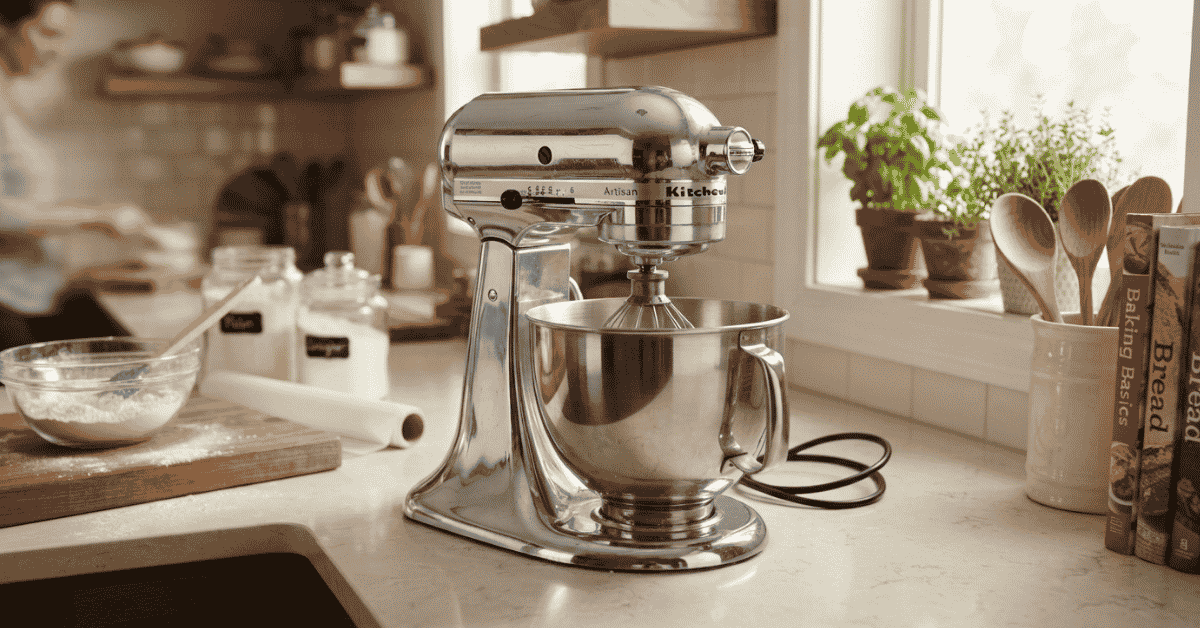
kitchenaid mixer chrome adds a bright, clean look to your bake space. See key model facts, care tips, and fit notes, then pick with ease today.
KitchenAid mixer chrome can turn a plain worktop into a bright, neat bake spot. I like its clean shine. It feels fresh and bold. Yet looks are not enough for a mixer. I checked the main model facts, finish details, and care needs. I also looked at the key gaps between mixer types. This guide can help you choose with less guesswork.
My First Look at Chrome
The first thing I notice is the shine. A chrome mixer has a cool, bright look. It can make a small worktop feel more crisp.
I also like how chrome can suit many room styles. It fits well with white, black, gray, wood, and steel.
Still, the finish needs care. Dust and marks can stand out on a bright face. I found that a soft cloth works best for quick cleanups.
KitchenAid lists a chrome finish in its stand mixer range. Its current US chrome page shows one model. It is the Artisan Series 5 Quart Tilt-Head Stand Mixer with Premium Touchpoints.
That detail matters if you search for a new unit. Online listings may also show older chrome models. Some may be used or old stock.
Chrome Does Not Mean One Exact Mixer
This was the part I found easy to miss. The word “chrome” points to the finish. It does not tell you the full mixer type.
KitchenAid has made chrome finishes across different model lines. Older parts lists also show chrome as a finish option. One KitchenAid parts document lists Metallic Chrome for a 5-quart mixer.
So I would not buy from the finish alone.
Check these points first:
- Model number
- Bowl size
- Tilt-head or bowl-lift design
- Motor rating
- Included tools
- Finish name
- New, used, or refurbished status
A model number can tell you far more than a shiny photo.
Artisan vs Classic at a Glance
I found the Artisan and Classic lines useful for comparison. Both use the well-known tilt-head design. Yet their size, motor, bowl, and color range differ.
| Feature | Artisan Series | Classic Series |
|---|---|---|
| Bowl size | 5 quart | 4.5 quart |
| Motor | 325 watts | 275 watts |
| Bowl type | Stainless steel with handle | Brushed stainless steel |
| Head style | Tilt-head | Tilt-head |
| Hub | Multi-purpose hub | Multi-purpose hub |
| Color range | 20+ colors | Two neutral shades |
| Best fit | Frequent home baking | Basic home baking |
The Artisan line gives you a larger bowl. It also has a wider color range. KitchenAid says its standard Artisan model comes in more than 20 colors.
The Classic can make more sense for simple home use. It has a smaller bowl and lower motor rating.
Still, chrome shoppers may face a different issue. A chrome finish may belong to an older model. That means the model itself can matter more than the color.
The Finish Needs Simple Care
Chrome looks great when clean. Finger marks can also show fast.
I would keep care simple. Use a soft, damp cloth for normal marks. Dry the surface soon after cleaning.
Avoid rough pads on the finish. They may leave fine marks that catch the light.
I would also avoid treating the outer shell like a steel pan. The mixer body is not meant for harsh scrubbing.
My basic care kit would be:
- A soft microfiber cloth
- Mild dish soap
- Clean water
- A dry soft towel
For daily care, less is more. A quick wipe can keep the shine fresh.
Chrome Can Change the Feel of a Kitchen
A mixer stays on the worktop for many people. That makes its look more important than it seems.
I have found that shiny finishes can act like a small light source. They catch window light and nearby lamps. That can make the whole area feel brighter.
Yet chrome may show smudges more than matte finishes. A matte body can hide small marks better.
This creates a simple trade-off.
Chrome gives more shine. Matte finishes hide more marks.
Neither choice is bad. It depends on your room and your habits.
If your mixer stays out all day, I would think about both points. A clean chrome body can look stunning. A busy kitchen may also make it look less neat.
Check the Bowl Before You Buy
Bowl size can change your baking routine.
A 5-quart bowl gives more room for larger mixes. That can help if you bake bread, cookies, or cakes often.
A 4.5-quart bowl may suit smaller batches. It can also be enough for basic home baking.
I would not assume that every chrome KitchenAid mixer has the same bowl. Older and newer models can differ.
The safest move is simple. Find the model number first. Then check the matching bowl and tools.
KitchenAid also sells many stand mixer attachments. Its current support pages list items such as pasta rollers, food grinders, slicers, and food processors.
That makes the hub a useful feature for long-term use.
Chrome Mixers Can Be Great for Used Buyers
This is where I would slow down.
A used chrome mixer may look perfect in a photo. The real test starts with the machine itself.
I would check:
- Motor sound
- Speed control
- Head movement
- Bowl lock
- Beater clearance
- Power cord
- Hub cover
- Scratches or dents
Run the mixer if the seller allows it. Listen for odd grinding or sharp noise.
Also check the model label. It can help you confirm the bowl size and parts.
A shiny body cannot tell you the mixer’s age or past use.
That is why I would rather buy a clean, tested mixer than chase a rare finish.
My Simple Buying Rule
I use one rule for kitchen gear. Buy the tool first, then buy the look.
Chrome can be a great choice if the mixer fits your needs. The finish should not make you accept a poor model.
For a new buyer, I would check the current KitchenAid chrome range first. The official US page currently lists the 5-quart Artisan model with Premium Touchpoints.
For a used buyer, I would compare the model number with KitchenAid records. That can help avoid a wrong bowl or part.
I would also check if the mixer has the tools you need. Buying missing parts later can raise the real cost.
Small Details That Matter Most
A mixer can stay in your kitchen for years. Small details can shape that whole experience.
The chrome finish gives a strong visual pull. The tilt-head design can make bowl access easy. A 5-quart bowl gives good room for many home tasks.
The attachment hub is another useful point. It can expand the mixer beyond cakes and dough.
Still, no mixer is perfect.
Chrome needs more wipe-down care. Older chrome models can be harder to identify. Used listings can also lack key parts.
That is why I would keep my choice calm and practical.
FAQs
Is a KitchenAid mixer chrome finish easy to clean?
Yes, a soft damp cloth works well for light marks. Dry it after each wipe. Learn more about KitchenAid care.
Does chrome mean the mixer is an Artisan model?
No, chrome only describes the finish. Model lines can differ. Check the model code before you buy. Learn more about mixer models.
Is a 5-quart KitchenAid mixer good for home use?
Yes, 5 quarts gives useful room for many home bakes. It suits cakes, cookies, and dough. Learn more about bowl size.
Can old chrome KitchenAid mixers use new parts?
Some parts may fit, but model fit matters. Check the exact model first. Learn more about KitchenAid parts and support.
Is chrome better than a matte mixer finish?
Chrome gives more shine, while matte finishes may hide marks better. Pick the look you can keep clean. Learn more about finishes.
Final Takeaway
I still like the clean gleam of a KitchenAid mixer chrome finish. It has a warm charm despite its cool shine. Yet I would never pick it for looks alone. Model size, bowl fit, age, parts, and care all matter. As the fading light hits my worktop, I can hear the soft sound of my keyboard. I think that is the real lesson. A good mixer should look nice and work well.