
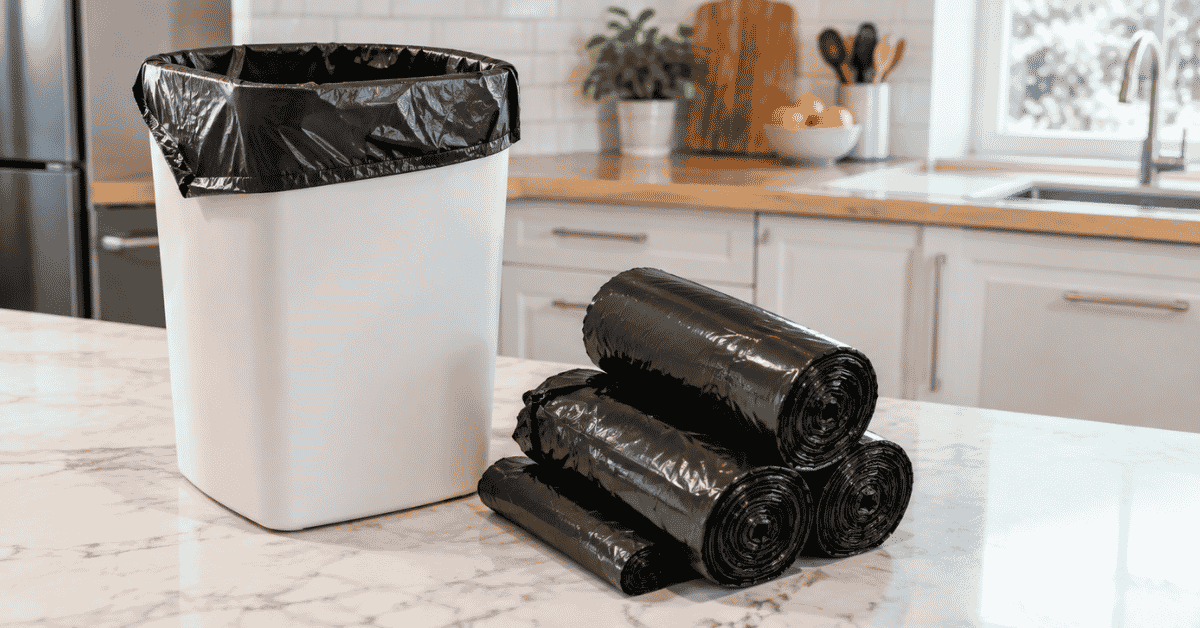
Finding the right kitchen garbage bag size used to cause big messes at home. I tried many trash bags in my own home over the years. I know how bad a torn bag can feel when you clean up. In this guide, I will show you how to pick the right fit for your can. Read on to stop messy spills and keep your kitchen clean today!
My Messy Battle with the Wrong Bag Sizes
I still remember the chilly Tuesday evening when a full bag snapped in my hands. Food scraps and wet coffee grounds spilled across my clean hardwood floor. I was using a cheap liner that was far too short for my tall metal bin. That gross mess forced me to learn how bag dimensions really work in a home kitchen.
The Frustration of Bag Slips and Rips
When a liner is too small, it stretches tight across the top rim. The moment you throw in a heavy soup can, the entire top edge slips down inside the bin. You then have to reach your hands into a dirty can to pull the plastic back up. I spent months fighting this annoying issue before I realized my mistake.
Why Standard Tall Kitchen Bags Matter
Most homes rely on a standard tall trash bin near the counter. Using the wrong bag size leads to constant tears near the drawstring seam. When you match the bag volume to your can height, the plastic rests easy on the bottom. This prevents sudden splits when you lift the trash out.
Decoding Gallon Capacities for Daily Kitchen Bins
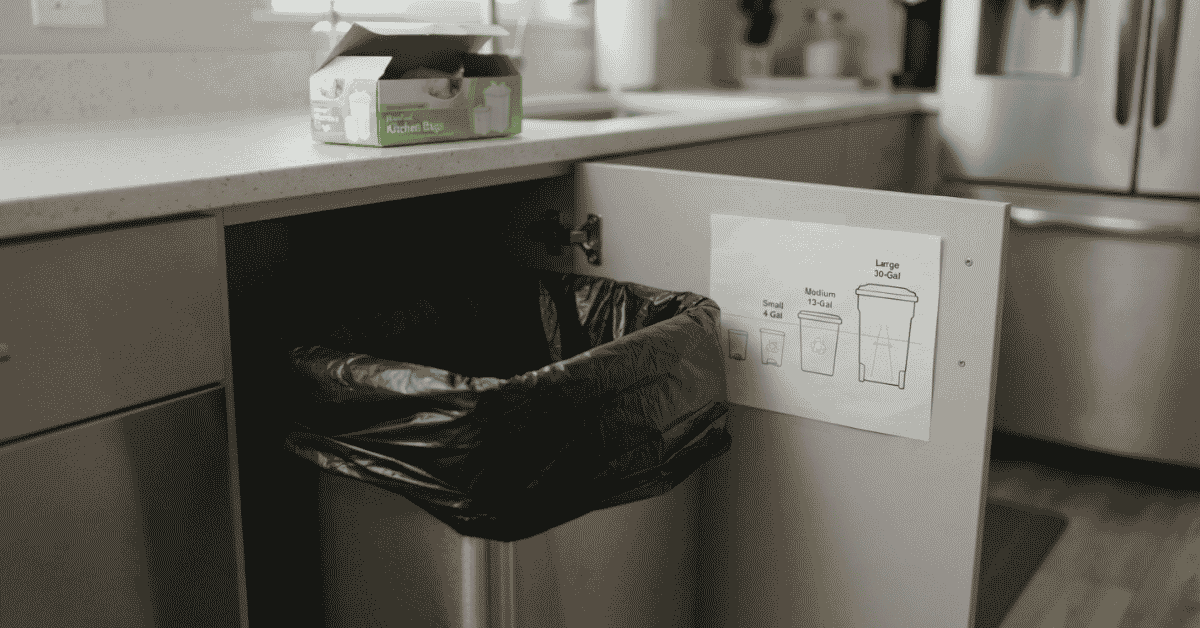
Navigating the grocery aisle can feel confusing with so many gallon numbers on the box. I tested small bins, tall step cans, and pull-out cabinets to find the exact matches.
The Standard 13-Gallon Workhorse
The 13-gallon liner is the undisputed king of American kitchens. A 13-gallon bag fits most standard tall cans ranging from 10 to 13 gallons in volume. These bags measure about 24 inches wide by 27 inches tall. They offer just enough extra length to overlap the top rim securely.
Small 4 to 8-Gallon Countertop Options
If you keep a small compost bucket or under-sink bin, a 13-gallon bag is way too big. Smaller 4-gallon to 8-gallon liners fit compact step cans and recycling caddies. These smaller bags keep waste fresh because you empty them every day or two.
How to Measure Your Kitchen Trash Can Accurately
You do not need to guess which bag size to buy at the store. I use a simple tape measure trick that gives me a perfect fit every single time.
Calculating Circular Bin Perimeter and Height
For round trash cans, measure the distance across the top opening to find the diameter. Multiply that number by 3.14 to get the perimeter, then divide by two to find the required bag flat width. Next, measure the height from bottom to top rim, and add four inches for overhang.
Measuring Rectangular Step Cans for a Snug Fit
Rectangular cans require measuring both the width and depth of the top opening. Add the width and depth together to determine the flat width your liner needs. Always add at least four to six inches to the can height so the bag can stretch over the rim.
Detailed Size and Dimension Comparison Guide
To make your shopping easy, I put together this detailed comparison table based on my own home testing.
| Trash Can Type | Can Capacity (Gallons) | Ideal Bag Size | Bag Flat Dimensions | Best Household Use |
| Small Counter Bin | 4 to 6 Gallons | 4 to 8 Gallon Liner | 17″ x 18″ | Food scraps & small waste |
| Medium Under-Sink | 7 to 10 Gallons | 8 to 10 Gallon Liner | 20″ x 22″ | Compact cabinet pull-outs |
| Standard Tall Can | 12 to 13 Gallons | 13-Gallon Tall Kitchen | 24″ x 27″ | General daily family waste |
| Large Step Can | 14 to 16 Gallons | 15 to 18 Gallon Liner | 26″ x 30″ | High-volume cooking areas |
| Commercial Bin | 20 to 30 Gallons | 30-Gallon Heavy Duty | 30″ x 36″ | Garage & large event cleanup |
Plastic Thickness and Gauge: Mil Ratings Explained
Bag size is only half the battle when you want to avoid mess. You also need to pay attention to plastic thickness, which manufacturers measure in mils.
Light Duty vs Heavy Duty Trash Liners
Standard kitchen liners usually measure between 0.5 mil and 0.7 mil in thickness. These work fine for light paper waste and soft packaging. However, heavy-duty kitchen bags range from 0.8 mil to 1.1 mil thick, offering much better resistance against sharp edges.
Preventing Punctures from Sharp Food Packaging
I learned the hard way that sharp cereal box corners and chicken bones easily poke through thin 0.5 mil bags. Upgrading to a 0.9 mil bag solved my puncture problems completely. The thicker plastic stretches around sharp objects instead of bursting open.
Drawstring vs Flap Tie: Which Closure Works Best?
Choosing how you seal your trash bag affects both convenience and clean hands.
The Convenience of Modern Drawstring Liners
I love drawstring bags because they make lifting heavy trash effortless. You simply pull the thick plastic handles, knot them together, and carry the bag outside. Drawstrings also act as an elastic grip around the top rim, preventing the bag from sliding down into the bin.
Flap Ties and Twist Ties for Budget Bins
Flap-tie bags feature four plastic flaps that you tie across the top in a cross pattern. They cost less than drawstring bags and work well for light waste. However, they do not grip the can rim as securely, which can lead to slipping if overloaded.
Sustainable and Odor-Control Innovations
Modern kitchen bags do more than just hold trash; they also keep your kitchen smelling fresh.
Scented Shields vs Unscented Odor Absorbers
I tested both lavender-scented bags and unscented baking soda liners in my home. Scented bags work great for hiding minor food smells, but some people find strong perfumes overwhelming. Unscented bags with active carbon trap bad smells without adding heavy perfume into your air.
Biodegradable and Plant-Based Plastic Alternatives
If you want to cut down on plastic waste, look for plant-based or compostable liners. Made from cornstarch or sugarcane, these bags break down faster in organic waste systems. Just remember to empty them often, as moisture can weaken them after a few days.
Common Pitfalls I Discovered and How to Avoid Them
Avoid these simple mistakes to save money and keep your floor clean.
-
Buying strictly by gallon rating without checking the total bag length in inches.
-
Stretching thin bags over sharp square corners on heavy stainless steel cans.
-
Stuffing trash down with force, which causes side seams to burst during removal.
Underestimating Can Depth and Overhang
Buying bags based only on gallon numbers often leads to short liners. Always check the physical length of the bag on the box label. You need at least four inches of overhang at the top so the bag does not collapse inside.
Overfilling Bags Beyond Their Tensile Limit
It is tempting to cram one last food package into a full bin. Pushing trash down builds high pressure against the side seams. When you pull the bag out, those stressed seams split open. It is far better to change the bag early than to clean up a tear.
Caring for Your Trash Can to Extend Liner Life
A clean trash can protects your bags from tears and stops lingering smells.
Cleaning Bins to Stop Sharp Odor Buildup
Wash your plastic or stainless steel trash can once a month with warm water and dish soap. Remove sticky food drips that can cause bags to cling to the inner walls and rip during removal.
Using Air Holes to Eliminate Vacuum Lock
Have you ever struggled to pull a full bag out of a smooth plastic bin? That resistance is caused by a vacuum lock at the bottom. Drilling two small holes near the base of your plastic trash can lets air flow freely, making bag removal effortless.
Frequently Asked Questions
What is the standard kitchen garbage bag size for most homes?
Most homes use a 13-gallon bag for tall kitchen trash cans. This size measures about 24 by 27 inches. Learn more about standard bag fit options today.
How do I know what gallon size my trash can is?
Measure the height width and depth of your bin in inches. Multiply these numbers and divide by 231 to find gallons. Learn more about trash can math now.
Why does my trash bag keep falling into the can?
Your bag is too small or lacks an elastic drawstring rim. Upgrade to a bag with four inches of extra overhang. Learn more about stop bag slip tips today.
Are 13 gallon and tall kitchen bags the same thing?
Yes 13 gallon bags and tall kitchen bags refer to the exact same size. They fit standard household step cans. Learn more about tall kitchen bag labels now.
What mil thickness is best for kitchen trash bags?
A thickness of 0.8 to 0.9 mil is best for daily kitchen waste. It stops sharp food packaging tears fast. Learn more about mil thickness choices now.
Final Takeaway
As the quiet hum of my kitchen fades and the soft clack of my keyboard slows down in the dim evening light, I hope this guide helps you conquer your trash struggles. Choosing the correct kitchen garbage bag size brings unexpected calm to your daily home routine. Take a quick moment to measure your trash bin tonight, grab the ideal roll at the store, and enjoy a cleaner, mess-free kitchen starting right now.