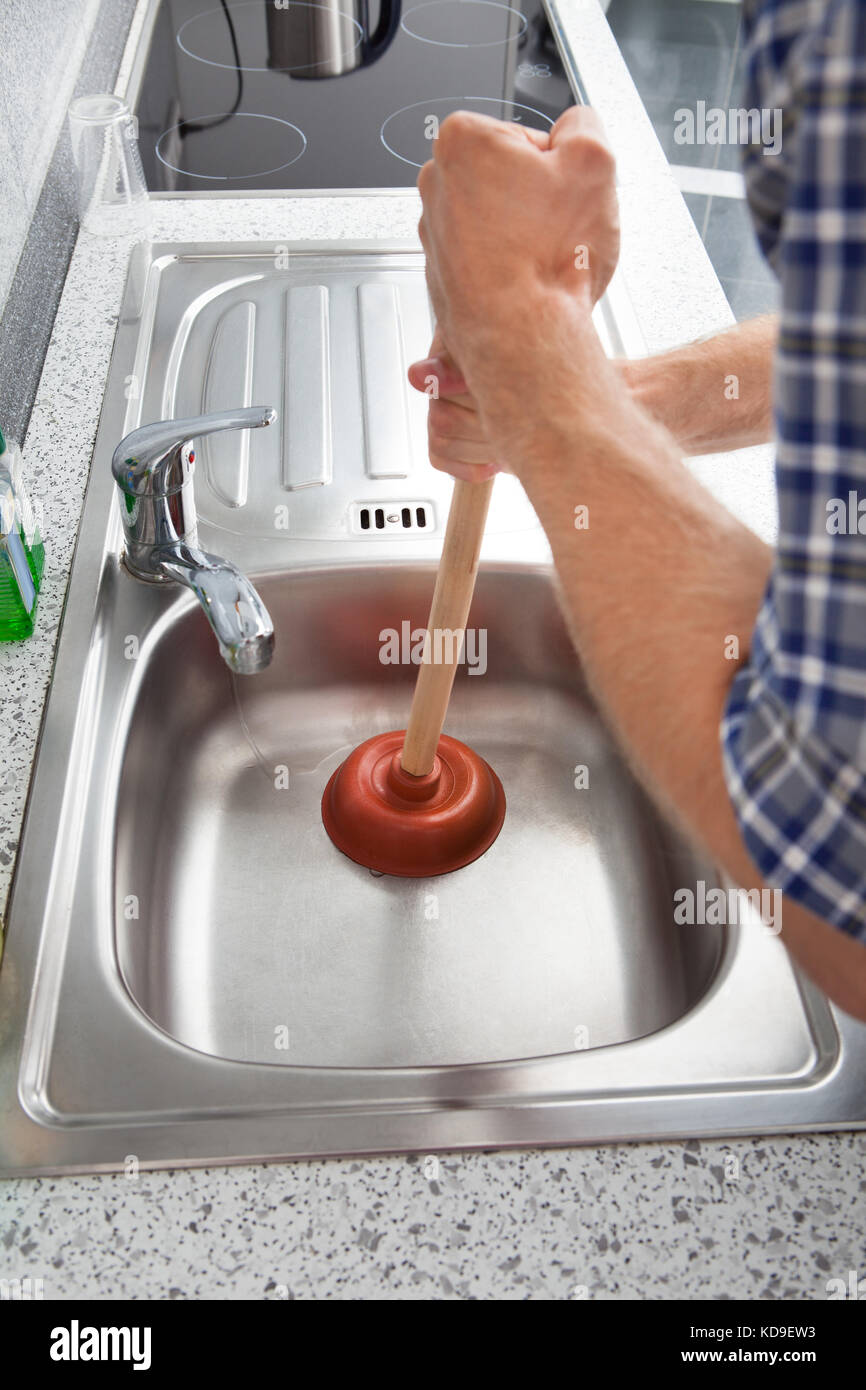
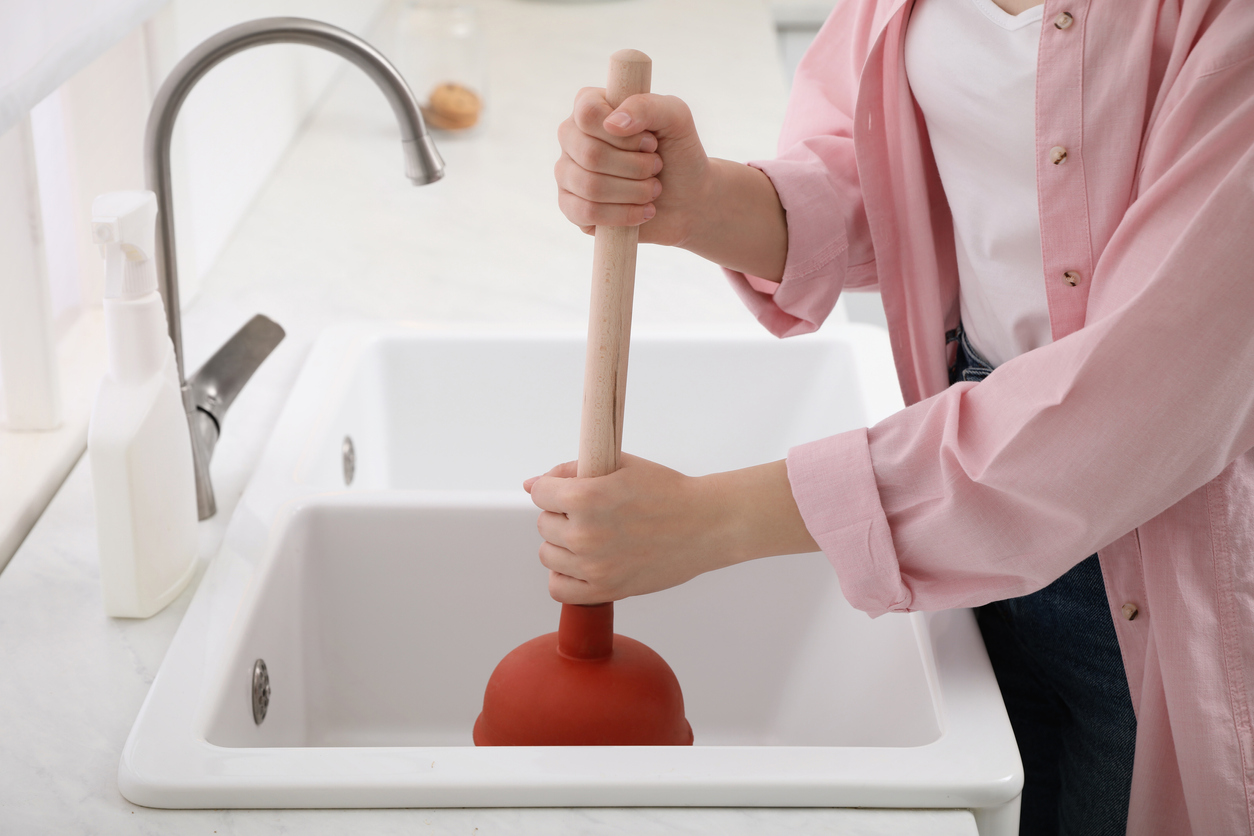
Yes, you can use a plunger on most clogged kitchen sinks. Use a clean cup-style sink plunger, cover any second drain opening, and make a tight seal before pushing and pulling. Never plunge a sink that contains chemical drain cleaner or standing water that could splash a hazardous product.
A clogged kitchen sink can bring dinner cleanup to a stop. In homes across the United States, food scraps, cooking grease, and bits of soap can build up inside a kitchen drain. Before you reach for a harsh drain cleaner or call a plumber, a plunger may help clear a simple blockage.
The key is to use the right plunger and seal the drain well. A single-bowl sink is often easier to plunge than a double-bowl sink because both drains may need attention. The method also depends on whether the sink has a garbage disposal, whether the clog affects other fixtures, and whether you have used a chemical cleaner.
A plunger can help move a clog that sits near the sink drain or in the nearby drainpipe. Its rubber cup forms a seal over the drain. Pushing and pulling the handle moves water and changes pressure in the pipe, which may loosen soft debris and help it move along.
The method works best when water can transfer pressure to the blockage. A poor seal lets air escape around the cup, so the force does little to clear the drain. A clog made of compacted grease, a solid object, or a blockage farther down the plumbing may need another method.
Plunging does not remove every kind of clog. It is a reasonable first step for a simple, isolated sink blockage, provided you can work safely and have not used a chemical drain product.
Source: bigblueplumbing.au
Food scraps
Small bits of food may collect near the drain opening or in the disposal and trap area. A plunger may shift a soft blockage, but large scraps should be removed by hand only when the fixture is safe and the disposal is off.
Soap and grease buildup
Dish soap and fats can combine with other debris inside the drain. Plunging may help with a loose obstruction, but a thick grease buildup can remain and may need drain cleaning.
A deeper blockage
A clog farther down the branch drain may resist a plunger. Repeated force will not fix every obstruction and can waste time or worsen an existing leak.
When a Plunger Is Less Likely to Help
A sink that drains slowly for weeks may have a buildup inside the trap or pipe rather than a loose clog at the drain opening. A plunger may give short-term relief, but the problem can return.
If water rises in the sink when a washing machine drains, or if a nearby tub or floor drain also backs up, the problem may affect a shared drain line. That situation calls for broader plumbing checks rather than endless plunging.
Several fixtures back up
Stop and contact a plumber, especially if wastewater appears in a tub, shower, or floor drain.
The sink leaks
Stop plunging if water appears under the sink or around a pipe joint. Check the area without dismantling a pressurized or damaged fitting.
Choose the Right Plunger for a Kitchen Sink
Use a clean cup-style plunger for most kitchen sink drains. It has a simple rubber cup that can sit flat over a drain opening. The rim needs to touch the sink around the full drain so pressure stays focused on the pipe.
A toilet flange plunger has an extra fold-out sleeve designed to fit a toilet outlet. It is not the easiest shape to seal against a flat kitchen sink. A clean cup-style model is usually a better fit for this job.
Keep a sink plunger separate from the one used for a toilet. This helps reduce the spread of germs around food prep areas. Store the sink tool clean and dry, away from dishes, cutlery, and food.
Best for a typical flat sink drain when the rubber cup covers the opening and forms a firm seal.
Toilet flange plunger
Designed for a toilet outlet. Its shape may make it harder to form a good seal on a kitchen sink.
Small drain plunger
May fit a narrow drain more easily, but the cup still needs to seal the opening without slipping.
Check the Sink Before You Start
Look for a garbage disposal, a second basin, an overflow opening, or a visible leak. These details affect how you prepare the sink. If you have a disposal, switch it off before working near the drain and never put your hand inside it.
If you can see loose food scraps near the opening, remove them with a tool or gloved fingers only when the disposal is off and the area is safe. Do not reach blindly into the drain.
Protect the work area
Move dishes and food away from the sink. Wear household gloves and eye protection if dirty water may splash.
Check for chemical cleaners
If you have poured a drain cleaner into the sink, do not plunge or take apart the trap. Follow the product label’s emergency and handling directions.
How to Use a Plunger on a Kitchen Sink Step by Step
The safest method is to prepare the drain, seal the plunger, use controlled strokes, and test the flow. Avoid sharp, forceful movements that send dirty water across the counter. You should not need to use extreme force to plunge a normal sink clog.
Start only if the sink contains no chemical drain cleaner and there is no sign of a serious backup or damaged pipe. If the clog followed the use of a caustic or acidic product, do not try this method.
Source: bigblueplumbing.au
Step 1: Remove Excess Water and Debris
Take out dishes, food scraps, and other items. If the sink is full, remove enough water with a cup or small container to leave the drain accessible. A shallow layer of clean water can help the plunger seal and transfer pressure, but a deep pool of dirty water raises the risk of splashes.
Avoid removing water by hand if you suspect it contains a drain-cleaning chemical. Follow the product instructions and keep people and pets away from the affected area.
Leave a little water if safe
A small amount around the plunger cup can help form a seal. The drain opening should still be easy to position over.
Step 2: Seal Any Other Drain Opening
For a double-bowl sink, water and air can escape through the other drain if it remains open. Cover that drain with a snug drain stopper or a suitable cover that stays in place. If the sink has an overflow opening, account for it too when forming the seal.
Do not put your hand into a disposal to block the opening. Use a stopper or another safe way to close the drain. If you cannot seal the other opening securely, the plunger may not work well.
Double-bowl sink
Close the second drain before plunging the blocked basin.
Single-bowl sink
Make sure the plunger cup sits flat and fully covers the drain.
Step 3: Place the Plunger Over the Drain
Center the rubber cup over the drain and press it down gently until the rim forms a full seal against the sink. Keep the handle upright enough to control the movement. If the cup tilts or leaks around the edge, reposition it before you start.
Check the seal
A tight fit matters more than a hard push. Air escaping around the cup reduces the pressure that reaches the clog.
Step 4: Use Controlled Push-and-Pull Strokes
Push down gently at first, then pull up while keeping the cup sealed. Repeat with steady, controlled strokes for several cycles. The pulling motion can be just as useful as the downward push because it helps shift debris in the drain.
Do not yank the handle so hard that the cup breaks its seal or dirty water sprays out. If the plunger slips, reset it and check the other drain opening before trying again.
Keep the cup sealed
Maintain contact with the sink during each stroke. Lift the cup only when you are ready to check the result.
Stop if you see a leak
Water under the sink or around a pipe joint is a reason to stop rather than apply more pressure.
Step 5: Lift the Plunger and Test the Drain
Lift the plunger and watch whether the water drains away. If the level falls and the sink begins to empty at a normal rate, the clog may have loosened. Remove any debris that comes up, using gloves or a suitable tool.
Run a small amount of water to test the drain only when you are confident no chemical cleaner is present and there is no sign of a leak. If the water drains slowly, you can make one more careful attempt. Repeated attempts without improvement are a sign to change methods.
Signs of success
Water drains without rising, gurgling, or backing up into the other basin.
Signs the clog remains
Water stays pooled, rises in the other basin, or drains slowly again after a brief improvement.
How to Plunge a Double Kitchen Sink
A double kitchen sink needs an extra step because the two basins often connect to the same drain system. When you plunge one side, pressure can escape through the other drain. This makes it harder to move the clog.
Close the second drain with a stopper before plunging the blocked side. Make sure the stopper stays in place during each push and pull. If both sides contain standing water, avoid plunging so forcefully that water shoots out of the unblocked opening.
Source: Bob Vila
What If Water Rises in the Other Basin?
Water rising in the other basin often means the two sides share a connected drain path and the blockage remains downstream. It does not prove the clog is deep in the main sewer line, but it shows that plunging one open drain may not be enough.
Secure the second drain before another careful attempt, provided there is no chemical cleaner or leak. If both basins stay blocked, stop and consider cleaning an accessible trap or calling a plumber.
Avoid loose covers
A cover that pops off can send dirty water across the counter. Use a proper stopper or another secure drain closure.
Check the disposal side
If one basin contains a garbage disposal, switch the unit off before checking for visible debris. Never reach into the disposal opening.
What to Do If the Plunger Does Not Work
If careful plunging does not restore normal flow, do not keep increasing the force. The blockage may sit in the P-trap, consist of a firm object, or extend farther down the drain. A leaking or damaged pipe can also make further pressure unsafe.
Choose the next step based on what you can safely observe. If the sink is the only fixture affected and no chemical cleaner has been used, checking an accessible trap may be reasonable for someone comfortable with basic plumbing. A persistent or widespread backup needs professional attention.
Source: storage.googleapis.com
Try Hot Tap Water Only When Appropriate
For a minor greasy film, warm water and a small amount of dish soap may help loosen residue. This is not a dependable fix for a solid clog or a fully blocked drain. Avoid pouring boiling water into a sink because very hot water can damage some pipes, seals, or sink components, and it can cause burns.
Do not add water or dish soap to a drain containing chemical cleaner unless the product label explicitly directs you to do so. Never mix drain products with bleach, acids, ammonia, or other cleaners.
Use warm water with care
Only consider it when no chemical cleaner is present, the drain can accept water safely, and the fixture shows no signs of damage.
Check the P-Trap if You Can Do So Safely
The P-trap is the curved section of pipe below the sink. It holds water to help block sewer gases from entering the home, and it can also catch debris. If you choose to remove it, first place a bucket beneath it and protect the cabinet from spills.
Do not take the trap apart if the sink contains chemical drain cleaner, if the fittings look corroded or fragile, or if you are unsure how to reseal the joints. A plumber can remove the blockage without risking a spill of hazardous liquid or a damaged connection.
Prepare for trapped water
Even a blocked sink trap may hold dirty water. Keep the bucket in place and avoid contact with the contents.
Check for leaks afterward
Any removed fitting must be reassembled correctly. Run water only when the system is safe, then inspect each joint for drips.
Know When to Call a Plumber
Call a licensed plumber when the blockage remains after reasonable attempts, the sink repeatedly clogs, or the pipes leak. Seek help promptly if several fixtures back up or wastewater comes up through another drain. These signs may point to a larger drainage problem.
If you suspect a chemical cleaner is trapped in the drain, tell the plumber what product you used and when. Do not conceal that detail because it affects how the blockage can be handled safely.
Recurring clogs
A clog that returns may point to grease buildup, an object in the line, or a pipe problem.
Multiple affected fixtures
Backups in more than one drain can indicate a shared line blockage that a sink plunger will not solve.
Visible pipe damage
Stop DIY work if a fitting is cracked, a pipe is loose, or water is leaking into the cabinet.
Kitchen Sink Plunging Mistakes to Avoid
Most plunging problems come from a poor seal, an open second drain, or unsafe preparation. Fixing these issues is more useful than pushing harder. Protecting your eyes, skin, pipes, and disposal should come before clearing the clog.
The most serious mistake is plunging after adding chemical drain cleaner. The action can force caustic or acidic liquid out of the drain. A splash can cause severe injury, so stop and follow the product’s safety instructions instead.
Source: storage.googleapis.com
Using a toilet plunger that does not seal
A large or awkward cup may leak air around the sink drain. Choose a suitable cup-style sink plunger.
Leaving the second basin open
Pressure can escape through the other drain, making plunging less effective.
Using excessive force
Hard, uncontrolled strokes can splash dirty water and put unnecessary stress on weak or damaged fittings.
Reaching into a garbage disposal
Never put your hand inside the disposal. Switch it off before inspecting visible debris, and use an appropriate tool only as directed by the manufacturer’s instructions.
Mixing drain cleaners
Never mix different drain products or combine them with household cleaners. Dangerous reactions or fumes may result.
Ignoring repeat clogs
Repeated blockages may need a deeper inspection instead of another round of plunging.
Is a Plunger Safe for PVC Pipes?
A suitable sink plunger is commonly used on ordinary household drains, including many systems with plastic pipe. Still, the condition of the plumbing matters. A loose joint, damaged trap, or brittle fitting may leak when pressure changes.
Use controlled strokes and stop if you see a leak or hear signs of a fitting shifting. If the plumbing is old, damaged, or poorly supported, ask a plumber to inspect it instead of applying more force.
Sound plumbing
Gentle, controlled plunging may be reasonable when the drain is otherwise in good condition.
Damaged plumbing
Do not plunge a sink with visible cracks, loose joints, or an active leak.
How to Prevent Kitchen Sink Clogs
The best way to reduce kitchen sink clogs is to keep grease, bulky food waste, and other debris out of the drain. A plunger can help with some blockages, but prevention reduces the need to use one in the first place.
Do not pour cooking oil, bacon fat, or melted grease down the sink. Let grease cool, then place it in a suitable container for disposal under your local waste rules. Wipe greasy pans with a paper towel before washing them when practical.
Source: storage.googleapis.com
Scrape plates first
Put solid food scraps in the trash or a suitable compost bin rather than washing them into the drain.
Use a drain strainer
A strainer catches many scraps before they enter the pipe. Empty it often so debris does not wash through.
Use the disposal correctly
Follow the disposal manufacturer’s directions. Avoid putting grease, fibrous waste, or large amounts of food into the unit.
Watch how water drains
A change from normal flow to repeated slow drainage can be an early sign of buildup. Address it before the sink becomes fully blocked.
Keep cleaning products separate
Use only products suitable for the fixture and follow the label. Never mix drain chemicals or use a plunger afterward unless the product instructions explicitly confirm it is safe.
Does Dish Soap Prevent Clogs?
Dish soap helps remove grease from dishes, but it does not guarantee that grease will stay dissolved as it travels through a cool drainpipe. Fats can cool and stick to pipe walls, where they can trap food particles and other debris.
Use dish soap as intended for washing dishes, not as a cure for every blockage. Avoid relying on repeated hot-water flushes to solve a drain that already backs up.
For everyday care
Scrape food into the trash, wipe excess grease from pans, and use a sink strainer.
For an existing clog
Choose a safe method based on the blockage and stop if the drain remains blocked or other fixtures back up.
Frequently Asked Questions
Q
Can you use a toilet plunger on a kitchen sink?
You may be able to use a clean toilet plunger if its rubber cup forms a tight seal over the sink drain. However, a cup-style sink plunger is usually easier to position on a flat drain. Keep toilet and kitchen tools separate for hygiene.
Q
Should the kitchen sink have water in it before plunging?
A shallow layer of water can help the plunger cup seal and transfer pressure. Remove excess water if the basin is full. Never plunge water that may contain chemical drain cleaner because it can splash onto your skin or into your eyes.
Q
Can you plunge a kitchen sink with a garbage disposal?
Yes, a sink with a garbage disposal may be plungable if the clog is suitable for the method and no chemical cleaner is present. Switch the disposal off first, never reach inside it, and seal the other basin if the sink has two bowls. Stop if the disposal leaks or appears damaged.
Q
Can plunging damage kitchen sink pipes?
Controlled plunging is a common method for a simple sink clog, but it cannot be guaranteed safe for damaged plumbing. Loose joints, cracked fittings, or fragile pipes may leak when pressure changes. Stop immediately if you see water under the sink or notice a fitting move.
Q
What should you do if both kitchen sink basins are clogged?
Close one drain securely and try controlled plunging on the other only if the sink contains no chemical cleaner and the plumbing appears sound. If both basins remain blocked, or water backs up in other fixtures, stop and contact a plumber. The blockage may be farther along the shared drain.
✦ Wrapping Up
Conclusion
Yes, you can use a plunger on a kitchen sink when the clog is suitable and the drain is safe to work on. A clean cup-style plunger, a tight seal, and steady push-and-pull strokes are the main steps. For a double-bowl sink, close the other drain before you begin.
Never plunge after using chemical drain cleaner, and do not force a sink that leaks or backs up through several fixtures. If careful plunging fails, check the situation before choosing another method or calling a plumber.
💡 Key Takeaway
Before you start, check for chemical drain cleaner, switch off any garbage disposal, and seal the second drain if present. Plunge with controlled strokes, test the flow safely, and stop if the clog remains or a leak appears.