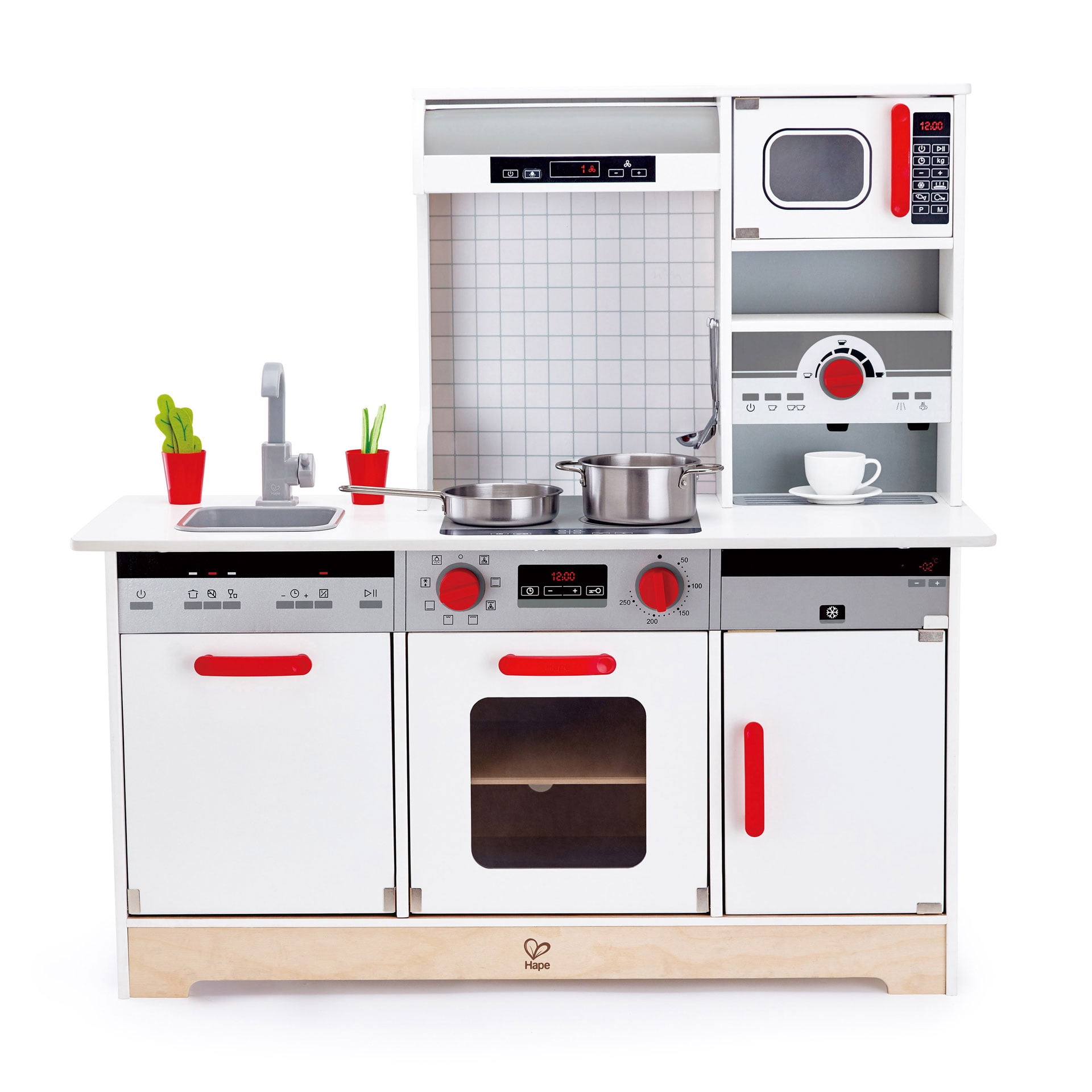
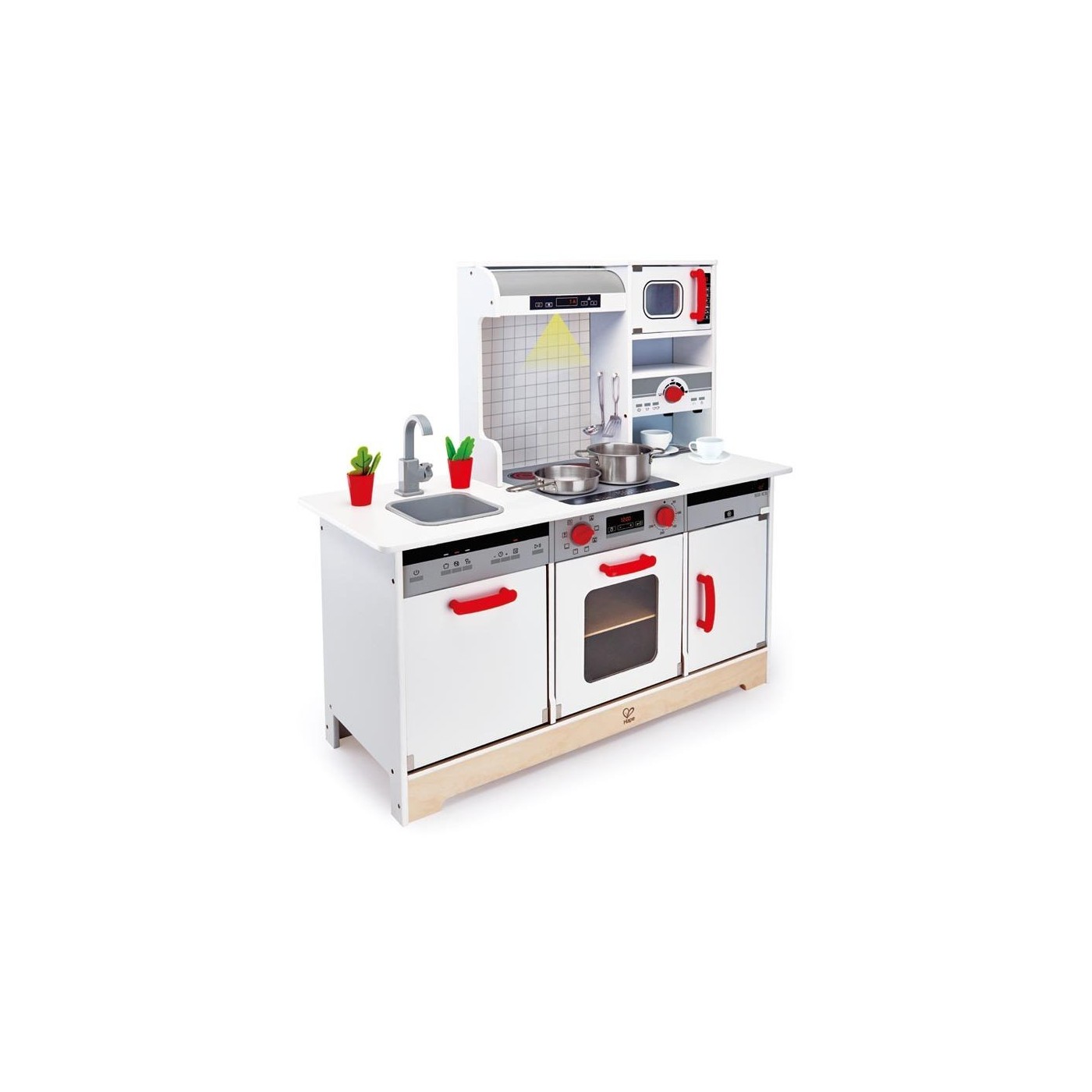
A Hape wooden kitchen is a pretend cooking toy that lets children play at making meals, washing dishes, and running a small home or restaurant. The right model depends on your child’s age, available space, preferred features, and budget.
In American homes, a play kitchen can give young children their own spot for make-believe cooking. It may sit in a playroom, bedroom, family room, or corner of the living room. Children can pretend to cook breakfast, serve lunch, or wash dishes after a family meal. Hape makes several wooden play kitchen designs, so features and sizes vary by model.
Before buying a Hape wooden kitchen, check the exact product name, age label, dimensions, included accessories, and assembly needs. Some models have a stove, sink, oven, and turning knobs. Others add more work space, storage, sound effects, or outdoor play features. A clear check of these details can help you avoid buying a kitchen that is too large, too small, or missing parts your child wants.
A Hape wooden kitchen is a toy kitchen made for pretend play. It gives children a small version of the cooking space they see at home. Depending on the model, it may have a cooktop, sink, oven, cupboard, shelves, or a place to hang toy utensils.
The goal is not to cook real food. Children use pretend food and toy tools to act out daily tasks. They might make soup for a stuffed bear, bake an imaginary cake, or serve a meal to a parent. These simple scenes can change each time a child plays.
Hape offers different designs rather than one single kitchen. A compact model may suit a small play area, while a larger set may offer more work space and room for two children. The product name matters because photos of one Hape kitchen do not confirm the features of another.
Source: i.etsystatic.com
Pretend cooking
A stove, oven, or worktop gives children a place to act out meal prep without using heat or real kitchen tools.
Everyday routines
A toy sink and cupboards can help children act out washing dishes, putting things away, and setting up a meal.
Open-ended play
The same kitchen can become a home kitchen, cafe, bakery, or restaurant, depending on the child’s ideas.
Why Choose a Wooden Play Kitchen?
A wooden play kitchen can feel like a small piece of playroom furniture. Its firm panels and fixed layout give children a steady place to play. Wood does not mean that every part is solid timber, though. Some products use a mix of wood, manufactured wood, metal, and plastic, so read the material details for the exact model.
The best reason to choose a wooden kitchen is its fit with your child’s play habits and your home. Color, size, storage, and ease of cleaning can matter more than the material alone. A large unit may look appealing online but become hard to place in a small apartment.
Check the full build
Read the listed materials rather than assuming the whole kitchen is made from solid wood.
Think about long-term use
Look for a design that can support the kinds of pretend games your child already enjoys.
Features to Check Before Buying
The useful features of a Hape wooden kitchen depend on the model and the child who will use it. A simple kitchen with a stove and sink may offer plenty of room for pretend meals. A larger model may suit children who enjoy serving guests, storing play food, and acting out several tasks at once.
Do not judge a kitchen by the number of parts alone. Think about whether your child will use those parts, whether they fit the room, and whether they are easy to reach. A few well-used features may be more helpful than a crowded set with pieces that often get lost.
Source: cdn.shopify.com
Cooktop and knobs
Turning knobs can make pretend cooking feel more lifelike. Check whether the knobs turn, click, or have another listed function.
A toy sink lets children act out washing produce and dishes. It does not connect to a real water supply unless the specific product clearly states otherwise.
Oven and doors
Opening doors can add more play ideas, but hinges, handles, and moving parts need to remain secure.
Shelves and storage
Cabinets and open shelves help keep play food, pots, and cups in one place after play.
Sound and light
Some models have extra effects. Confirm whether batteries are needed and whether the listed accessories are included.
Accessories Included With the Kitchen
A product listing may show plates, pans, spoons, play food, or other items around the kitchen. These pictures do not always mean every item comes in the box. Read the included-parts list and compare it with the package details before placing an order.
If a kitchen comes with only a few accessories, that is not always a problem. Children can start with a small set of pretend food and dishes. Extra items can be added later if the child uses the kitchen often.
Count the listed pieces
Check the exact number and type of included accessories, especially when a retailer uses a large display photo.
Check size compatibility
Choose play food and utensils that fit the kitchen’s shelves, storage areas, and intended age range.
Which Hape Wooden Kitchen Is Right for Your Child?
The right Hape wooden kitchen is the one that fits your child’s play style, age, and available space. There is no single model that suits every family. A compact design can work well in a small room, while a wider kitchen may be more useful when siblings or friends often play together.
Hape product names and designs can differ across shops and markets. A listing may describe a gourmet kitchen, a multi-function kitchen, an all-in-one kitchen, or an outdoor kitchen. Check the exact model number and product details before comparing prices or assuming two listings describe the same item.
Source: m.media-amazon.com
For a small room
Look for a compact design with enough space for the child to stand or sit and move safely around the unit.
For pretend restaurant games
A model with extra counter space, shelves, or a chalkboard may support menus and serving games.
For children who like realistic details
Look for a sink, oven window, turning knobs, and other features that are actually listed for the chosen model.
For outdoor play
Choose a kitchen made for outdoor use rather than assuming an indoor wooden kitchen can stay outside.
Compare Dimensions Before You Buy
Product dimensions can help you decide whether a kitchen will fit. For example, Hape’s official Gourmet Kitchen with Cook listing gives dimensions of 21.5 inches long, 12.5 inches wide, and 27 inches high. These figures apply to that listed model, not to every Hape kitchen.
Measure the floor area at home and check the height against your child’s reach. Leave enough room for opening the oven or cabinet doors and for an adult to help when needed. If the kitchen will sit near a sofa or doorway, make sure it does not block a walking path.
Measure the space
Record the width, depth, and height available where the kitchen will stand.
Allow room to play
Leave space for the child to move, place pretend food on the counter, and open doors without hitting nearby furniture.
Check the package size
If you plan to carry the box upstairs or fit it in a car, review the shipping dimensions and package weight too.
Age Guidance and Safe Play
Follow the age range and warnings on the exact Hape wooden kitchen you plan to buy. Many Hape pretend kitchens are marked for children ages 3 and up. The age label is a key safety guide, not just a suggestion about how much fun a child may have with the toy.
Small accessories can pose a choking risk for young children. Keep the set away from children who are below its stated age range, and do not let a younger child play with loose parts from an older sibling’s kitchen. Adult supervision remains useful, especially when children share a play area.
Before the first play session, inspect the kitchen for loose screws, damaged panels, rough edges, or parts that do not work as intended. If something is cracked or unstable, stop use until it can be repaired in line with the maker’s instructions.
Source: images.thenile.io
Follow the age label
Use the product’s age recommendation and warning label to decide whether the toy is suitable for the child.
Keep small pieces in check
Store small accessories away from babies and children who may put objects in their mouths.
Secure the unit
Place the kitchen on a level floor and follow any instructions about wall attachment or stability.
Use only as a toy
Do not let children use real knives, hot pans, working appliances, or actual cleaning products as part of pretend play.
What to Check After Assembly
Once the kitchen is assembled, look over every visible joint and moving part. Doors should open as intended, knobs should stay attached, and the unit should not rock when used in the normal way. Follow the instructions for tightening hardware and do not add parts that the maker has not approved.
If a part breaks, check the product manual or contact the seller or manufacturer about a suitable replacement. Tape, glue, or improvised hardware may not restore the toy’s intended strength. Keep the kitchen out of use if the repair leaves a sharp edge or an unstable structure.
Check the hardware
Make sure the supplied screws and fasteners are fitted as directed and do not leave sharp points exposed.
Test doors and knobs
Move each part gently and look for loose fittings, pinched fingers, or parts that may detach.
Review recalls when needed
If you suspect a safety issue, check official consumer product recall information and contact the manufacturer with the model details.
How to Assemble a Hape Wooden Kitchen
Most full-size wooden play kitchens require adult assembly. The exact process depends on the model, so use the instruction sheet supplied with your product rather than a guide for a different Hape kitchen. Set aside enough time to sort the parts and work without rushing.
Before you begin, clear a flat area and check the parts against the manual. Keep screws and small fittings in a tray so they do not roll under furniture. If the instructions call for a tool, use the correct type and size instead of forcing a screw into place.
Source: media.karousell.com
Step 1: Read the manual
Review the diagrams and identify the front, back, side panels, shelves, doors, and hardware before joining the pieces.
Step 2: Sort all parts
Lay out the pieces and compare them with the parts list. Contact the seller if anything appears to be missing or damaged.
Step 3: Build in order
Follow the numbered steps and keep panels aligned. Avoid fully tightening every fastener too early if the instructions require later adjustment.
Step 4: Fit doors and accessories
Attach handles, knobs, shelves, and doors as shown. Do not force a part that does not line up.
Step 5: Check the finished unit
Tighten the hardware as directed, test moving parts, and confirm that the kitchen stands securely on a level surface.
Common Assembly Problems
A panel that seems to be in the wrong place may be facing the wrong way. Stop and compare its holes and edges with the manual before adding more screws. Forcing a fastener can damage the panel or make later steps harder.
A wobbly kitchen may have a loose connection, a panel that is not seated properly, or an uneven floor beneath it. Check the assembly steps again and tighten only as instructed. If the unit remains unstable, contact the manufacturer rather than allowing a child to use it.
A screw will not line up
Check the panel direction and step order. Do not enlarge holes or force the screw into the wood.
A door rubs against the frame
Review the hinge placement and panel alignment before adjusting the hardware.
A part is missing
Keep the packaging and model information, then ask the seller or maker about the correct replacement.
Cleaning and Caring for a Wooden Play Kitchen
Regular light cleaning can help keep a Hape wooden kitchen ready for play. Dust the shelves and worktop, then wipe suitable surfaces with a soft cloth that is only slightly damp. Follow the maker’s care instructions for the exact finish and materials.
Avoid soaking wood or leaving water around joints, screw holes, and unfinished edges. Too much moisture can affect some wooden and manufactured wood parts. Dry the surface after wiping and let it air out before returning accessories to the shelves.
Do not spray strong cleaners, bleach, or disinfectants onto the kitchen unless the product instructions say the cleaner is suitable. A cleaner that is safe for a household counter may not be right for a child’s painted toy. Keep cleaning products out of reach and never let children help with adult cleaning chemicals.
Source: toys.hape.com
Wipe after play
Remove crumbs, dust, and marks with a soft cloth suited to the surface.
Clean accessories separately
Use the care directions for each item because wood, plastic, fabric, and metal may need different treatment.
Keep the kitchen dry
Dry damp areas and avoid storing the unit in a wet or humid place unless the model is designed for that setting.
Inspect it often
Look for peeling finish, loose parts, cracks, and damaged doors during routine cleaning.
Can a Hape Wooden Kitchen Be Used Outdoors?
Only use a kitchen outdoors if the manufacturer identifies that model for outdoor play. An indoor wooden kitchen may not be built to handle rain, damp soil, direct sun, or large changes in temperature. Leaving it outside can damage its finish and structure.
Hape also offers outdoor play kitchen designs, including mud kitchens. These are intended for a different kind of play and may use materials suited to outdoor settings. Even then, follow the model’s instructions for placement, cleaning, storage, and weather exposure.
Check the intended setting
Confirm that the listing says outdoor use rather than relying on a product photo.
Protect indoor models
Keep an indoor wooden kitchen away from rain, wet grass, and damp patios.
Follow care directions
Outdoor toys still need regular checks for wear, dirt, loose parts, and standing water.
How a Pretend Kitchen Can Support Learning
Pretend kitchen play gives children a simple way to act out things they see adults do. They may name foods, describe what they are making, count plates, or decide who gets served first. These activities can create chances to practise language, planning, and social skills during everyday play.
The toy does not teach every skill by itself. The child’s age, interests, play partners, and the way adults join in all affect the experience. A child who enjoys quiet solo play may use the kitchen in a different way from siblings who turn it into a busy pretend cafe.
Source: toys-shop.gr
Language
Ask the child to name the pretend meal, explain the steps, or describe what a guest has ordered.
Counting and sorting
Count toy plates, sort play food by type, or match cups with saucers.
Social play
Take turns being the cook, customer, server, or person who cleans up.
Daily routines
Use pretend play to talk about setting a table, storing dishes, and cleaning up after a meal.
Simple Games to Try at Home
You do not need a large set of accessories to start. A few toy plates, pretend food, and a safe play space can lead to many small games. Let the child make choices instead of directing every step, so the play stays open and fun.
Keep the activity suited to the child’s age. Do not use real food that could spoil, hot items, sharp tools, or actual cleaning products as props. The pretend version is enough for these games.
Make a breakfast menu
Invite the child to choose two or three pretend foods and serve them to family members or stuffed toys.
Open a tiny cafe
Take turns choosing a menu item, placing an order, and thanking the pretend cook.
Sort and store
Put toy dishes in one place and pretend food in another to practise simple sorting.
Clean up the kitchen
Ask the child to return safe accessories to their shelves after the game ends.
Price, Value, and What to Check Before Ordering
The price of a Hape wooden kitchen can vary by model, retailer, condition, and included accessories. A compact kitchen and a larger feature-rich set should not be compared by price alone. Compare the size, included parts, material details, age label, and any added sound or light features before deciding which one offers better value for your home.
Prices and stock can change, so use the retailer’s current product page to confirm the total cost. For online orders in the United States, check shipping fees, delivery estimates, return rules, and whether the item is sold by the retailer or a marketplace seller. These details can affect the final cost and what help is available if something arrives damaged.
Source: limetreekids.com.au
Confirm the model
Match the product name, model number, photos, and dimensions so you know which kitchen is being sold.
Read the package list
Check whether cookware, food toys, batteries, or other pictured items are included.
Check delivery and returns
Review the seller’s shipping costs, return window, and process for missing or damaged parts.
Consider used kitchens carefully
Ask for clear photos of the actual item and inspect its hardware, finish, stability, and included accessories before purchase.
Is a Used Hape Wooden Kitchen Worth Buying?
A used play kitchen may cost less than a new one, but its condition matters. Ask the seller whether all doors, knobs, shelves, and fasteners are present. Request the model name or a photo of its label so you can find the correct manual and age guidance.
Check for cracked panels, missing screws, loose hinges, peeling paint, and signs of water damage. A low price may not be useful if the kitchen needs hard-to-find parts or cannot be made stable. Do not buy a damaged toy for a young child unless it can be repaired properly with approved parts.
Ask for real photos
Look at the actual kitchen from the front, back, sides, and inside the storage areas.
Check completeness
Compare the included parts with the correct manual and ask about missing hardware.
Inspect the finish
Avoid a unit with peeling coating, sharp edges, severe cracks, or unknown repairs.
Common Mistakes to Avoid
A little checking before purchase can prevent many common problems. The biggest mistake is treating all Hape kitchens as if they have the same size, parts, or age range. Model names and product photos may look alike while the actual layouts differ.
Another mistake is choosing a kitchen based only on appearance. A large set may take up too much room, while a small one may not have the counter space a child wants. Think about daily use, storage, cleanup, and the child’s reach before choosing.
Source: i.etsystatic.com
Skipping measurements
Measure the space and compare it with the assembled dimensions, not just the shipping box.
Assuming all accessories are included
Read the package list and confirm which items are shown for display only.
Ignoring age warnings
Follow the stated age range and keep small parts away from younger children.
Leaving assembly unchecked
Inspect fasteners, doors, and stability before the first play session and at intervals later.
Using the wrong cleaner
Follow the care guide and avoid harsh products or excess water on wooden surfaces.
Leaving an indoor kitchen outside
Use an outdoor model for outdoor play and protect indoor units from rain and damp conditions.
A Quick Checklist Before You Buy
Use this short checklist when comparing two or more listings. It keeps the choice focused on the child’s needs and the practical details that affect use at home.
Age
The child’s age fits the product’s stated range and safety warnings.
Size
The kitchen fits the room and leaves space for safe movement.
Features
The stove, sink, storage, doors, or other parts match the child’s interests.
Parts
The package includes the accessories you expect.
Care
You know how to clean the surfaces and where the kitchen can be used.
Seller
The return policy and process for missing parts are clear.
The suitable age depends on the exact model. Many Hape wooden play kitchens are marked for ages 3 and up, but you should check the product label and current manual. Small accessories may create a choking risk for younger children, so do not rely on age guidance from a different model.
Q
Does a Hape wooden kitchen come with play food?
Not every model includes play food. Some sets come with cookware or utensils, while others may include only the kitchen and selected accessories. Check the retailer’s included-parts list and package description before ordering.
Q
Is a Hape wooden kitchen hard to assemble?
Assembly varies by design. Many full-size wooden kitchens need an adult to fit panels, shelves, doors, knobs, and fasteners. Read the manual first, sort the hardware, and follow the steps in order. Contact the seller or manufacturer if a part is missing or does not fit.
Q
How do you clean a Hape wooden play kitchen?
Use a soft cloth that is slightly damp, unless the care guide gives other directions. Do not soak the wood or leave water around joints and screw holes. Dry the surfaces after cleaning and use only products approved for the materials and finish.
Q
Can a Hape wooden kitchen be used outside?
Use it outside only if the maker states that the exact model is intended for outdoor play. Indoor wooden kitchens may be damaged by rain, moisture, or long periods in direct sun. Hape has outdoor kitchen designs, so compare the intended use and care instructions before choosing.
Q
How much space does a Hape wooden kitchen need?
The space needed depends on the model. Check its assembled width, depth, and height, then leave room for the child to stand or sit and open doors. Also consider the route into the room and the space needed to unpack and assemble the kitchen.
Q
Are Hape wooden kitchens good for siblings?
They can work well for shared pretend play if the design has enough room and the children can take turns. A wider counter or more than one work area may help, but the best choice depends on the children’s ages and the space at home. Follow the product’s age guidance for every child who uses it.
✦ Wrapping Up
Conclusion
A Hape wooden kitchen can give children a simple place to cook pretend meals, serve guests, and act out daily routines. The right choice is not always the biggest or the one with the most features. It is the kitchen that fits the child’s age, play style, room, and family’s budget.
Before buying, confirm the exact model, assembled dimensions, included accessories, safety warnings, and care instructions. After delivery, follow the manual, check every fitting, and make sure the unit stands securely before play begins. A little care at the start can help keep the kitchen ready for many make-believe meals.
💡 Key Takeaway
Choose two or three Hape wooden kitchen models, compare their exact dimensions and included parts, and measure your play area before placing an order.