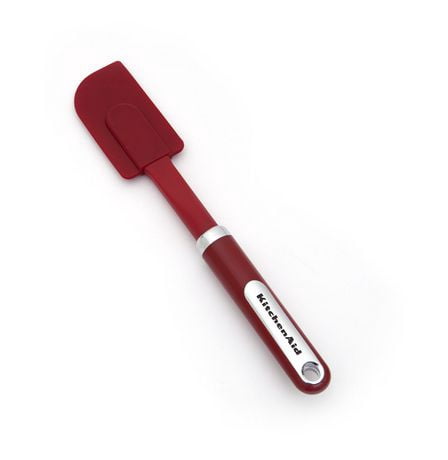
A KitchenAid rubber spatula is a handy tool for scraping bowls, mixing batters, folding ingredients, and spreading soft foods. Many KitchenAid scraper spatulas use a flexible silicone head rather than natural rubber. The right model can help reduce food waste and make everyday cooking easier.
In American home kitchens, a spatula often earns its place beside the measuring cups, mixing bowls, and wooden spoons. It helps with weekend pancakes, birthday cakes, holiday cookies, and quick weeknight meals. A flexible scraper can reach the sides of a bowl and gather food that a spoon may leave behind.
KitchenAid sells scraper spatulas in different styles, colors, and handle designs. Many have a flexible silicone head with a firm inner support and a separate handle. Exact materials, heat limits, and care rules can vary by model, so check the product details before you buy or use one near a hot pan.
This guide explains what a KitchenAid rubber spatula does, how to use it well, and how to clean it. It also covers common mistakes, safe heat use, and the differences between a scraper spatula and a flat turner. The goal is simple: help you choose and care for a tool that fits the way you cook.
A KitchenAid rubber spatula is a kitchen utensil with a broad head that bends enough to follow the shape of a bowl, jar, or pan. People often use the term rubber spatula for tools made from several soft materials. Many modern KitchenAid scraper spatulas use silicone, which is not the same material as natural rubber.
The flexible head helps gather food from curved surfaces. Its edge can slide along a mixing bowl and move thick batter toward the center. This simple action helps you combine ingredients and use more of what you have measured.
KitchenAid makes several scraper designs. Some use a plastic handle and a silicone-covered head. Others may have a different handle material or shape. Do not assume every KitchenAid spatula has the same heat limit, size, or cleaning rules.
Source: i.pinimg.com
Flexible head
The head bends against the sides of bowls and jars to collect soft food and thick mixtures.
Firm inner support
Some designs use a reinforced inner core to give the head more support during mixing and scraping.
Comfortable handle
The handle gives you control while mixing, spreading, or moving food from one container to another.
Smooth surface
A smooth silicone head is often easy to rinse and can be gentle on cookware when used as directed.
Is It Made From Rubber or Silicone?
The name rubber spatula is often used as a general term, even when the head is made from silicone. Silicone is a synthetic material with properties that make it useful for many kitchen tools. It can stay flexible across a range of cooking temperatures, depending on its design and rating.
KitchenAid’s silicone scraper spatulas are not all built alike. A silicone outer layer may cover a stronger inner structure, while the handle may use plastic or another material. Check the packaging or product page to confirm the materials in your model.
Silicone
Often used for flexible scraper heads and suitable for many bowls, pans, and baking tasks.
Natural rubber
A different material that should not be assumed to have the same heat resistance or care rules as silicone.
Plastic or wood handles
The handle material can affect comfort, cleaning, and whether the whole utensil can go in a dishwasher.
What Can You Use a KitchenAid Rubber Spatula For?
A KitchenAid scraper spatula is most useful when food is soft enough to move with a flexible head. It can handle many baking and cooking jobs without needing a separate tool for every step. Its shape also helps you work neatly in narrow jars and deep bowls.
The best results come from matching the tool to the food. A soft silicone head works well with cake batter, frosting, sauces, and mashed foods. It is not meant to replace a sturdy turner when you need to lift or flip a heavy burger.
Source: bartan.com.au
Scraping mixing bowls
Run the curved edge along the sides and base of the bowl to gather batter, frosting, dough, or other soft mixtures.
Mixing ingredients
Use the flat face to stir small batches of frosting, sauces, dips, or other mixtures that do not need a whisk.
Folding delicate foods
Move the spatula down through a mixture, across the base, and back up to combine ingredients gently.
Spreading frosting
Use the broad face to spread soft icing over cupcakes, cakes, or brownies.
Emptying jars
A narrow or curved head can help collect peanut butter, mayonnaise, yogurt, and other foods from the sides of a jar.
Gathering cooked food
A suitable silicone spatula can help move soft scrambled eggs, cooked vegetables, or thick sauce from a pan. Follow the tool’s heat rating and avoid direct contact with flames.
How to Scrape a Bowl Without Leaving Much Behind
Start by holding the bowl steady on a flat surface. Place the curved edge of the spatula against the upper side of the bowl, then draw it down toward the base. Turn the bowl as you work so you cover the full inside surface.
Use the narrower edge to reach the curve where the side meets the base. Gather the mixture into the center before scraping it out. This method works well with cake batter, cookie dough, whipped cream, and thick sauces, although very stiff dough may need a stronger tool.
Keep the head in contact
A light, steady angle helps the edge follow the bowl instead of skipping over food.
Turn the bowl
Moving the bowl gives you better access than twisting your wrist around the whole rim.
Use the right amount of force
Let the flexible edge do the work. Do not bend the head sharply against a hard rim or sharp object.
How to Fold Cake Batter or Whipped Egg Whites
Folding combines a light mixture with a heavier one while keeping as much trapped air as possible. Add the ingredients as directed by your recipe. Then slide the spatula down the side of the bowl, sweep across the bottom, and lift the mixture over the top.
Rotate the bowl and repeat until the ingredients are combined. Stop when you no longer see large streaks of the separate mixture, unless the recipe gives another sign of doneness. Excess mixing can deflate an airy mixture or make some batters tougher.
Use a broad, flexible head
A wide head can move more mixture in each gentle fold.
Avoid fast stirring
A folding motion is gentler than beating or making small, rapid circles.
KitchenAid Rubber Spatula Features to Check Before Buying
Choose a spatula based on the food you make most often, the containers you use, and the way you clean your tools. A larger scraper may be useful for cake batter, while a smaller head can fit narrow jars. A comfortable handle also matters when you need to scrape a large bowl for several minutes.
Product names can be similar, so read the exact model details instead of relying on a photo or color name. Heat ratings, dimensions, handle materials, and warranty terms can differ between versions and markets. Current prices and stock can also change by retailer.
Source: cdn.manomano.com
Head shape
A curved edge helps with round bowls. A flatter edge may work better against straight sides and flat surfaces.
Head flexibility
A flexible head is useful for scraping. A firmer head may give more control with thicker mixtures.
Length
A longer handle can reach into deep bowls and large jars. A shorter tool may be easier to store and use in small containers.
Handle grip
Look for a shape that feels steady in your hand, especially when mixing thick batter or scraping a large bowl.
Heat rating
Check the maximum temperature listed for the exact model and avoid exposing the tool to a flame or hot burner.
Cleaning instructions
Confirm whether the whole spatula is dishwasher safe or whether the handle needs hand washing.
Which Size Is Best for Home Baking?
A medium or full-size scraper is a useful starting point for most home bakers. It can reach around a standard mixing bowl and move a fair amount of batter with each stroke. A smaller scraper is handy for narrow jars, small batches, and getting food from measuring cups.
If you often bake large cakes or several batches of cookies, consider the depth of your bowls and the amount of mixture you handle. The longest tool is not always the easiest to control. A smaller spatula may work better when the bowl is low or the recipe makes only a little frosting.
Small tasks
Choose a compact head for jars, small bowls, and small amounts of sauce or frosting.
Everyday baking
Choose a general-purpose scraper for cake batter, cookie dough, and mixing bowls.
Large batches
Look for a longer handle and a head wide enough to move thick mixtures without excessive bending.
Does the Color Matter?
Color is mostly a style choice, but it can help you keep tools easy to spot in a busy kitchen. KitchenAid has offered scraper spatulas in shades such as red, black, pink, and cream across different product lines and markets. The available colors depend on the model and retailer.
Do not use color as a sign of heat resistance or material quality. Two spatulas that look alike may have different construction or care rules. Check the item number and specifications when those details matter.
Match your kitchen
Choose a color that fits your other tools if appearance matters to you.
Check the model
Use the item number and product details to confirm the material and temperature limit.
KitchenAid Rubber Spatula Heat Resistance and Cookware Safety
Heat resistance is one of the most important details to check before using a silicone spatula near a stove. KitchenAid’s general silicone gadgets care guidance lists a maximum heat resistance of 450°F (232°C). Some individual KitchenAid scraper spatula listings specify 500°F (260°C), so the exact product instructions take priority over a general rule.
A heat rating is not permission to leave the spatula in a hot pan for a long time. KitchenAid advises users not to leave silicone utensils in hot pans while cooking and to keep them away from a stovetop flame or heating element. A handle can also be made from a material with a different heat tolerance than the head.
Silicone heads are often suitable for nonstick cookware because they are less likely to scratch the coating than metal tools. Still, inspect the head for hard edges, trapped debris, or damage before use. A worn spatula is not worth risking damage to an expensive pan.
Source: m.media-amazon.com
Check the exact temperature limit
Read the packaging or official product details. Do not assume every KitchenAid spatula has the same rating.
Keep it away from direct flame
Do not rest the head on a gas flame, hot electric element, or another direct heat source.
Avoid long exposure to a hot pan
Use the spatula to stir or scrape, then set it on a heat-safe rest instead of leaving it in the pan.
Protect the handle
Keep plastic and wood handles away from hot cookware edges and follow the care instructions for the handle material.
Can You Use It on a Nonstick Pan?
A silicone KitchenAid scraper spatula is generally suitable for nonstick cookware when the specific product is labeled for that use. Its soft head can help stir sauce, move soft eggs, or scrape food from the pan without the hard edge of a metal utensil.
Use gentle pressure and avoid dragging a damaged or dirty tool across the coating. Do not cut food in the pan with a knife, and do not use the spatula to chip away burnt food. If the coating is peeling or badly scratched, follow the cookware maker’s advice about continued use.
Good uses
Stirring soft foods, mixing sauces, and lifting loose food from a suitable nonstick surface.
Poor uses
Scraping hardened burnt food, prying up stuck material, or working with a head that has a sharp or damaged edge.
How to Clean a KitchenAid Rubber Spatula
Clean the spatula after each use so food does not dry on the head or collect around its joints. KitchenAid recommends washing silicone tools before first use with warm water and mild detergent, then drying them thoroughly. The same basic approach works well for routine hand washing.
KitchenAid’s general care guidance says its silicone utensils are dishwasher safe, but wood-handled silicone tools are an exception. A product may also have special care instructions because of its handle or construction. When in doubt, use the instructions for your exact model rather than assuming all parts can go in the dishwasher.
Source: i5.walmartimages.ca
Wash soon after use
Rinse off loose food before it dries, especially after working with egg, cheese, sticky batter, or sugary sauces.
Use mild dish soap
Wash the head and handle with warm water and mild detergent, paying attention to the area where the two parts meet.
Rinse well
Remove soap and food residue from both sides of the head and around any seams.
Dry fully
Towel dry the spatula or allow it to dry fully before storing it in a drawer.
Skip harsh scrubbers
KitchenAid advises against steel wool, copper sponges, and coarse-bristle brushes that may scratch silicone.
How to Remove Greasy or Sticky Food
For greasy sauces or butter-rich batter, use warm water and dish soap first. Rub the silicone gently with a soft sponge, then rinse until the surface no longer feels slick. Repeat if needed instead of reaching straight for a harsh cleaner.
Sticky sugar, honey, or syrup can be easier to remove after a short soak in warm, soapy water. Avoid very hot water if the handle’s instructions warn against it. Do not use sharp tools to pick food from a seam because they can cut the silicone or damage the joint.
For oil
Use dish soap that is made to cut grease and rinse the surface thoroughly.
For dried batter
Soften the residue with a brief soak before wiping it away with a soft sponge.
For lingering odors
Wash the spatula again, rinse it well, and let it dry fully in a ventilated spot.
Can It Go in the Dishwasher?
Many KitchenAid silicone scraper spatulas are listed as dishwasher safe. That can make cleanup easier after baking or cooking for a group. Confirm that your specific model is dishwasher safe before placing it in the machine.
Wood-handled silicone tools need different care because the dishwasher can harm natural wood. Hand wash the parts according to the manufacturer’s directions and dry the handle promptly. If the head is removable, do not force it off unless the instructions say it is designed to detach.
Silicone and suitable plastic handles
Use the dishwasher only when the exact model’s care label allows it.
Wood handles
Follow the model’s hand-washing instructions and keep the wood from soaking for long periods.
Unclear instructions
Hand wash with mild soap and water until you can confirm the official care directions.
KitchenAid Rubber Spatula vs. Other Spatula Types
A scraper spatula is designed mainly to move soft food, scrape containers, and fold mixtures. Other spatulas may look similar but have a different job. A flat turner lifts food, while a narrow icing spatula helps spread frosting over a surface.
You do not need every type of spatula in your kitchen. Start with the jobs you do most often, then add another tool only if the first one cannot do the work well. A flexible scraper is often a useful first choice for people who bake or cook sauces at home.
Source: cdn.manomano.com
Scraper spatula
Best for gathering batter, scraping bowls, folding mixtures, and spreading soft foods.
Flat turner
Best for lifting and flipping foods such as pancakes, burgers, or grilled sandwiches.
Offset icing spatula
Best for spreading frosting and smoothing cake surfaces with controlled, even strokes.
Spoon spatula
Best when you need to scoop and stir soft foods, sauces, or mixtures in a pot or bowl.
Metal spatula
Useful for some high-strength lifting tasks, but it may scratch nonstick coatings if the cookware is not designed for metal tools.
Is a KitchenAid Scraper Spatula Good for Baking?
Yes, a scraper spatula can be useful for many common baking tasks. It helps combine ingredients, scrape the last batter from a bowl, fold whipped mixtures, and spread soft frosting. It is especially handy when the recipe calls for gentle mixing or when every bit of batter matters.
It is not a replacement for a whisk, dough hook, or sturdy pastry tool in every recipe. A whisk adds air and breaks up small lumps, while a scraper gathers and folds mixtures. Choose the tool that matches the step rather than forcing one utensil to do every job.
Cake batter
Use the scraper to bring dry and wet ingredients together and gather batter from the bowl.
Cookie dough
Use a firm scraper to combine ingredients and clear the sides of the bowl. Very stiff dough may need a stronger utensil.
Frosting
Use the broad side to spread soft icing or transfer it into a piping bag.
Delicate mixtures
Use slow folding strokes when a recipe calls for keeping air in whipped egg whites or cream.
Common KitchenAid Rubber Spatula Problems and Fixes
A spatula that smells odd, holds stains, or starts to split may need a closer look. Some surface changes can happen with normal use, but damage near a joint or a cut through the head can make the tool harder to clean. Check the condition of the whole utensil rather than judging it by appearance alone.
Do not keep using a spatula with loose pieces, deep cuts, a melted head, or a handle that no longer feels secure. Food may collect in damaged areas, and pieces of the utensil could break off during use. Replace it when cleaning no longer restores a sound, usable surface.
Source: i.pinimg.com
The spatula smells after washing
Wash it with warm water and mild dish soap, rinse well, and allow it to dry fully. If the smell remains or the material appears damaged, consider replacing it.
The head feels sticky
Remove grease with dish soap and a soft sponge. If the surface stays tacky after cleaning, stop using it until you can assess the condition.
The head has a cut
Inspect the cut closely. Replace the utensil if the damage is deep, exposes the inner core, or makes cleaning difficult.
The head has changed shape
Remove the spatula from use if it appears melted or warped after contact with excessive heat.
Food collects at the joint
Clean around the joint carefully. If the head is loose or the joint cannot be cleaned well, replace the tool.
How to Store the Spatula
Store the spatula in a clean, dry place where the head will not be crushed by heavy tools. A drawer organizer can protect the edge from knives and other sharp objects. If the handle has a hanging hole, you can hang it in a clean, well-ventilated spot.
Avoid leaving the spatula in a crowded utensil cup where sharp edges may press against the head. Do not store it while damp, especially if it has a wood handle. A little care during storage can help the head keep its shape and make it easier to inspect before each use.
Keep it dry
Dry the tool before placing it in a drawer or closed container.
Protect the head
Keep knives and other sharp utensils from cutting or pressing into the silicone.
Avoid direct heat
Store it away from the stove, oven vents, and other hot surfaces.
How to Decide Whether a KitchenAid Rubber Spatula Is Worth Buying
A KitchenAid rubber spatula may be a useful purchase if you often bake, prepare sauces, or need a flexible tool for scraping bowls and jars. Its value depends on the model’s construction, how well its shape suits your tasks, and how easy it is to clean. Brand name alone does not prove that one spatula will perform better than another.
Before buying, compare the current product specifications with the tools you already own. Check the head size, handle material, heat rating, dishwasher instructions, and warranty terms. If you mainly flip eggs or burgers, a turner may be a better fit than a scraper.
Source: ecx.images-amazon.com
Consider your main task
Choose a scraper for bowls and batters, or a turner for lifting and flipping foods.
Check the construction
Look at the head, inner support, handle, and joint to understand how the tool is assembled.
Compare care needs
A dishwasher-safe model may be easier to maintain, while a wood-handled version may need hand washing.
Read the product details
Confirm the temperature limit, dimensions, materials, and warranty for the exact model you plan to buy.
Compare total value
Consider the price, expected use, ease of cleaning, and whether another spatula you own already does the same job.
What to Check Before Ordering Online
Online product photos may show a particular color or version that is not the one listed in the title. Read the item number, size, material details, and seller information before placing an order. Review the return policy if the tool arrives with a different handle or head design than expected.
Prices and availability vary by retailer and location. Do not rely on an old price or a product listing from another country as proof of the current price in the United States. Check the retailer’s current listing and the manufacturer’s care guidance for the version you are considering.
Model number
Match the item number across the product title, specifications, and packaging when possible.
Materials and heat rating
Make sure the head and handle meet your cooking needs and care preferences.
Seller and returns
Check who sells the item and what happens if the product is damaged or does not match the listing.
Frequently Asked Questions
Q
Is a KitchenAid rubber spatula the same as a silicone spatula?
Not always. Rubber spatula is a common name for a flexible scraper, while silicone spatula describes the head material. Many KitchenAid scraper spatulas use silicone, but you should check the exact model details to confirm its materials.
Q
What temperature can a KitchenAid silicone spatula withstand?
KitchenAid’s general silicone gadget care guidance lists a heat limit of 450°F (232°C). Some individual scraper spatula listings state a limit of 500°F (260°C). Check the instructions for your exact model, and do not leave the tool in a hot pan or expose it to a direct flame.
Q
Can I put my KitchenAid rubber spatula in the dishwasher?
Many KitchenAid silicone scraper spatulas are dishwasher safe, but this depends on the model and handle material. KitchenAid warns that wood-handled silicone tools should not go in the dishwasher. Check the product’s care instructions before cleaning it.
Q
Can I use a KitchenAid silicone spatula on nonstick cookware?
Many KitchenAid silicone scraper spatulas are designed for use on nonstick cookware. Use a clean, undamaged head and avoid sharp or rough edges that could scratch the surface. Follow the instructions for both the spatula and the cookware.
Q
Why does my silicone spatula smell after washing?
Grease or food residue may remain on the head or around its joint. Wash it with warm water and mild dish soap, rinse well, and dry it fully. If the odor persists or the surface becomes sticky, cracked, or damaged, consider replacing the spatula.
Q
When should I replace a KitchenAid rubber spatula?
Replace it if the head is deeply cut, melted, badly warped, or separating from the handle. A loose head or damaged surface can trap food and make proper cleaning harder. Minor stains alone do not always mean the tool is unsafe, but damage that affects its structure is a reason to stop using it.
✦ Wrapping Up
Conclusion
A KitchenAid rubber spatula can be a useful everyday tool for baking and cooking. Its flexible head helps scrape bowls, mix soft ingredients, fold delicate mixtures, and spread frosting. For many home cooks, that range of tasks makes a scraper spatula a practical addition to a basic kitchen tool set.
The best choice depends on the work you do most often. Check the exact model’s materials, size, heat rating, and cleaning instructions before buying. Clean the tool after each use, store it away from sharp objects, and replace it if the head or handle becomes damaged.
💡 Key Takeaway
Before buying or using a KitchenAid rubber spatula, check the exact model number, heat limit, and care instructions. Choose a flexible scraper for bowls and batters, keep it away from direct heat, and inspect it regularly for cuts, warping, or a loose head.