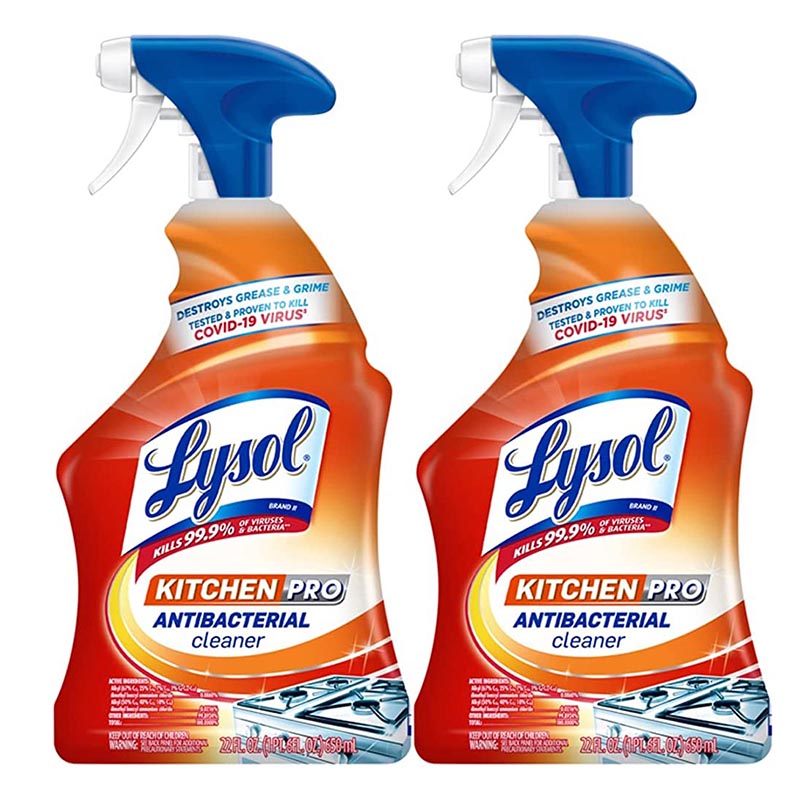
A March 10, 2025, retailer recall notice identified Lysol Antibacterial Kitchen Cleaner in a 22-fluid-ounce bottle with lot number S24313 and a best-if-used-by date of October 29, 2026. The notice listed mislabeling as the reason. Check your bottle and contact Reckitt for current instructions before using a product that matches these details. The notice alone does not establish that every Lysol kitchen spray is recalled.
For households across the United States, the Lysol kitchen spray recall raises a simple question: Is the bottle under your sink affected? The answer depends on the exact product, lot number, and date printed on its label. A brand name alone is not enough to identify a recalled item.
A product recall notice published by Dave’s Fresh Marketplace on March 10, 2025, listed Lysol Antibacterial Kitchen Cleaner in a 22-fluid-ounce bottle. It identified product code 19200-00888, lot number S24313, and a best-if-used-by date of October 29, 2026. The stated reason was mislabeling. Separately, some Amazon customers reported receiving messages from Reckitt about a potential safety issue involving Lysol Pro Kitchen Spray Cleaner and Degreaser. Those reports add context, but they do not establish the precise hazard or prove that every bottle is affected.
This guide explains how to check your bottle, what to do if the details match, and where to seek reliable answers. It also separates the documented recall information from details that remain unclear. If you have a matching bottle, pause use while you confirm the correct disposal, return, or refund instructions with the manufacturer or retailer.
The available retailer notice identifies a specific Lysol Antibacterial Kitchen Cleaner product rather than every cleaner sold under the Lysol name. Dave’s Fresh Marketplace published the notice on March 10, 2025. Its listing identifies a 22-fluid-ounce bottle, product code 19200-00888, lot number S24313, and a best-if-used-by date of October 29, 2026.
The stated reason was mislabeling. That term means a product label may not correctly present required or relevant information. The available notice does not provide enough detail to say exactly what was printed incorrectly or what ingredient, use direction, or warning may have been involved. It would be inaccurate to fill in those missing details with a guess.
Some Amazon customers also reported receiving messages in March 2025 about a potential safety issue involving Lysol Pro Kitchen Spray Cleaner and Degreaser, Citrus Scent, in a 22-ounce bottle. These reports are useful leads, but customer posts are not a substitute for a complete manufacturer recall notice. Anyone with a possibly affected bottle should verify the details directly with Reckitt or the seller.
The key point is that a recall is product-specific. A different Lysol spray, a different lot, or a different bottle size should not automatically be treated as part of the same action. At the same time, the absence of a matching label does not replace checking for newer notices.
Source: walmart.com
Notice date
March 10, 2025, on the Dave’s Fresh Marketplace product recall page.
Product
Lysol Antibacterial Kitchen Cleaner, listed as a 22-fluid-ounce bottle.
Product code
19200-00888.
Lot number
S24313.
Listed reason
Mislabeling. The exact label error is not established by the available notice summary.
Does the Recall Affect Every Lysol Kitchen Spray?
No such conclusion can be drawn from the available notice. Lysol sells multiple cleaning products, and similar names or packaging do not prove that products share the same lot or recall status. Check the full product name, bottle size, UPC or product code, and lot number.
If your product says Lysol Pro Kitchen Spray Cleaner and Degreaser rather than Lysol Antibacterial Kitchen Cleaner, do not dismiss a manufacturer safety message just because the names differ. Contact Reckitt with the information on your bottle and ask whether your specific item is included in any current safety action.
Do not guess
A matching brand name is not enough to establish recall status.
Check current information
Older retailer notices may not show every later update or related manufacturer communication.
How to Check Whether Your Bottle Is Affected
Start with the label on the bottle you actually own. Do not rely on a shopping receipt, a product photo, or the general name printed on the front. The information on the container is more useful for matching your item to a recall notice.
Place the bottle on a stable surface with the front and back labels visible. Look for the product name, volume, barcode, lot or batch code, and date marking. The lot number may appear on a separate printed area rather than beside the product name.
Compare every available detail with the retailer notice. The clearest match is a 22-fluid-ounce Lysol Antibacterial Kitchen Cleaner with product code 19200-00888, lot number S24313, and the listed date of October 29, 2026. If one detail is hard to read, contact the manufacturer instead of guessing.
A bottle may have a similar label but a different lot number. That difference matters. It does not prove the product is safe in every respect, but it means you should not label it as part of this specific notice without further confirmation.
Source: luxplus.fi
Step 1: Read the front label
Record the exact product name, scent if listed, and bottle size.
Step 2: Find the barcode or product code
Compare it with 19200-00888, the code in the retailer notice.
Step 3: Locate the lot number
Look for S24313. Take a clear photo if the print is small or hard to read.
Step 4: Check the date
The listed best-if-used-by date is October 29, 2026. A date match alone is not enough.
Step 5: Confirm the status
Ask Reckitt or the retailer to verify the complete product details and current remedy.
What If the Lot Number Is Missing or Unreadable?
Do not invent a lot number or assume that a faint code matches the recalled one. Take photos of all sides of the container, including any printed code near the bottom, neck, or back label. Keep your receipt or order confirmation if you have one.
Give those details to Reckitt Consumer Care and explain that you cannot read the lot number. Ask whether the company can identify the item from the UPC, product name, size, purchase date, and photos. If the bottle appears damaged or leaks, avoid handling it more than necessary.
Useful details
Product name, size, UPC, lot code if visible, date marking, retailer, purchase date, and clear label photos.
Avoid this mistake
Do not throw away the only readable label before the manufacturer has identified the bottle and explained what to do.
What Should You Do If Your Bottle Matches?
If your bottle matches the listed product details, stop using it while you seek direct guidance from Reckitt or the retailer. Do not wait for a smell, color change, leak, or other visible sign before taking action. A labeling issue may not produce an obvious change in the liquid.
Keep the bottle upright in a secure place away from children, pets, food, and drink. Leave the product in its original container, with its label intact. Do not transfer it to a water bottle or another spray bottle, because doing so can create a serious risk of mistaken use.
Ask customer care to confirm whether your exact item is included and whether it should be returned, discarded, or handled through another remedy. Request clear instructions for any refund, replacement, or disposal process. The available retailer notice does not establish a universal remedy for every person who owns a matching bottle.
If the retailer sold the item to you, keep your receipt or order record. If you bought it online, save the order confirmation and any safety message you received. These records can help the seller identify the purchase and explain the next step.
Source: catalog.classicsolutionsinc.com
Pause use
Do not spray the product until its status and the correct handling instructions have been confirmed.
Keep it contained
Store it upright in its original container, away from children, pets, and food.
Contact the right source
Use Reckitt Consumer Care or the retailer that sold the item. Give them the exact label details.
Follow the stated remedy
Return, disposal, and refund directions may depend on the confirmed recall and seller policy.
Should You Throw the Bottle Away Right Now?
Do not pour a possibly affected cleaner down a drain or into a toilet unless the manufacturer or local waste authority specifically directs you to do so. Do not mix it with bleach, ammonia, vinegar, drain cleaner, or any other cleaning chemical. Mixing household cleaners can release dangerous fumes or cause harmful reactions.
First, contact Reckitt or the seller for product-specific instructions. If they tell you to dispose of it, follow the directions they provide and any applicable local household hazardous waste rules. If the container leaks, keep people and pets away and follow the product label’s emergency guidance.
Keep the original label
It contains information that may be needed to identify the product and handle it safely.
Do not improvise disposal
A recall notice does not automatically mean that every local waste system accepts the cleaner in the same way.
Why Was the Lysol Kitchen Cleaner Listed for Recall?
The available Dave’s Fresh Marketplace notice gives mislabeling as the reason. It does not clearly describe the specific error or establish whether the issue involved an ingredient statement, use direction, warning, or another part of the label. Without a fuller notice from the manufacturer, a more detailed claim would be speculation.
Labels on household cleaners serve a practical safety role. They tell users what the product is, where it may be used, what precautions apply, and how to handle exposure or storage. An error in labeling can matter even when the liquid looks and smells normal.
A recall also does not mean that every bottle from the same brand has the same problem. The affected lot, product identity, and scope of the action determine which items are covered. This is why it is better to verify the bottle than to rely on broad claims on social media.
Some online posts refer to potential contamination or an unspecified safety issue. Those descriptions should not be treated as confirmed findings unless a reliable notice identifies the hazard. The retailer notice’s stated reason is mislabeling, and the available summary does not establish a specific contaminant.
Source: merchantsppr.com
Documented
The retailer notice lists a specific Lysol kitchen cleaner, a lot number, a date, a product code, and mislabeling as the reason.
Not established by that summary
The precise label error, a named contaminant, the cause of the error, and the full extent of any related manufacturer action.
Practical meaning
Confirm the product and ask the manufacturer for the complete safety explanation before deciding what to do with a matching bottle.
Does Mislabeling Mean the Cleaner Contains Harmful Bacteria?
No. Mislabeling by itself does not establish bacterial contamination. A label issue can have different causes, and the available notice does not name a specific germ or other contaminant.
Likewise, a product marketed as antibacterial should not be assumed to be contaminated merely because it is recalled. The actual hazard must be established by the relevant notice or manufacturer statement. Until that information is confirmed, avoid repeating claims that go beyond the available evidence.
Use precise language
Describe the published notice as a mislabeling-related recall unless an authoritative update confirms a different or additional reason.
Where Can US Consumers Verify Recall Information?
The most useful next step is to check the manufacturer and retailer records, then consult official US recall resources if needed. Recall notices can change, and an older store listing may not include the full explanation or current remedy. Use the exact product name and lot number when asking for confirmation.
Lysol is a brand owned by Reckitt. Its US consumer website provides product information and a frequently asked questions page. Consumers can use the company’s current contact information to ask about the affected bottle, the reason for the notice, and the proper remedy.
The US Consumer Product Safety Commission also maintains a searchable recall database. Recalls.gov serves as a federal starting point for several types of consumer product recalls. Not every household cleaner notice will appear in the same database, so a missing result should not be treated as proof that no recall exists.
For this specific issue, the retailer listing is a useful record of the product details, while the manufacturer is the better source for an exact product identification and handling instructions. If the retailer cannot answer the question, ask Reckitt to provide written confirmation.
Source: ar.inspiredpencil.com
Lysol US
Visit https://www.lysol.com/ and use the current consumer contact options or FAQ to ask about your exact product.
Reckitt Consumer Care
A March 2025 customer message shared online listed 1-800-228-4722 and ConsumerCare_USA@reckitt.com. Verify the current contact details through Reckitt’s official website before relying on them.
Dave’s Fresh Marketplace
Its product recall notice dated March 10, 2025, records the listed product code, lot number, date, and mislabeling reason.
US Consumer Product Safety Commission
Use https://www.cpsc.gov/Recalls to search its recall and product safety records.
Recalls.gov
Use https://www.recalls.gov/ as a federal starting point for consumer recall information.
What Should You Ask Customer Care?
A short, clear message can help you get a useful answer. Include the product name, bottle size, UPC or product code, lot number, date marking, purchase location, and purchase date if known. Attach clear photos of the front and back labels when the contact method allows it.
Ask whether the bottle is included in the recall, what the exact hazard or labeling issue is, whether you should stop using or return it, and whether a refund or replacement is available. If the company gives disposal instructions, ask for them in writing so you can follow them correctly.
Confirm scope
Ask whether your exact lot is affected or whether a broader product range is covered.
Confirm remedy
Ask about return, refund, replacement, or disposal steps and any required proof of purchase.
Save the response
Keep the email, case number, or written instructions until the matter is resolved.
What If You Already Used the Cleaner?
If you already used a bottle that may be affected, do not panic. First, stop using it and check whether the product matches the notice. The available notice does not establish that every use of a matching cleaner causes harm, and the specific hazard is not fully explained in the available summary.
If you used the cleaner on a food-contact surface, follow the directions on the product label for that surface. If the product is confirmed to be affected, ask Reckitt whether any extra cleaning or rinsing steps are needed. Do not assume that ordinary wiping, extra spraying, or mixing in another cleaner is the right response.
If someone has symptoms after exposure, follow the emergency and first-aid directions on the label and seek appropriate medical advice. For a serious reaction, breathing difficulty, collapse, or another medical emergency in the United States, call 911. For suspected poisoning or chemical exposure, contact Poison Control at 1-800-222-1222 or use its official website at https://www.poison.org/.
If the cleaner got into someone’s eyes or onto skin, follow the label’s first-aid directions and seek professional guidance. If it was swallowed, do not induce vomiting unless a qualified medical professional or poison specialist instructs you to do so. Keep the container nearby so responders can identify the product.
Source: nellisauction.com
Stop further exposure
Put the bottle aside and keep children and pets away from it.
Avoid unverified cleanup steps
Ask the manufacturer how to handle affected surfaces if the recall instructions call for extra action.
Get help for symptoms
Use the product label and Poison Control guidance, and seek emergency care for serious symptoms.
Should You Clean Your Whole Kitchen Again?
Not automatically. The available notice does not provide enough detail to say that every counter, appliance, or utensil exposed to a matching bottle needs special treatment. The correct response depends on the confirmed hazard, where the cleaner was used, and the product label’s directions.
Ask Reckitt whether it recommends any extra steps for the surfaces you cleaned. If the product contacted food, dishes, or a surface where food is prepared, explain that when you request guidance. Avoid applying a second chemical in an attempt to neutralize the first one.
Use verified cleanup directions rather than a general social media tip.
Common Mistakes to Avoid During a Product Recall
The most common mistake is treating every product from the same brand as if it were part of one recall. A brand can sell many cleaners with different formulas, labels, sizes, and production lots. The product details are what connect a bottle to a specific notice.
Another mistake is treating an old notice as a complete record of the current situation. The original listing can help identify the bottle, but it may not show later updates, the full hazard explanation, or the current refund process. Check the manufacturer’s latest information before taking a final step.
Do not rely on a product’s normal appearance as proof that it is safe. A labeling issue may not change the color or smell of the liquid. Similarly, do not spread a claim about bacteria, poisoning, or another hazard unless a reliable source confirms it.
Finally, avoid throwing away the label or transferring the cleaner before you have identified it and received directions. A clear label photo and purchase record can make it easier for the manufacturer to confirm the product and tell you what to do.
Source: catalog.classicsolutionsinc.com
Mistake: Assuming all Lysol products are recalled
Correction: Match the exact product name, code, size, and lot number.
Mistake: Assuming a recall proves contamination
Correction: Use the hazard stated in the actual notice. Mislabeling alone does not prove bacterial contamination.
Mistake: Using a matching bottle until it looks unusual
Correction: Pause use while you confirm its status.
Mistake: Mixing cleaners to make them safer
Correction: Never mix household cleaning chemicals to neutralize a product.
Mistake: Disposing of the bottle without checking
Correction: Ask the manufacturer or local waste authority for the correct method.
How to Keep a Simple Recall Record
Keep a small note with the product name, lot number, purchase date, store, and the date you contacted customer care. Save any email or case number. This record helps if you need to follow up about a refund, replacement, or safe disposal.
If you have more than one bottle, check each one separately. Bottles purchased at the same store may have different lot numbers. A quick check of each label is more reliable than assuming that all bottles from one shopping trip are identical.
Record the details
Write down the product name, code, lot number, date marking, and seller.
Save the response
Keep the manufacturer’s advice and any return or refund reference.
Frequently Asked Questions
Q
Is Lysol kitchen spray recalled in the United States?
A retailer notice dated March 10, 2025, listed a 22-fluid-ounce Lysol Antibacterial Kitchen Cleaner with product code 19200-00888, lot number S24313, and a best-if-used-by date of October 29, 2026. The notice stated mislabeling as the reason. Check the current manufacturer information to confirm whether your bottle is affected and whether any later update applies.
Q
What is the recalled Lysol kitchen spray lot number?
The lot number in the available retailer notice is S24313. The listed product is Lysol Antibacterial Kitchen Cleaner in a 22-fluid-ounce bottle, with product code 19200-00888. Match the full details rather than relying on the lot number alone.
Q
Why was Lysol Antibacterial Kitchen Cleaner recalled?
The retailer notice lists mislabeling as the reason. Its available summary does not explain the precise label error or establish a specific contaminant. Contact Reckitt for the full safety explanation and current instructions for your bottle.
Q
Can I still use a Lysol kitchen spray with a different lot number?
A different lot number means your bottle does not exactly match the listed lot, but it is not a guarantee that the product is free from every possible safety issue. Check the exact product details against current manufacturer notices. If you received a direct safety message or have concerns about the label, pause use and ask Reckitt to confirm the status.
Q
What should I do if I already sprayed the recalled cleaner on my counter?
Stop using the bottle and confirm whether it matches the notice. Ask Reckitt what, if any, extra cleaning steps are needed for your specific surface and use. Follow the label’s instructions, avoid mixing cleaners, and contact Poison Control or a medical professional if an exposure causes symptoms or you need urgent guidance.
Q
Can I get a refund for the recalled Lysol kitchen spray?
The available retailer notice does not establish a single refund process for every buyer. Contact the retailer where you bought the product or Reckitt Consumer Care with your product details and proof of purchase. Ask whether your specific bottle qualifies for a refund, replacement, return, or another remedy.
Q
Does this recall mean Lysol kitchen spray is contaminated with bacteria?
The available retailer notice does not establish bacterial contamination. It lists mislabeling as the reason and does not name a specific germ. Do not treat online speculation as a confirmed finding; ask the manufacturer for the exact hazard information.
✦ Wrapping Up
Conclusion
The Lysol kitchen spray recall information available from a retailer identifies a 22-fluid-ounce Lysol Antibacterial Kitchen Cleaner, product code 19200-00888, lot number S24313, and a best-if-used-by date of October 29, 2026. The notice, dated March 10, 2025, gives mislabeling as the reason. It does not establish that every Lysol kitchen spray is recalled or that the product was contaminated with a specific germ.
For US households, the safest next step is to check the bottle and contact Reckitt or the seller if the details match or remain unclear. Stop using a possibly affected product while you confirm its status. Keep the label intact, save your purchase record, and follow product-specific instructions for return or disposal.
💡 Key Takeaway
Check your bottle now. Compare its exact product name, 22-fluid-ounce size, product code 19200-00888, lot number S24313, and date marking with the notice. If it matches, pause use and ask Reckitt or the retailer to confirm the hazard and the correct next step.