Yes, some Drano products can be used in certain kitchen sinks, but you must check the exact product label first. Do not use a drain cleaner in a way the label forbids, and never mix it with other cleaners.
A clogged kitchen sink is a common problem in American homes. Food scraps, grease, soap, and bits of other waste can build up inside the drain. Water may drain slowly at first, then stop moving altogether. Before you reach for a bottle of Drano, check what is causing the clog and whether the product is suitable for your sink and plumbing.
Drano is a brand with several drain-cleaning products, and their directions are not all the same. Some products are intended for certain kitchen drains, while special care is needed with garbage disposals, standing water, older pipes, and plumbing fixtures. The safest choice depends on the exact formula and its current label. A sink plunger or a cleaned drain trap may solve some clogs without adding a harsh chemical to the pipe.
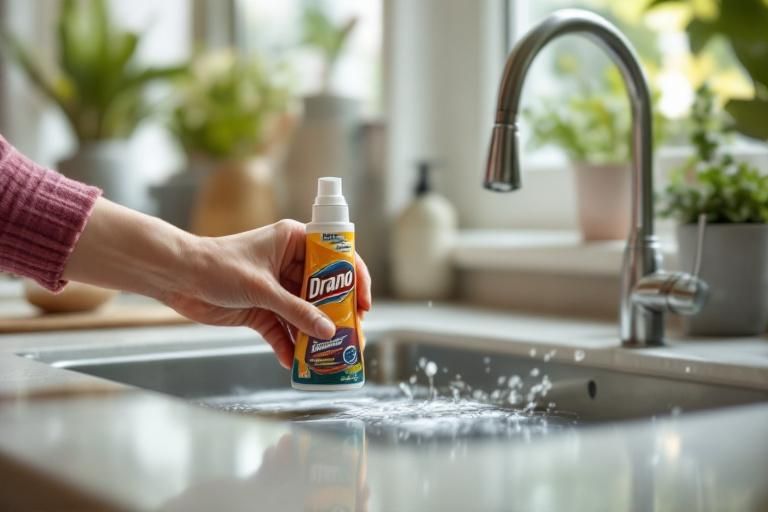
Yes, you may be able to use Drano in a kitchen sink if the specific product label permits that use. Check the bottle for the approved drain type, directions, warnings, and any limits on garbage disposals or plumbing materials. A brand name alone does not tell you whether every formula is suitable for your sink.
Many liquid drain openers use strong chemicals to break down or loosen certain types of organic material. Depending on the formula, the ingredients may include substances that can cause severe burns. A chemical drain opener is not a general-purpose cleaner, and it cannot repair a broken pipe or guarantee that a solid object will move through the drain.
Before pouring anything into the sink, check whether water is draining slowly or not moving at all. Also consider whether the sink has a garbage disposal, whether another drain is backing up, and whether a different cleaner has already been used. These details can change the safest next step.
Use a product only when its current label lists the intended kitchen drain use and your plumbing setup does not fall under a warning or exclusion.
A sink with a garbage disposal
Check the exact product directions and the disposal manufacturer’s instructions. Do not assume that every drain opener is suitable for a disposal.
A completely blocked sink
Be cautious with chemical treatment when water cannot drain. Standing water may leave caustic liquid trapped in the basin or pipe, making later plunging or repair dangerous.
A drain that keeps clogging
Repeated clogs may point to grease buildup, a problem in the drain trap, a deeper obstruction, or a plumbing defect that a chemical product will not fix.
Which Drano Product Should You Check?
Start with the exact name on the bottle, not a general online claim about Drano. Different formulas may have different instructions, waiting periods, disposal restrictions, and flushing directions. Product labels can also change, so use the directions on the container you have rather than relying on an old article.
If the label does not clearly permit use in your sink setup, do not guess. Check the manufacturer’s current instructions or choose a mechanical method that suits the blockage. Never increase the amount or leave the product in the drain longer than directed in an attempt to force a result.
Read the use directions
Confirm that the product is intended for your drain type and follow the stated amount, contact time, and flushing instructions.
Check all warnings
Look for restrictions involving garbage disposals, pipe materials, standing water, or previous use of another chemical.
Keep the container
Retain the label and bottle information so you can give accurate details to poison control, emergency responders, or a plumber if something goes wrong.
What Happens When You Pour Drano Down a Kitchen Sink?
A chemical drain opener works through reactions between its ingredients and material inside the drain. The exact process depends on the formula. Some products are designed to loosen hair, grease, soap residue, or other organic buildup. That does not mean they can dissolve every kind of blockage.
Kitchen clogs often contain cooking grease, food scraps, soap residue, and other debris. Grease can coat the inside of a pipe and catch more waste over time. A drain opener may help with some buildup when used as directed, but a dense mass of food, a utensil, or another solid object may need physical removal.
Chemical reactions can release heat, depending on the product and how it is used. Strong drain cleaners can also injure skin and eyes. If a product becomes trapped in a blocked drain, the liquid may remain in the sink or plumbing and create a hazard for anyone who later tries to plunge the drain or open the pipes.
Source: housedigest.com
Grease buildup
Grease can cling to pipe walls and collect food particles. Avoid pouring cooking oil or grease into the sink, even if hot water seems to carry it away.
Food scraps
Large scraps can collect near the drain opening, disposal, or trap. Remove visible debris only when it is safe to reach and the disposal is off.
Solid objects
A ring, bottle cap, utensil, or other object will not reliably dissolve with a chemical cleaner. It may require safe physical removal.
Deep blockages
A clog farther down the branch drain may need a suitable drain snake or professional service rather than repeated chemical treatments.
Why Drano May Not Clear the Clog
A drain can stay blocked when the cause is outside the product’s intended use. A clogged disposal, an object wedged in the trap, a damaged pipe, or a buildup deep in the plumbing may not respond to a liquid cleaner.
If the sink remains blocked after one label-directed treatment, do not keep adding more product. Repeated applications can leave more hazardous liquid in the system without fixing the cause. Stop and reassess the problem, or seek professional help if a safe mechanical method is not clear.
The water level does not drop
A severe blockage may be preventing the liquid from reaching or passing the obstruction. Avoid plunging or dismantling the drain if the chemical may still be present.
The sink clears briefly, then clogs again
The product may have loosened only part of the buildup. A remaining deposit or a deeper plumbing issue may still restrict the flow.
Several fixtures drain slowly
A blockage may be farther along a shared drain line. A plumber can determine whether the problem is limited to the kitchen or affects the larger system.
When Should You Avoid Drano in a Kitchen Sink?
Avoid using Drano when the label does not permit your sink setup, when another chemical drain cleaner is already in the pipe, or when you cannot follow the product’s directions safely. Do not use it to treat a suspected broken pipe or a blockage caused by a solid object.
A fully blocked sink deserves extra caution because the product may stay in the basin or drain. If a chemical is sitting in standing water, do not reach into it, plunge it, or loosen the drain trap. A later repair attempt could splash the caustic liquid onto your skin or eyes.
Be especially careful if the plumbing is old, damaged, or made from a material that the label excludes. If you do not know what type of pipe you have, do not assume that it is compatible. Ask a plumber or the product manufacturer before taking a risk.
Source: i.ytimg.com
You used another drain product
Do not add Drano to another cleaner or to a drain that may still contain another chemical. Dangerous reactions can occur.
The sink has a disposal
Follow the disposal maker’s directions as well as the chemical product label. Do not put your hand inside the disposal to clear a blockage.
You suspect a pipe problem
Leaks, corrosion, repeated backups, or signs of a damaged drain call for diagnosis rather than repeated chemical treatment.
You cannot use protective measures
If you cannot prevent splashes, keep children and pets away, or follow the label’s ventilation and handling instructions, do not use the product.
Can Drano Damage Kitchen Sink Pipes?
The risk depends on the product, pipe material, plumbing condition, and how the cleaner is used. A product’s approved-use statement applies only within its stated conditions. It does not mean that every formula is harmless to every drain or that unlimited use is safe.
Incorrect use, prolonged contact contrary to the label, mixing products, or repeated treatment of an unresolved blockage can create avoidable hazards. If you have brittle, corroded, leaking, or uncertain plumbing, use a safer diagnostic approach and seek qualified help before applying a strong chemical.
Follow the label exactly
Do not use extra product, mix it with other substances, or extend the contact time beyond the directions.
Do not treat a leak with drain cleaner
A cleaner is not a pipe sealant. A leak needs inspection and repair.
Stop if the problem repeats
Recurring blockage is a reason to find the cause instead of relying on repeated chemical applications.
How to Unclog a Kitchen Sink Without Drano
For many kitchen clogs, start with the least hazardous method that fits the symptoms. Remove visible debris, check whether the disposal is working as intended, and use a suitable sink plunger if no chemical cleaner is present. These steps can help with some blockages without leaving caustic liquid in the plumbing.
Do not try a mechanical method until you know whether a drain cleaner has already been added. If Drano or another chemical may still be in the sink, stop. Do not plunge, remove the trap, or pour in another substance. Follow the product’s emergency and disposal instructions, and get professional advice if the drain remains blocked.
Before beginning, clear items from under the sink and keep towels and a bucket ready if you plan to inspect the trap. Turn off a garbage disposal before any inspection, and never place your hand inside it. If you are unsure how to isolate power or remove plumbing parts safely, leave that work to a qualified person.
Source: sinkformula.com
Step 1: Remove visible debris
With no chemical present, remove food scraps around the drain opening using a suitable tool. Avoid pushing debris farther into the pipe.
Step 2: Check the garbage disposal
If fitted, follow the disposal manufacturer’s troubleshooting steps. Turn off power before inspection, and never reach inside the grinding chamber.
Step 3: Try a sink plunger
Only plunge when no chemical drain opener is present. Use a sink plunger suited to the fixture and follow its instructions to create a seal.
Step 4: Inspect the drain trap
If the sink is clear of chemical cleaner and you are comfortable with the task, place a bucket below the trap and follow appropriate plumbing instructions. Stop if parts are corroded, stuck, or leaking.
Step 5: Call a plumber when needed
Get help if the blockage remains, the drain backs up again, the pipe leaks, or the obstruction appears to be deep in the plumbing.
Is Hot Water Enough to Clear a Kitchen Drain?
Hot tap water may help move small amounts of ordinary residue, but it will not reliably clear a solid blockage or a severe grease buildup. Avoid pouring boiling water into a sink as a universal fix. Very hot water can pose a scald risk and may harm some sink components, seals, or plastic plumbing.
If a chemical cleaner has already been used, do not add hot water unless the product label specifically directs you to flush it that way and the situation is safe. Follow the stated flushing procedure, not an improvised remedy.
For minor residue
A modest flow of warm tap water may help when the drain is otherwise open and no incompatible cleaner is present.
Do not rely on hot water to force the clog through. Choose an appropriate mechanical method or get professional help.
For a disposal
Follow the disposal maker’s cleaning and operating instructions rather than assuming that boiling water is safe for every setup.
Can You Use Baking Soda and Vinegar Instead?
Baking soda and vinegar are often suggested as home drain remedies, but their fizz does not prove that they will clear a blocked kitchen pipe. The reaction produces carbon dioxide and other products, and it may loosen light residue without removing a dense obstruction.
Never pour vinegar, baking soda, bleach, or any other home remedy into a drain that may contain Drano. Mixing substances with a chemical drain opener can create heat, splashes, or dangerous reactions. If a commercial cleaner is present, follow its label and do not experiment with another remedy.
Do not mix cleaning products
Use one suitable approach at a time, and never combine a home remedy with a chemical drain opener.
Set realistic expectations
Fizzing is not proof that a clog has been removed. Check the actual drainage only when it is safe to do so.
How to Use Drano More Safely If the Label Allows It
If the exact product is approved for your sink and you decide to use it, read every direction and warning before opening the bottle. Keep children and pets away, protect yourself from splashes as directed, and make sure the area meets the label’s ventilation requirements. Never use a damaged container or transfer the chemical into a food or drink bottle.
Do not improvise the dose or contact time. Use only the amount specified for the relevant drain and wait only as long as the label says. Do not lean over the opening or put your face near the drain while handling the cleaner.
The flushing step matters. Follow the exact instructions on the container, including the stated water temperature and amount. If the sink remains blocked, do not immediately add a second dose or another cleaner. Treat the failure as a sign that the clog may need another method.
Source: littlehouselovelyhome.com
Read before opening
Check the approved use, warnings, dose, contact time, flushing steps, first-aid instructions, and disposal guidance.
Protect people and pets
Keep others away from the work area and prevent contact with skin, eyes, clothing, and nearby food or utensils.
Use the stated amount
More product does not mean a better result. Excess cleaner can increase the amount of hazardous material left in a blocked drain.
Do not combine remedies
Never add a second drain opener, bleach, vinegar, ammonia, toilet cleaner, or another chemical to the same drain.
Stop when the directions cannot be followed
If the drain is fully blocked, a warning applies, or the product’s safety conditions cannot be met, choose another safe approach.
What If Drano Does Not Work?
If a label-directed treatment does not clear the sink, stop adding chemicals. A stubborn clog may contain a solid object, thick grease, or a buildup that the product cannot remove. The drain may also have a structural issue.
Tell a plumber that a drain opener was used before the plumber touches the trap or drain line. Give the exact product name, approximate amount, and time of use if known. This information helps the plumber assess the chemical hazard and plan the next step.
Do not plunge a chemically treated drain
Plunging can splash hazardous liquid back toward your face or skin.
Do not remove the trap while cleaner may remain
Opening the plumbing can release caustic liquid. Tell the plumber about the product before work begins.
Avoid repeated doses
Repeated treatment may increase the hazard without resolving the blockage.
What to Do If Drano Splashes or Causes an Exposure
Drano can cause serious chemical burns. If it contacts skin or eyes, act at once rather than waiting to see whether irritation develops. Follow the first-aid instructions on the product label and seek urgent medical advice for an exposure.
For skin contact, remove contaminated clothing and rinse the affected skin with plenty of running water. For eye exposure, start rinsing immediately with clean, gently flowing water and get emergency medical advice. Do not try to neutralize the chemical with vinegar, baking soda, or another substance.
If someone swallows the product, do not induce vomiting or attempt a home chemical remedy. Contact Poison Control in the United States at 1-800-222-1222 for immediate guidance. If the person has trouble breathing, collapses, has a seizure, or cannot be awakened, call 911.
Source: topchooser.com
Skin exposure
Rinse with plenty of running water, remove contaminated clothing, and follow the product’s first-aid directions.
Eye exposure
Begin flushing the eye with clean water immediately and obtain urgent medical guidance. Do not delay rinsing to search for supplies.
Swallowing the product
Do not induce vomiting. Contact Poison Control or emergency services as appropriate, and keep the product container available.
Fumes or a suspected chemical reaction
Move away from the affected area to fresh air if you can do so safely. Do not lean over the drain or attempt to clean up a hazardous reaction without appropriate guidance.
Never Mix Drano With Other Cleaners
Do not mix Drano with bleach, vinegar, ammonia, toilet bowl cleaner, or another drain opener. Depending on the substances involved, mixing cleaners can release hazardous gases, generate heat, or cause violent splashing. Even products that seem mild on their own may react with chemicals left in the pipe.
If you accidentally mix products and notice strong fumes, coughing, burning eyes, or breathing trouble, leave the area and seek emergency advice. Do not add water or another chemical as an experiment. Follow emergency responders’ instructions and tell them which products were involved.
One drain, one chemical treatment
Do not layer cleaners or follow one chemical product with another while residue may remain.
Keep the label available
The exact product name and ingredient information can help Poison Control and emergency responders provide suitable guidance.
How to Prevent Kitchen Sink Clogs
The easiest way to deal with a clogged kitchen sink is to prevent waste from building up in the first place. Grease, food scraps, and other debris can collect inside the drain over time. A few simple habits can reduce the chance of a repeat blockage.
Let cooking grease cool, then place it in a suitable container for disposal rather than pouring it down the sink. Scrape plates into the trash or compost where appropriate before washing them. Use a drain strainer to catch food scraps, and empty it often.
A garbage disposal is not a license to send every kind of waste down the drain. Follow its manufacturer’s instructions for approved food types, operation, and cleaning. If drainage becomes slow more than once, find the cause before the pipe becomes fully blocked.
Source: kitchenwaresets.com
Keep grease out of the drain
Wipe greasy pans with a paper towel when appropriate, and collect used cooking oil for proper disposal.
Use a sink strainer
Catch food scraps before they enter the pipe and clear the strainer after meal prep.
Avoid sending large scraps into the disposal
Follow the disposal manufacturer’s approved-use instructions and never put your hand into the unit.
Respond to slow drainage early
A minor slowdown can be easier to diagnose than a fully blocked sink with standing water.
Watch for repeat problems
If the same drain clogs again soon after clearing, arrange an inspection to find the source rather than relying on more chemicals.
When Is It Time to Call a Plumber?
Call a plumber when the sink remains blocked after a safe, suitable attempt, when a chemical cleaner may still be trapped in the drain, or when you are unsure how to remove the obstruction. A plumber is also a sensible choice for damaged plumbing, persistent leaks, or recurring clogs.
Seek help promptly if several fixtures back up at once, wastewater comes back into the sink, or you hear unusual gurgling along with slow drainage. These signs may point to a blockage farther down the drain system. If a chemical cleaner has been used, tell the plumber before any work starts.
One sink is blocked
The problem may be near the sink, disposal, or trap, though inspection is needed to confirm the cause.
Several drains are affected
A shared drain line or a more extensive plumbing problem may be involved.
Water is leaking or backing up
Stop using the affected fixture and get professional help, especially if wastewater or chemical cleaner is present.
A chemical is still in the drain
Tell the plumber what was used and do not attempt to open the pipe yourself.
Frequently Asked Questions
Q
Can you put Drano in a kitchen sink with a garbage disposal?
Only if the exact Drano product label permits that use and the disposal manufacturer’s instructions do not rule it out. Do not assume that every drain opener is safe for every disposal. If the drain is blocked and chemical cleaner may remain in it, do not run the disposal or reach inside the unit.
Q
Can Drano sit in a kitchen sink overnight?
Do not leave Drano in the sink overnight unless the exact product label explicitly directs that contact time. Follow the stated wait time and flushing directions. Leaving a strong cleaner in a blocked drain longer than directed can increase exposure risks and may not improve the result.
Q
Can I use a plunger after putting Drano in the sink?
No. Do not plunge a drain that may contain Drano or another caustic cleaner because pressure can splash the liquid onto your skin or eyes. Follow the product’s instructions and get professional help if the sink remains blocked.
Q
Can Drano remove grease from a kitchen drain?
Some drain opener formulas may help with certain types of grease or organic buildup when used as directed. Results depend on the product and the nature of the blockage. A thick or deep grease clog may not clear, so avoid repeated doses and seek professional help if drainage does not return.
Q
What if I already poured Drano into a clogged sink and it did not work?
Do not add another chemical, plunge the sink, or remove the drain trap while the cleaner may still be present. Follow the label’s safety and flushing instructions. If the sink remains blocked, tell a plumber the exact product used and the approximate time and amount.
Q
Is Drano safe for PVC pipes?
Do not decide based on the word PVC alone. Check the exact product label for approved pipe materials and use conditions, and consider the condition of the plumbing. If the pipes are damaged, old, or of uncertain type, ask a qualified plumber before using a chemical drain opener.
Q
What should I do if Drano gets on my skin or in my eyes?
Start rinsing the affected area with plenty of running water immediately and follow the product’s first-aid instructions. For eye exposure, seek urgent medical advice. For swallowing or other serious exposure, contact Poison Control in the United States at 1-800-222-1222; call 911 for life-threatening symptoms.
✦ Wrapping Up
Conclusion
You can use some Drano products in certain kitchen sinks, but only when the exact product label permits it and the plumbing setup meets its conditions. A brand name is not enough to confirm suitability. Pay special attention to garbage disposals, standing water, damaged pipes, and any other chemical already in the drain.
For a minor clog, removing visible debris or using a suitable plunger before any chemical treatment may be the simpler choice. Never plunge or dismantle a drain while Drano may still be present. If the blockage does not clear, several drains back up, or you suspect a plumbing fault, stop and call a plumber.
💡 Key Takeaway
Before opening a bottle, check the exact product label and identify the likely cause of the clog. Never mix cleaners, never exceed the stated directions, and get professional help if the drain remains blocked or chemical cleaner may be trapped inside.